
As I sit here in 2026, still replaying the old Fable trilogy on my aging Xbox, I can't help but reflect on how those games shaped my love for role-playing. There's a nostalgic pull every time I boot up Fable Anniversary and see that familiar map of Albion, divided into neat little zones, each with its own personality. The promise of a new Fable, officially confirmed to be an open-world RPG by Playground Games, has the community buzzing again. But it also raises an interesting question: were the original Fable games open-world? I've spent years with these titles, and the answer is more nuanced than a simple yes or no.
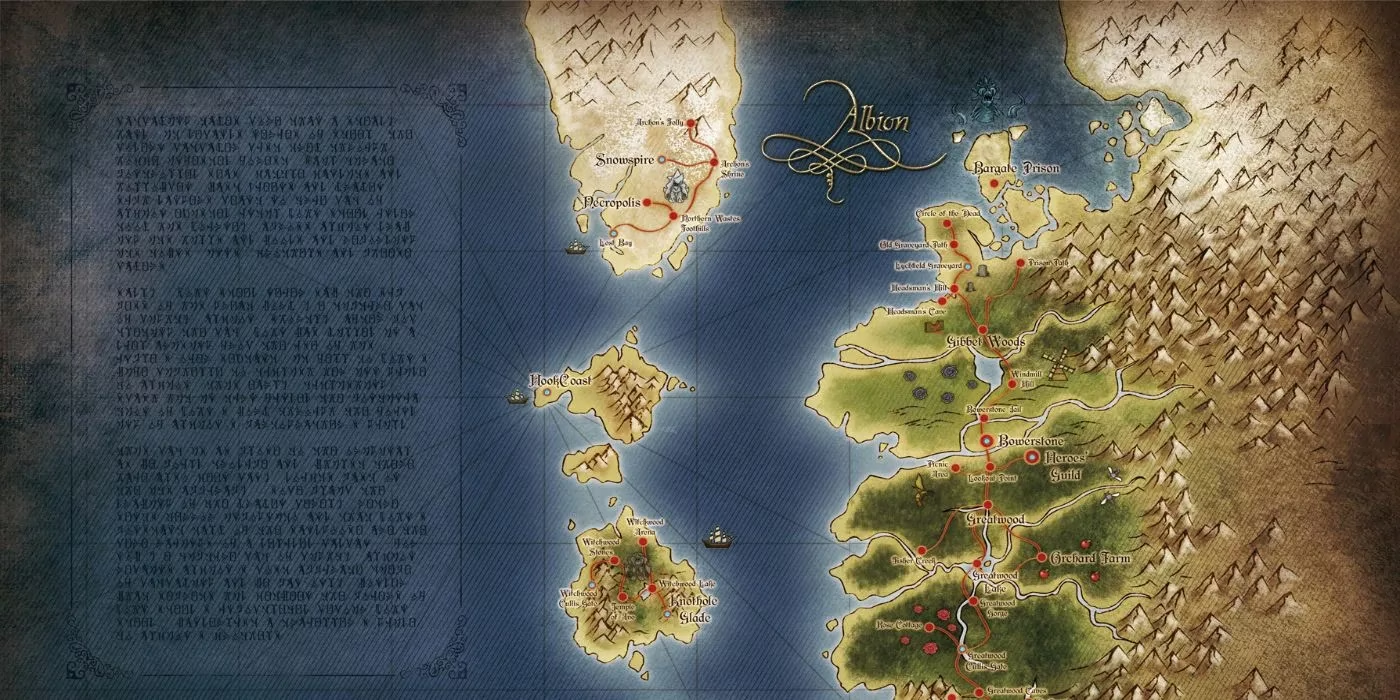
I vividly remember my first steps in the original Fable. It felt like walking into a dark, whimsical fairy tale. The world was magical, but it was never seamless. The map was cut into clear sections — small hubs like Bowerstone or Oakvale, connected by narrow corridors that served as transition areas. You couldn't just sprint from one end of Albion to the other without hitting a loading screen or a pathway choke point. The same design philosophy carried into Fable 2 and Fable 3. These later entries expanded the size of each zone and let you interact more deeply with the environment — buying houses, getting married, or interacting with NPCs — but the fundamental structure remained. Each region was an isolated bubble. In that technical sense, the classic Fable games are not true open-world experiences. They don't offer the sprawling, uninterrupted exploration you'd find in Skyrim or The Witcher 3.
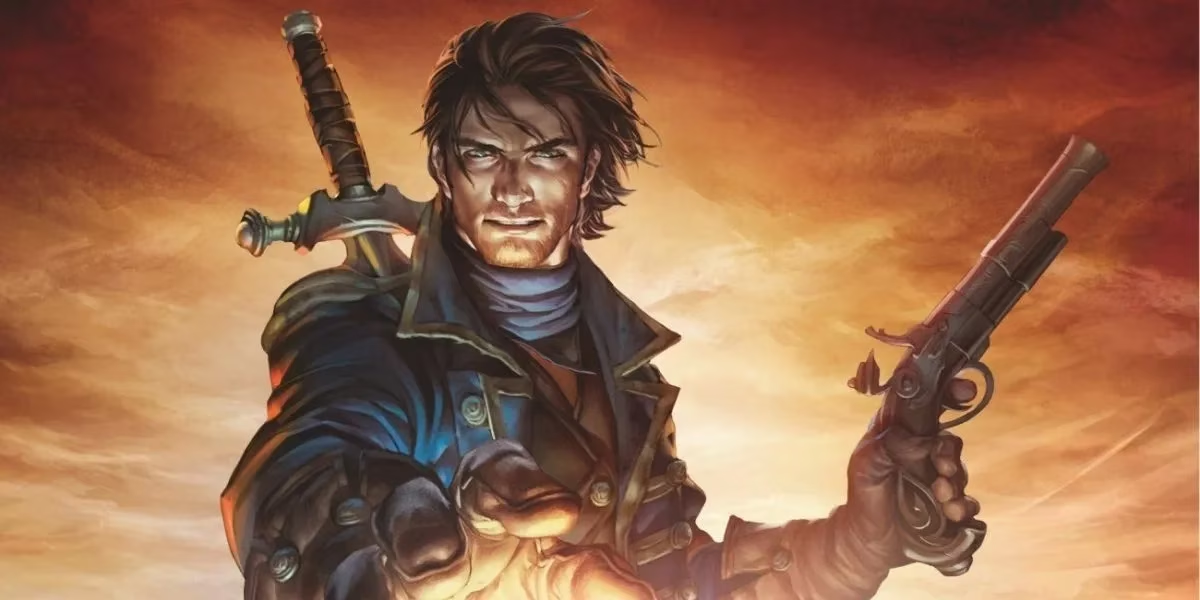
Yet, calling them linear would be a disservice. After those initial prologue sequences, I could roam wherever I wanted, whenever I wanted. The freedom was intoxicating. I could ignore the main quest entirely and dive into real estate speculation, or terrorize villagers just to see how far the moral alignment system would let me fall. That morality mechanic was revolutionary for its time, and it's clear it influenced later open-world masterpieces like Red Dead Redemption. The original Fable games might not have had a contiguous map, but they laid the groundwork for player agency that defines modern sandbox RPGs. They injected open-world DNA into their design without fully embracing the technical definition. So, they occupy a fascinating middle ground — a kind of proto-open-world series that prioritized choice and consequence within a compartmentalized world.
Fast forward to today, and the conversation has shifted entirely. Job listings from Playground Games have confirmed that the upcoming Fable will be a full open-world RPG, built on the Forza engine. I'll admit, hearing that an engine known for racing games is powering my beloved fairy tale was surprising, but the tech could deliver stunning vistas and seamless traversal. The moral system is almost certainly returning, and that has me genuinely excited. Having your deeds physically reshape the open landscape in real time could elevate the series to new heights. Imagine an Albion where cutting down a sacred grove darkens the skies permanently, or where your benevolent reign makes settlements flourish visibly as you ride through.
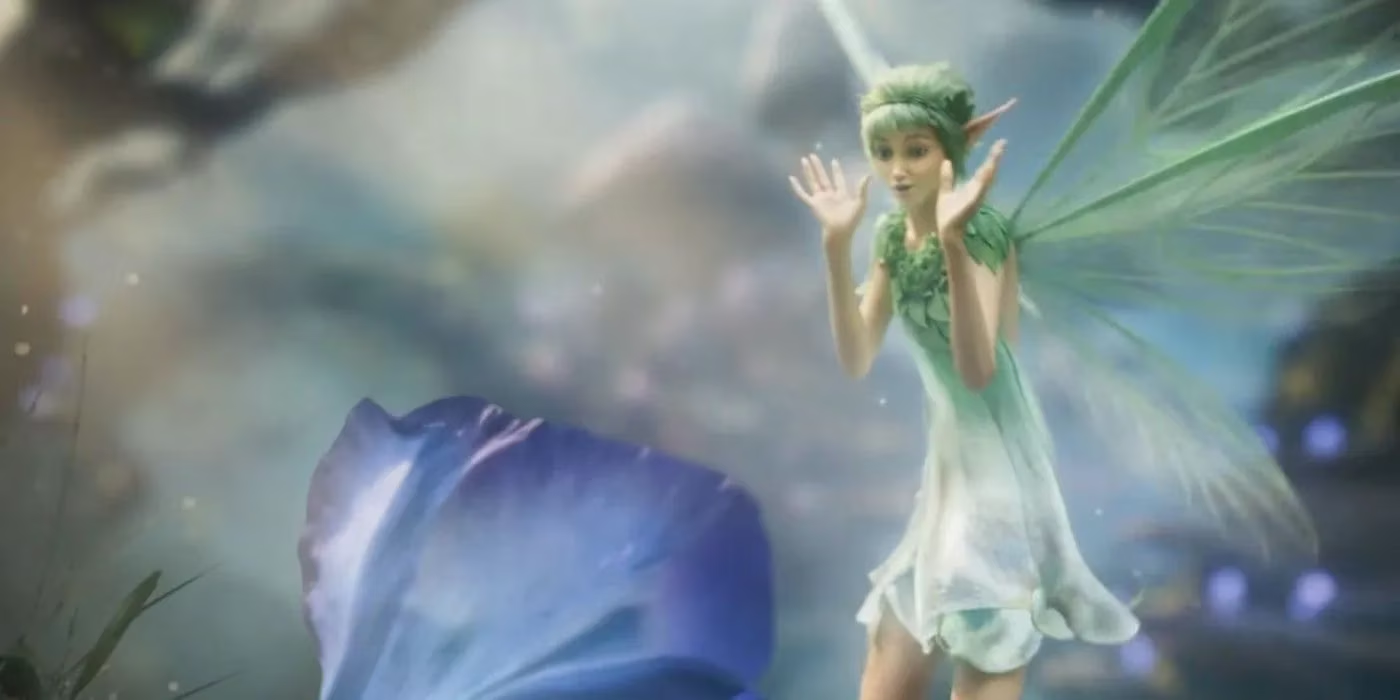
Playground Games seems to understand the weight of this legacy. They've recruited top talent to craft this new chapter. As of 2026, we're still waiting for concrete gameplay reveals beyond that cinematic teaser from years ago. Every cryptic hint or developer update sends the community into a frenzy. I often find myself re-examining the old games not just for nostalgia, but to pinpoint what must be preserved: the cheeky humor, the dark undertones, the way your dog companion in Fable 2 made you feel genuinely attached to a bunch of pixels. An open-world structure can finally let those elements breathe without artificial barriers. I want to chase a runaway chicken across multiple zones, or lead a trail of villagers through a forest without hitting a loading screen.
The platform is set: PC and Xbox Series X|S. The game will likely be a showcase for the current generation, and I'm hopeful it'll set a new standard for player-driven narratives. The old Fable games were never truly open-world, but they planted the seed. Now, in 2026, it's time for that seed to grow into a vast, interconnected Albion we can get lost in for years.
Loading comments...