
Time, that most cunning of sculptors, has a way of reshaping memory. As whispers of a new journey in Albion grow louder on the wind in 2026, I find myself drawn back not to the well-trodden paths of nostalgia, but to the one road often left untraveled: the legacy of Fable 3. Once a pariah in the family chronicle, it now sits quietly in the corner of the tavern, its story waiting to be heard anew. We dismissed it once, in the clamor of unmet expectations. But returning now, with eyes softened by years and a heart seeking not just adventure but poetry, I see a different tale etched in its worn pages. It is a game of brilliant, fractured light, where moments of genuine magic are trapped in amber, suspended within systems that feel like they were built by a different hand entirely.
🌟 The Gilded Promise: Where Fable 3 Truly Shone
My memory first alights on the spellcraft. Oh, the glorious, chaotic symphony of combining spells! It was less a mechanic and more an act of personal alchemy. To weave together a vortex of flame and force was to conduct a storm of my own making, a feeling as exhilarating as watching two rival colors bleed into a sunset no artist could replicate. This was the series' magic system not just evolved, but transcended.
Then, there were the characters, who walked with a depth that the world around them sometimes lacked. Walter Beck, steadfast and tragic, remains a lodestar of loyalty in the series. Jasper, the ever-present butler, was the punctured kettle of the narrative, whistling a tune of dry, Monty Python-esque wit that somehow held the entire, sometimes wobbling, structure together with sheer charm. And Logan? Voiced with chilling precision by Michael Fassbender, he was not a cartoonish fiend but a monarch frozen in the glacier of impossible choice, his tyranny born from a terrible, secret calculus. These figures gave the story a soul that its gameplay bones sometimes struggled to carry.
The world-building, too, deserves its laurels. Industrializing Albion was a bold stroke. Walking through Bowerstone, with its soot-stained bricks and clanking machinery, felt like witnessing a beloved storybook land grow up, for better and for worse. It was a setting ripe with narrative potential, a canvas painted in the new, grimier hues of the Industrial Revolution.
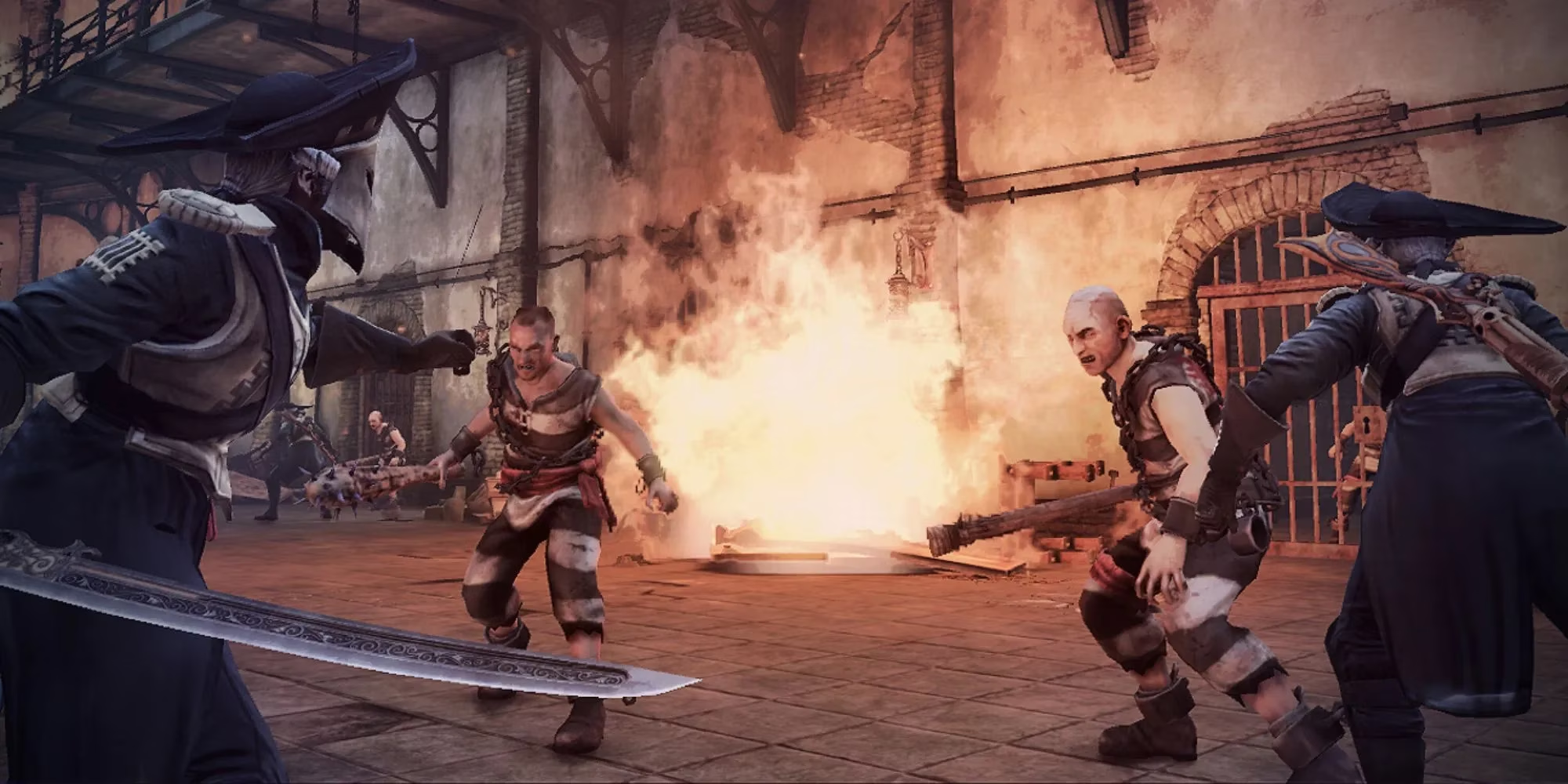
The weight of legacy and choice, embodied in stone.
⚖️ The Hollow Crown: Where the Dream Frayed
Yet, for every peak, there was a valley. The journey to the throne was an epic, but sitting upon it felt like being handed a scepter made of painted wood. The promise of rulership—the core of the game's second half—dissolved into a handful of binary, yes-or-no decrees. It was governance reduced to a checklist, a profound disappointment after a revolution fought with heart and steel. To secure the "good" ending felt less like wise stewardship and more like a mercantile grind, turning the noble ruler into a frantic landlord, scrounging for gold. This segment became a desert of decision-making, vast and visually striking, but ultimately barren of meaningful interaction.
Other simplifications chafed against the spirit of the Fable I knew:
| Feature | Fable 2 | Fable 3 | The Poet's Lament |
|---|---|---|---|
| Expression System | A wheel of nuanced gestures | A paired-down, context-sensitive list | The rich language of the body replaced by a few simple phrases |
| Leveling/Upgrades | Granular, menu-driven customization | Streamlined into the Road to Rule chests | The joy of tailoring one's destiny felt packaged and pre-ordained |
| Inventory & Trading | Detailed shops and management | Drastically oversimplified | The bustling market square quieted to a lone, silent vendor |
Playing it directly after Fable 2 is a peculiar experience—like hearing a familiar folk song played on new, slightly out-of-tune instruments. The melody is there, the heart yearns for it, but the notes land just shy of harmony.
🔮 The Unwritten Future: What Legacy for the Third?
So, where does this leave Fable 3 as we stand on the precipice of a new dawn in 2026? It is neither the failure we declared nor the secret masterpiece some now proclaim. It is a beautiful, flawed experiment. Its greatest contributions—the character writing, the tonal daring, the spell-weaving—are like delicate, preserved flowers in the book of the series. Its stumbles are lessons etched in stone.
Will the new caretakers of Albion look to this chapter? To draw directly from its industrial aesthetic or its rulership mechanics would be a startling, avant-garde choice. More likely, they may heed its deeper truths: that Albion's heart beats strongest in its people, that humor is its lifeblood, and that true magic lies in giving the player a brush to paint their own chaos. Fable 3 dared to dream a different dream for the series. That the dream was only partially realized does not make the act of dreaming any less brave. In my quiet replay, I no longer see a black sheep, but a poignant, gilded footnote in a legend that is still being told—a reminder that even in imperfection, there can be found a strange and lasting kind of beauty. ✨
Loading comments...