
As a professional gamer who's been around the block more times than a quest-giver in a starter village, I've watched the Fable series' saga unfold like a dramatic soap opera starring knights and chickens. For years, the future seemed darker than a dungeon with a blown-out torch. Then, in 2020, the news hit: Playground Games, the wizards behind the Forza racing series, were taking the reins for Fable 4. It was like finding out your favorite baker, known only for perfect croissants, was suddenly crafting an entire fantasy banquet. The community's mood shifted faster than a Fable 2 expression wheel from evil to pure. We were intrigued, hopeful, and wildly speculative, clinging to every scrap of info like a greedy goblin to a gold coin. Now, in 2026, with the game still simmering in the development cauldron, I can't help but think the secret ingredient for its success might be hiding in the unlikeliest of places: the shadowy, cobblestone alleys of Eidos-Montreal's 2014 title, Thief.
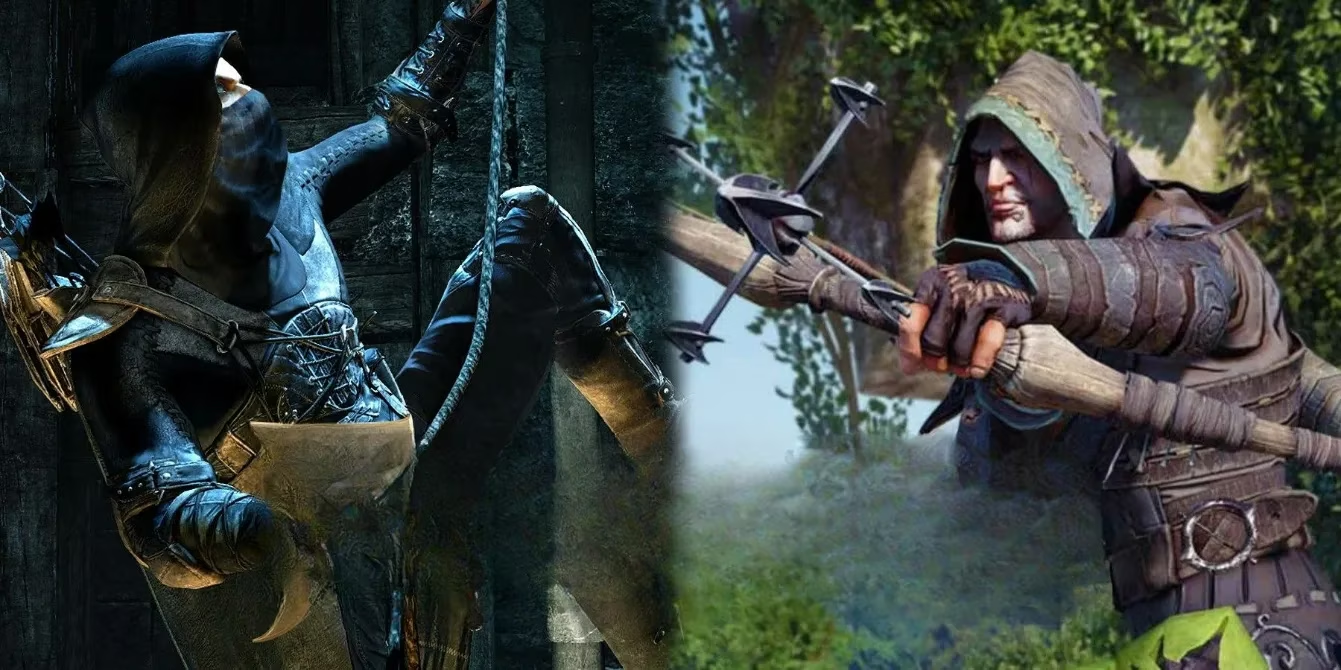
Now, I know what you're thinking. On the surface, comparing Fable and Thief is like trying to pair a singing, dancing, pie-throwing hobbe with a grim, silent master thief who communicates primarily in grunts and the thwip of a rope arrow. One is a vibrant, cheeky fairy tale romp where you can become a landlord and marry three people, the other is a brooding stealth sim set in a gothic, plague-ridden city called The City. They seem as compatible as a Hollow Man and a bright sunny day. But hear me out! As a player who's crawled through both worlds, I've spotted some fascinating connective tissue beneath the surface. Both franchises are, at their core, power fantasies set in rich, reactive worlds. Fable lets you shape your legend through moral choices and flashy spellcraft, while Thief lets you shape the environment itself through shadows, sound, and cunning. Playground Games, in their quest to reinvent Fable, could learn a ton from Garret's leather-clad playbook.
Let's break down the potential cross-pollination, shall we?
👑 The Thematic Tapestry: Light, Shadow, and Steampunk Cogs
First, the setting and tone. The later Fable games, particularly Fable III, began dabbling in industrialization. Albion started sprouting factories, steampunk-inspired weaponry, and a more... sooty aesthetic. This evolution mirrors Thief's world perfectly—a place where ancient stonework groans under the weight of new, clanking machinery and oppressive social structures. If the rumors are true and Fable 4's Albion was indeed reset by a catastrophic event (an asteroid? Talk about a bad day!), the opportunity for a darker, grittier rebuild is immense. Imagine a world where magic is a rare, dangerous relic, and survival depends as much on skulking in the shadows as it does on swinging a glowing sword. Thief's mastery of atmosphere—where every creaking floorboard and distant guard patrol tells a story—could teach Fable how to make its world feel truly alive and perilous, not just picturesque.
🎮 Gameplay Grafts: From Brute Force to Brainpower
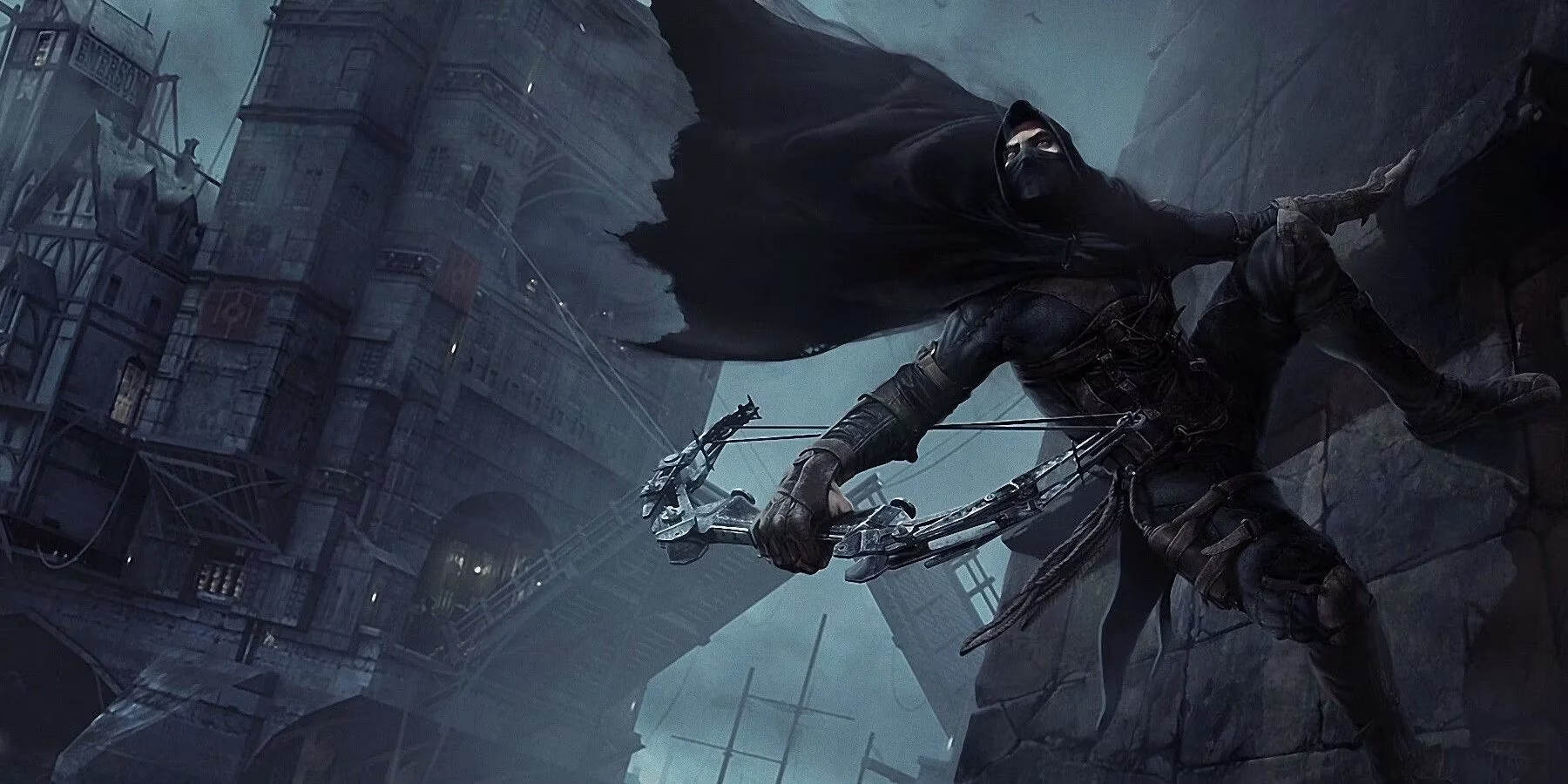
This is where the magic (and the potential theft) really happens. Traditional Fable combat is often a glorious, chaotic ballet of melee, ranged, and will (magic). But what if Fable 4 offered a genuine alternative? What if, like a chameleon shifting its colors, you could choose to be a shadow?
-
Stealth Systems: Thief's light-and-sound gem mechanic is a timeless classic. Applying a refined version to Fable could revolutionize how we interact with its world. Sneaking into a bandit camp, pickpocketing a key from a sleeping troll, or eavesdropping on villainous plots could become deep, rewarding gameplay pillars, not just occasional mini-games. It would make the world feel more tangible and full of consequence.
-
Verticality and Exploration: Thief's city is a climbing frame. Rope arrows, claw shots, and mantling create a wonderfully vertical playground. Fable's towns have always been charming, but often a bit flat. Introducing more parkour or magical traversal options (a teleportation spell that requires line-of-sight and silence, perhaps?) could make exploration as thrilling as combat.
-
Non-Lethal Playthroughs: Fable has morality, but it's often a binary of "Smite Evil" or "Embrace Evil." Thief often rewards avoiding conflict altogether. Implementing a robust system where you can complete major quests through subterfuge, theft, and manipulation—without ever drawing your sword—would be a game-changer. It would make the "Hero" path more about cleverness than carnage.
🧚 The Fable Flavor: Keeping the Fairy Tale Magic
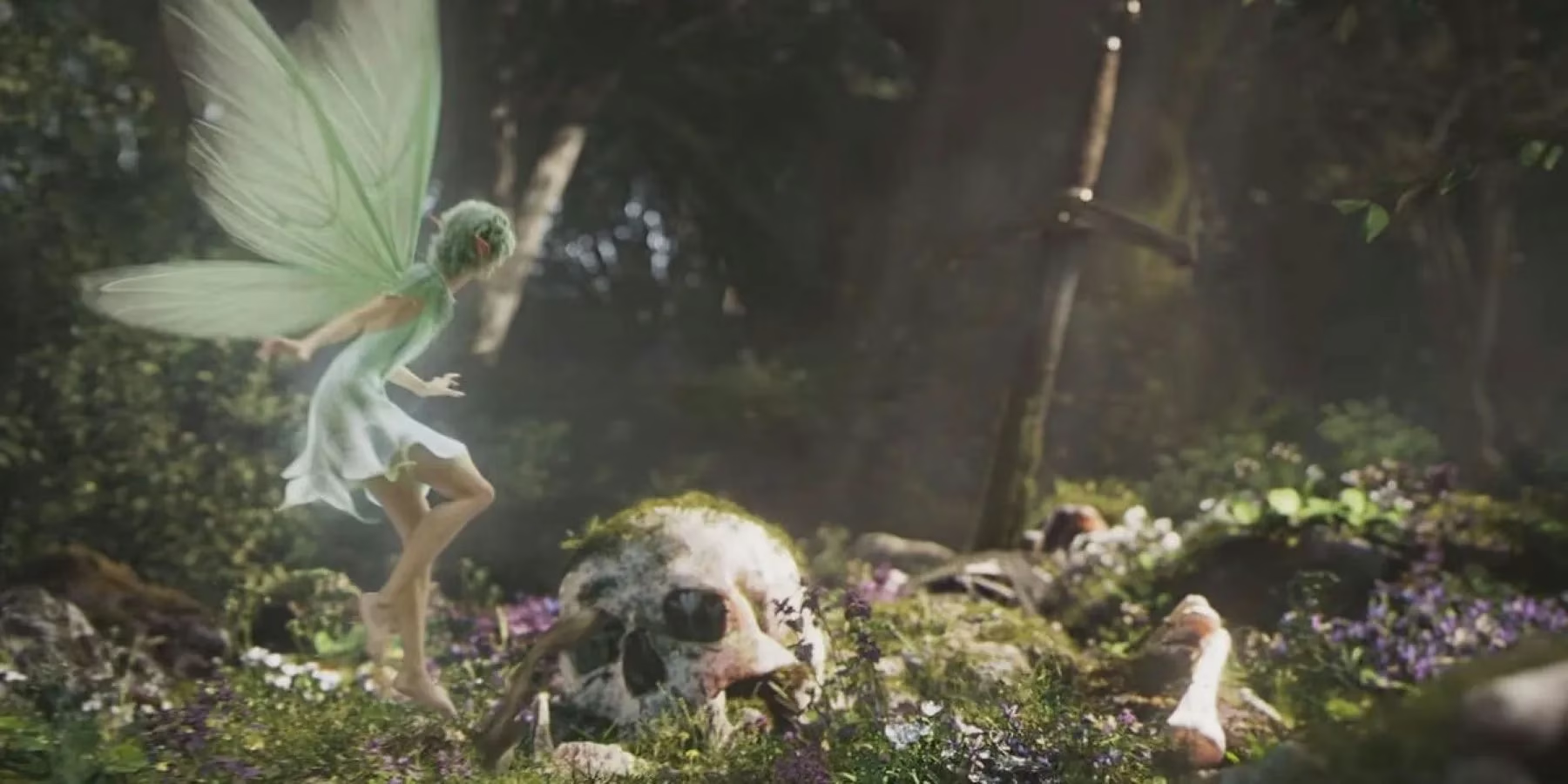
Now, don't panic! I'm not suggesting Fable 4 should be as dour as a rainy day in Bowerstone's old quarter. The series' irreverent humor, fairy tale whimsy, and ability to let you be a ridiculous property mogul are its beating heart. The trick is integration. Think of it like this: the darkness in the best fairy tales isn't a separate layer; it's the rich soil from which the magic grows. Thief's influence could be that soil.
-
Imagine a quest where you have to sneak into a giant's castle not to slay him, but to steal back a magical harp he "borrowed." The challenge isn't his health bar, but his thunderous snoring and the creaky floorboards made of old ship timbers.
-
Picture a stealth system that's not just about hiding, but about using illusions or polymorph magic to blend in—turning into a chicken to bypass guards would be the most Fable thing ever.
-
The iconic narrator could have a field day with a stealthy protagonist. "And so, the hero chose the path of shadows... and also the path of pilfering every silver spoon in the mansion. His legend would be one of great wealth and quiet footsteps."
⚖️ The Balancing Act
Of course, weaving these threads together is a task more delicate than performing surgery on a micro fairy. Playground Games needs to ensure the core Fable identity isn't lost. Here’s a quick table of what should stay, what could be borrowed, and what should remain in The City:
| Fable Core (Keep!) | Potential Thief Inspiration (Borrow!) | Thief Exclusive (Leave Behind!) |
|---|---|---|
| Irreverent Humor & Narration | Atmosphere & Environmental Storytelling | Unrelenting Gothic Grimdarkness |
| Over-the-Top Character Progression | Deep, Systemic Stealth Mechanics | Total Lack of Direct Confrontation |
| Vibrant, Living World (Shops, Jobs, Families) | Vertical City Design & Parkour-Lite | Extremely Limited NPC Interaction |
| Moral Choice with Tangible World Impact | Non-Lethal Objective Completion | Purely Amoral Protagonist |
In the end, the prospect of Fable 4 taking notes from Thief is as exciting as finding a legendary weapon in a random chest. It's an unexpected fusion that could elevate the series from a beloved, if sometimes janky, fairy tale to a truly groundbreaking RPG. It would offer players unprecedented agency in how they forge their legend—be it as a gleaming paladin, a mischievous trickster, or a ghost in the system who rules Albion from the shadows. As we wait for more news, I'll be here, practicing my lockpicking and hoping that when we finally return to Albion, it will be a world where the light shines brighter because the shadows have grown deeper, and more interesting, too.
Loading comments...