
The gaming landscape of 2026 continues to be shaped by the powerful trend of remakes and reboots, with iconic franchises leveraging cutting-edge technology to reintroduce beloved worlds to a new generation. The success of titles like the Resident Evil 4 Remake has set a formidable benchmark, proving that thoughtful modernization can resonate deeply with both nostalgic fans and newcomers. Into this arena steps the long-awaited Fable 4, a reboot of the classic fantasy RPG trilogy developed by Playground Games. After a dormancy of over a decade for the mainline series, the announcement of a new Fable title generated palpable excitement. Yet, the path to a successful revival is fraught with challenges, as the developer must carefully navigate the series' rich legacy, learn from past missteps, and meet the elevated expectations of the modern RPG audience. The journey from its 2020 announcement to the present day has been marked by anticipation, scrutiny, and a clear directive: to deliver a thrilling experience that honors the past while forging its own future.
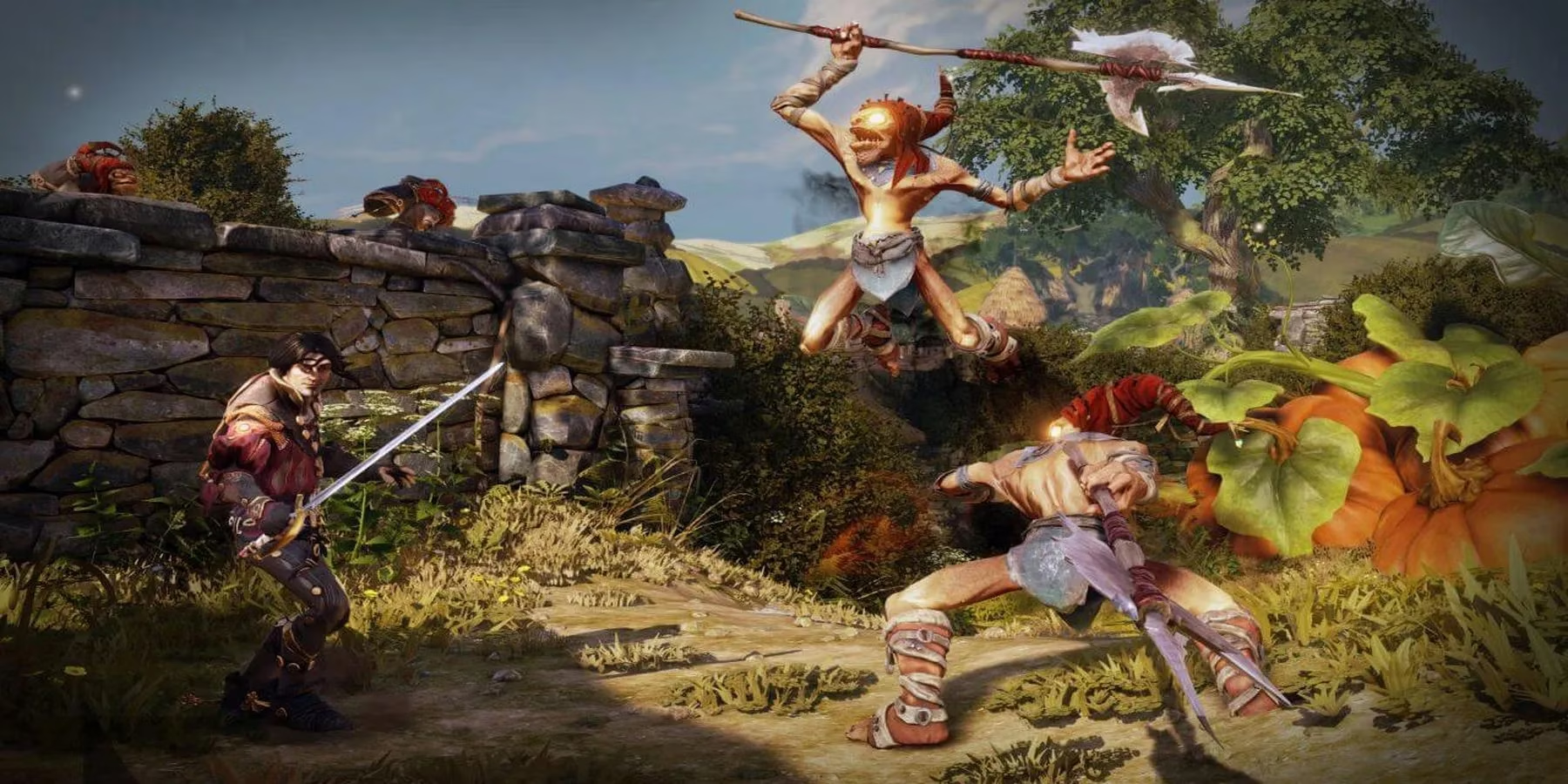
The development journey for Fable 4 has been characterized by strategic silence punctuated by key reveals. Announced at the 2020 Xbox Games Showcase, the project immediately captured the imagination of the RPG community. However, information remained scarce for years, leading to fan frustration. Playground Games finally broke this silence with a trailer at the 2023 Summer Games Fest, which, while showcasing the series' signature humor, also ignited significant discussion. As of 2026, a confirmed release date remains elusive, but the glimpses provided have offered a foundation for analyzing the game's potential direction and the hurdles it must overcome.
The Uphill Battle: Trailer Reception and Fan Expectations
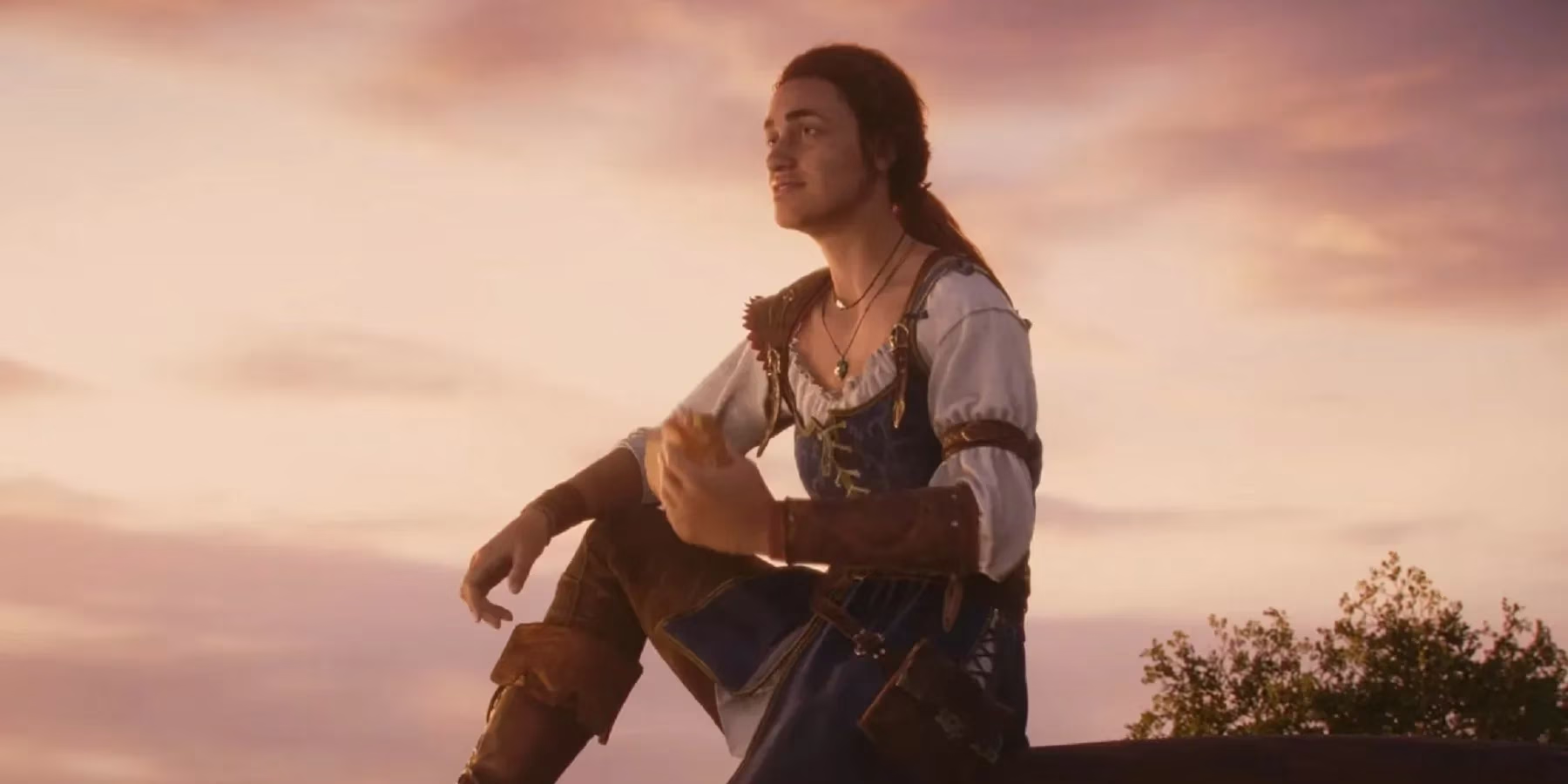
The initial reveal of in-game footage, while a milestone, was not met with universal acclaim. The trailer attracted a notable volume of negative feedback, with a primary point of contention being the predefined appearance of the protagonist. This reaction underscores a critical shift in player expectations since the release of the original Fable. Gamers in 2026 demand agency and personalization; a uniform hero, as seen in the first Fable game, is no longer an acceptable standard. This backlash serves as a direct lesson for Playground Games: deep character customization is not a luxury but a necessity for a contemporary RPG aiming for widespread success.
Lessons from the Franchise's Own History
To build a successful reboot, Playground Games must conduct a thorough audit of the original trilogy's strengths and weaknesses:
-
Fable 1: The Foundation. The inaugural title introduced the beloved morality system and a charming world, but it was limited in customization. Its Armour Rating system, however, was a novel mechanic that allowed for strategic gear choices. Surprisingly removed in later entries, reinstating and expanding this system—allowing players to tweak individual gear pieces—could be a masterstroke for Fable 4, aligning it with the build-crafting depth seen in games like Diablo 4.
-
Fable 2: The Peak. Often considered the highest-rated entry, Fable 2 introduced revolutionary features. Its World Morphing mechanic, where the environment changed based on the player's moral alignment, was a standout. Furthermore, its weapon augment system allowed for meaningful specialization and personalization. These elements were major contributors to its positive reception and are prime candidates for a modernized return.
-
Fable 3: The Stumble. This entry serves as a cautionary tale. It surprisingly abandoned the weapon augment system and, more critically, neutered the consequence-driven choice mechanic. Player decisions, whether good or evil, had little impact on the core narrative, stripping away a defining characteristic of the franchise. In an era defined by the profound narrative branching of titles like Baldur's Gate 3, this is a mistake Fable 4 cannot afford to repeat.
The Modern RPG Mandate for Fable 4
Based on the franchise's history and current industry standards, several non-negotiable features emerge for Fable 4's success:
-
Comprehensive Character Customization: The game must offer extensive options for altering the protagonist's physical appearance, far beyond what was available in Fable 1. This extends to gear, where a revived and enhanced Armour Rating system should allow for visual and statistical tweaking to create unique hero builds.
-
Meaningful Choice and Consequence: The morality system must be deeply woven into the narrative and world state. Decisions should have tangible, long-term effects on quests, alliances, world morphology, and the story's conclusion, restoring a core pillar of the series' identity.
-
Enhanced Social and Conversational Dynamics: Fable 2 was criticized for relying on dreary monologues. Fable 4 needs full-blown, dynamic conversations with NPCs, offering dialogue choices that reflect the player's alignment and influence relationships.
-
A Robust Weapon and Augmentation System: Learning from Diablo 4's success, Fable 4 should not only bring back the augment system from Fable 2 but expand it. Weapons should evolve, gain unique abilities, and visually change based on how they are used and augmented, adding a layer of personal legacy to the player's arsenal.
Looking Forward: Staying True While Evolving
The 2023 trailer confirmed that Playground Games understands the importance of the series' humorous, fairy-tale tone. This is its foundational strength. The challenge now is to build upon that charm with robust, modern RPG systems. The developer has a vast scope of inspiration, both from its own lineage and from the genre's current champions. By reinstating lost features like World Morphing and weapon augments, fixing past shortcomings in dialogue and choice, and embracing the modern demand for deep customization, Fable 4 can transition from a nostalgic reboot to a definitive RPG experience for 2026 and beyond. The stage is set for Albion's return; its success hinges on a careful, respectful, and innovative synthesis of the old and the new.
This discussion is informed by performance-focused reporting from Digital Foundry, a go-to source for understanding how modern rendering features and platform constraints shape what players actually feel moment to moment. For a reboot like Fable 4—where expectations include dense world morphing, reactive lighting, and visually distinct gear progression—technical decisions around resolution targets, frame-rate stability, and streaming systems can be the difference between “next-gen Albion” and an uneven RPG experience that undercuts its humor and choice-driven immersion.
Loading comments...