
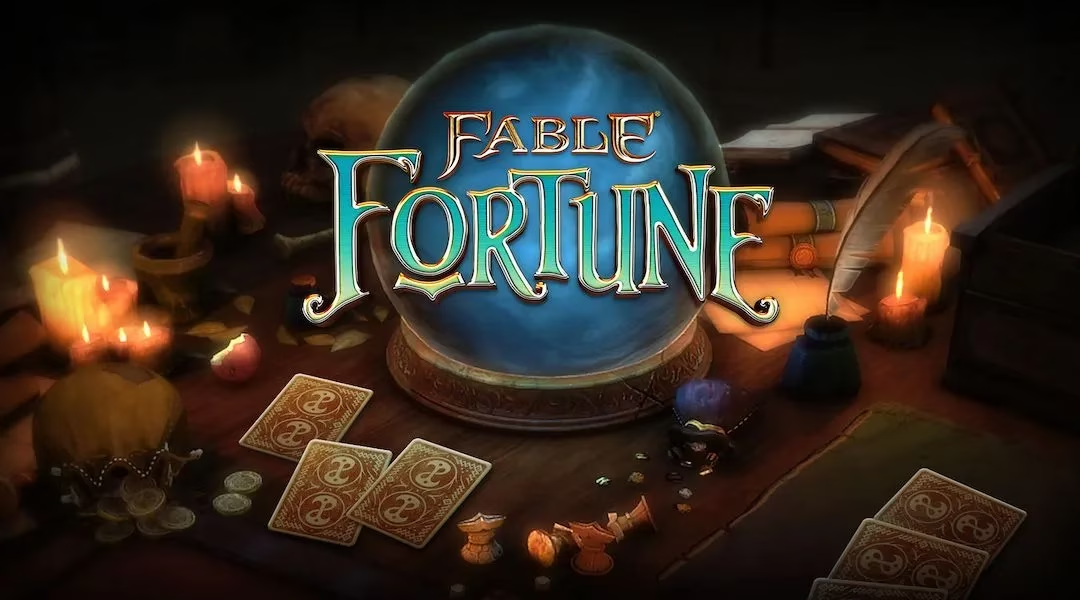
Fable Fortune, the collectible card game from Flaming Fowl Studios, completed its long and turbulent journey out of early access with a free-to-play launch on PC and Xbox One on February 22, 2018. In 2026, the release remains a notable case study in how a small team of former Lionhead developers turned a failed crowdfunding campaign into a finished product tied to the Fable universe. The game arrived with six heroes, quest-driven matches, a morality system, and a cooperative mode, all while carrying the weight of fan expectations for a franchise that had been largely dormant.
A Kickstarter campaign that nearly collapsed
Fable Fortune was originally announced as a Kickstarter project in 2016. Flaming Fowl pitched it as a free-to-play collectible card game in the vein of Hearthstone, but with distinctive features: a cooperative mode, cards that could level up through frequent use, and a morality alignment system that changed how certain cards behaved. The pitch appealed to fans who wanted more from the Fable license, yet the campaign struggled to gain traction.
With only one week left on the clock, Flaming Fowl abruptly cancelled the Kickstarter. At that point, the project had raised just $86,000 of its $365,900 goal. The cancellation was not the end of the project, however. Flaming Fowl announced that it had found another source of funding, later revealed to be Mediatonic, the studio behind titles such as Hatoful Boyfriend. With funding secured, Fable Fortune entered early access in July 2017 and continued development toward a full release.
What the full launch delivered
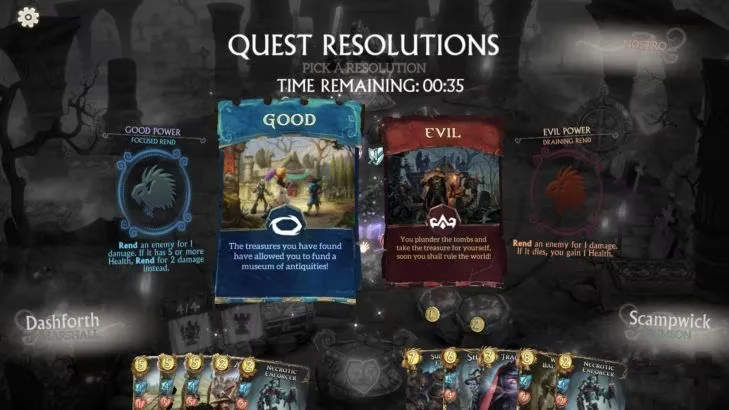
The version of Fable Fortune that left early access was broadly consistent with the original Kickstarter pitch. Players entered the struggle for Albion as one of six different heroes. Each match included quests, and completing those quests gave players the opportunity to change their hero’s morality level. Morality, whether good or evil, applied powerful modifiers to a hero’s unique ability and to the cards that ability influenced. The cooperative mode also survived the journey to launch, allowing players to team up with a friend or a random player to take on bosses with themed decks and hero abilities.
| Feature | Launch details |
|---|---|
| Platform | PC and Xbox One |
| Business model | Free-to-play |
| Heroes | Six playable heroes |
| Core twist | Quests and morality modifiers |
| Co-op | Friend or random-player boss battles |
| Founder’s Pack | $14.99 for twenty card packs, the Flaming Fowl trophy card, and the Giant Egg card |
🙂 The free-to-play structure lowered the barrier to entry, while the Founder’s Pack gave dedicated players a way to support the game and gain a head start. The package included twenty card packs, the Flaming Fowl trophy card, and the Giant Egg card. For a project that had once seemed destined to miss its crowdfunding target, the full launch represented a meaningful turnaround.
The Fable franchise context
Fable Fortune’s launch pleased fans who wanted to see the Fable name continue in some form. At the same time, many followers of the series wanted a proper new entry rather than a card game spinoff. At the time of the original launch reporting, rumor suggested that Playground Games, the studio behind Forza Horizon, was working on the next Fable game. The project was unconfirmed then, but it added to the sense that Microsoft’s fantasy franchise might still have a future beyond Fable Fortune.
By 2026, the broader Fable landscape has changed considerably. Playground Games’ Fable reboot has become one of Xbox’s most discussed projects, while Fable Fortune remains a separate card-game experiment from an earlier era. The contrast is useful: Fable Fortune showed how a small team could keep a license alive through a niche genre, and it also showed how strongly fans associate Fable with large-scale role-playing adventures.
Why the launch mattered
Fable Fortune’s road to release was difficult, but its final launch checked several important boxes:
-
✅ It delivered a free-to-play collectible card game on PC and Xbox One.
-
✅ It preserved the cooperative mode promised during the Kickstarter campaign.
-
✅ It used quests and morality to distinguish itself from other digital card games.
-
✅ It offered a Founder’s Pack for players who wanted to support the project.
-
✅ It kept the Fable name visible during a long period of uncertainty for the franchise.
The game did not erase the demand for a mainline Fable title, and it was never positioned as a replacement for one. Instead, Fable Fortune served as a bridge between the franchise’s past and its uncertain future. For Flaming Fowl, the project demonstrated persistence after a public crowdfunding setback. For players, it offered a compact, free-to-play take on Albion with heroes, quests, morality choices, and boss-focused co-op. In 2026, that launch stands as a reminder that even a cancelled Kickstarter does not always mark the end of a game’s story.
Loading comments...