
Fable Fortune strolled into 2017 with the confidence of a card shark wearing a hero's cape. Instead of another sprawling role-playing epic through Albion, the Fable brand dealt itself into the collectible card game tavern, where The Witcher had already parked Gwent and ordered a round. The pitch was simple enough for a village blacksmith to understand: take the Fable name, add cards, sprinkle in morality, and let players battle either against other humans or alongside a friend. In 2026, that launch window is ancient history, but the game's little identity crisis remains a charming piece of card-game trivia.
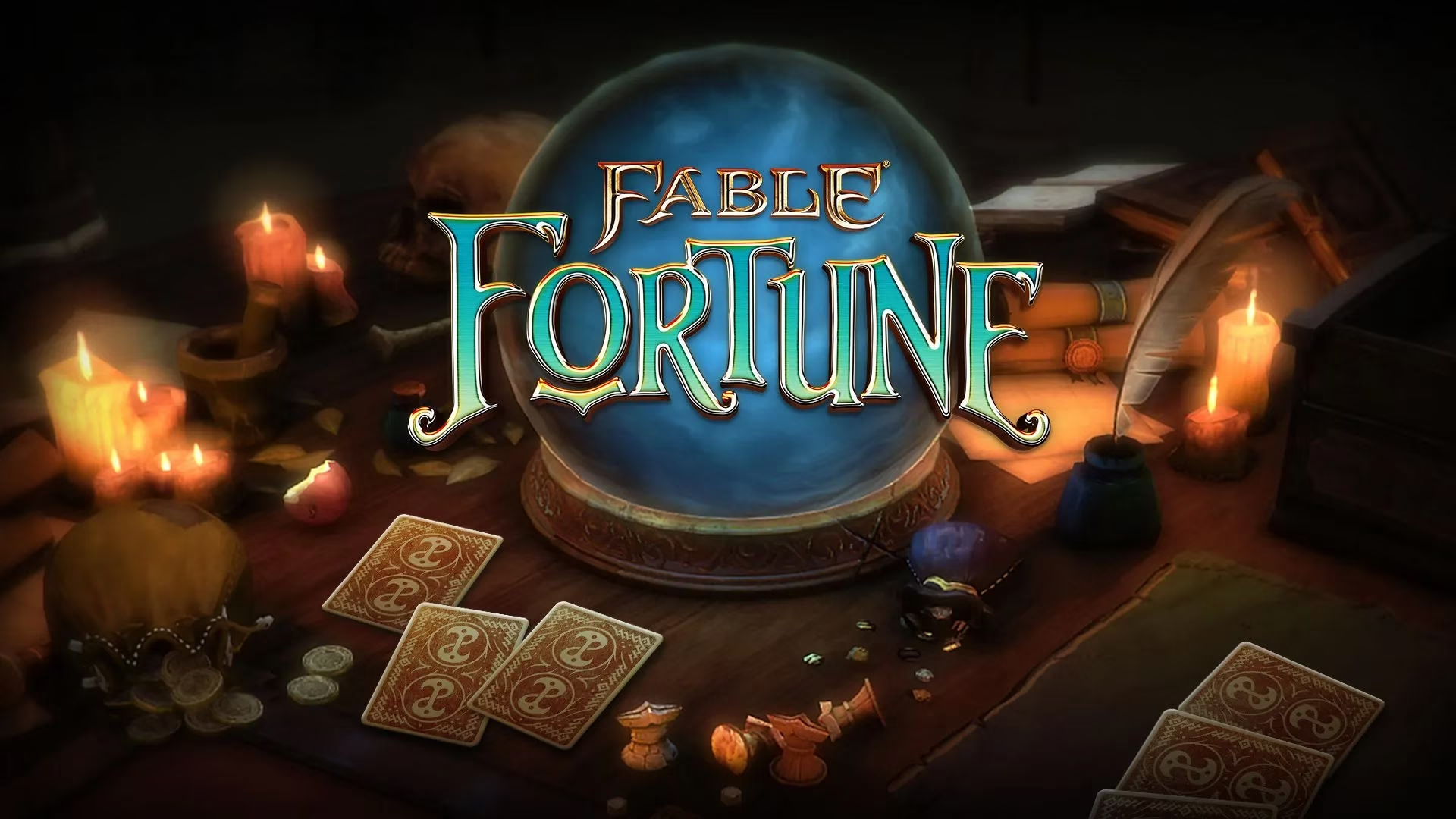
The original announcement gave Fable Fortune a July 11 release date on Xbox One and PC, with one very Fable-ish catch attached. Players who wanted in immediately could buy the Founder's Pack for $14.99. That wallet-based summoning ritual included instant access, twenty packs of cards, and some guaranteed rare cards. Anyone who preferred the noble path of not paying could wait for the free-to-play version, which was promised for later in 2017 with the sort of precise scheduling that makes a quest marker shrug. 😅
What made the game stand out from the usual card-slinging crowd was its good-versus-evil mechanic. During a match, a player could make choices that nudged their hero toward virtue or villainy, and those choices changed the hero's abilities. It was a morality slider with card sleeves. One moment a hero might be a shining defender of Albion; the next, they might be the sort of person who charges villagers a convenience fee for rescuing their chickens. The system gave each match a small role-playing heartbeat, which was a clever way to make Fable's oldest obsession feel at home in a genre built on decks, draw piles, and dramatic topdecks.
Fable Fortune also offered two ways to play: competitive PvP against other players and a co-op mode with a friend. That combination made sense for a franchise that had always enjoyed letting players choose whether to be a hero, a heel, or a hero with suspiciously sticky fingers. The card game was a Microsoft exclusive at the time, landing only on PC Windows 10 and Xbox One. It was not a grand new Fable adventure, but it was a different kind of trip through Albion, one where a player's biggest weapon might be a well-timed card rather than a sword the size of a door.
| Version | Price | What it offered | The catch |
|---|---|---|---|
| Founder's Pack | $14.99 | Immediate access, 20 card packs, guaranteed rare cards | The wallet had to act first |
| Free-to-play | $0 | Eventual access | Patience was a resource with a terrible drop rate |
For a 2026 reader, the important context is that this was a 2017 story, not a shopping tip. The calendar has left the building, and the launch details are best treated as historical loot. Back then, the free-to-play date was still an unknown later in 2017, which gave the whole arrangement a pleasantly chaotic “we'll know it when we see it” energy. The Founder's Pack was for the impatient and the collector-minded; the free-to-play route was for the patient and the budget-conscious. Both groups were essentially signing up to see whether Fable's morality system could survive contact with a deck-building economy. 🃏
It was also a reminder that every popular franchise eventually eyes the card table. Gwent had shown that a mini-game could escape its parent RPG and become a full competitive pursuit. Fable Fortune tried a similar trick, but with its own twist: the cards were not just about creatures and spells; they were about who the hero was becoming. A player could pivot from paladin-adjacent to petty villain in the middle of a match, and the hero's powers would follow. That is a genuinely funny idea, because most card games ask players to build a deck, while Fable Fortune asked them to build a reputation and then possibly wreck it before dessert.
The game's exclusivity also kept its audience neatly fenced. PC Windows 10 and Xbox One meant Microsoft's garden was the only place to play, which was either a cozy clubhouse or a locked gate depending on a player's platform loyalty. By 2026, the digital storefront landscape has changed so much that the 2017 wording feels like a message from a slightly different dimension. Still, the core pitch remains easy to picture: heroes, choices, cards, and the eternal question of whether to be good, evil, or just annoyingly lucky with a rare draw. ⚔️
In the end, Fable Fortune is a curious footnote in the Fable story and a nostalgic curiosity for card-game fans who remember when every franchise wanted its own Gwent. It promised morality-driven hero abilities, PvP, co-op, and a Founder's Pack that came with twenty packs and a few guaranteed rares. The free-to-play version was meant to follow later in 2017, with a date that was, at announcement time, hiding behind a quest marker. A 2026 player can look back and smile at the ambition: Albion tried to shuffle itself into a card game, and for a brief moment, the fate of a hero depended on both moral choices and a decent opening hand. 🎲
Loading comments...