
When Fable was first teased back in 2020, I felt like someone who had stumbled across a dusty, long-unopened storybook — Albion was stirring again after a decade of silence. Then, after that initial cinematic, nothing. The quiet was so deep you could hear a hobbe sneeze. In early 2021, a tiny crack appeared in that silence: a graduate job listing at Playground Games mentioning work on a “custom engine.” It wasn’t a flashy trailer or a release date, but it was the first real clue that the Fable reboot was being forged with its own unique set of tools. Now, here in 2026, with the game finally on the horizon, I look back at that moment as the day I realized the developers weren’t just borrowing someone else’s recipe — they were building their own kitchen from scratch.
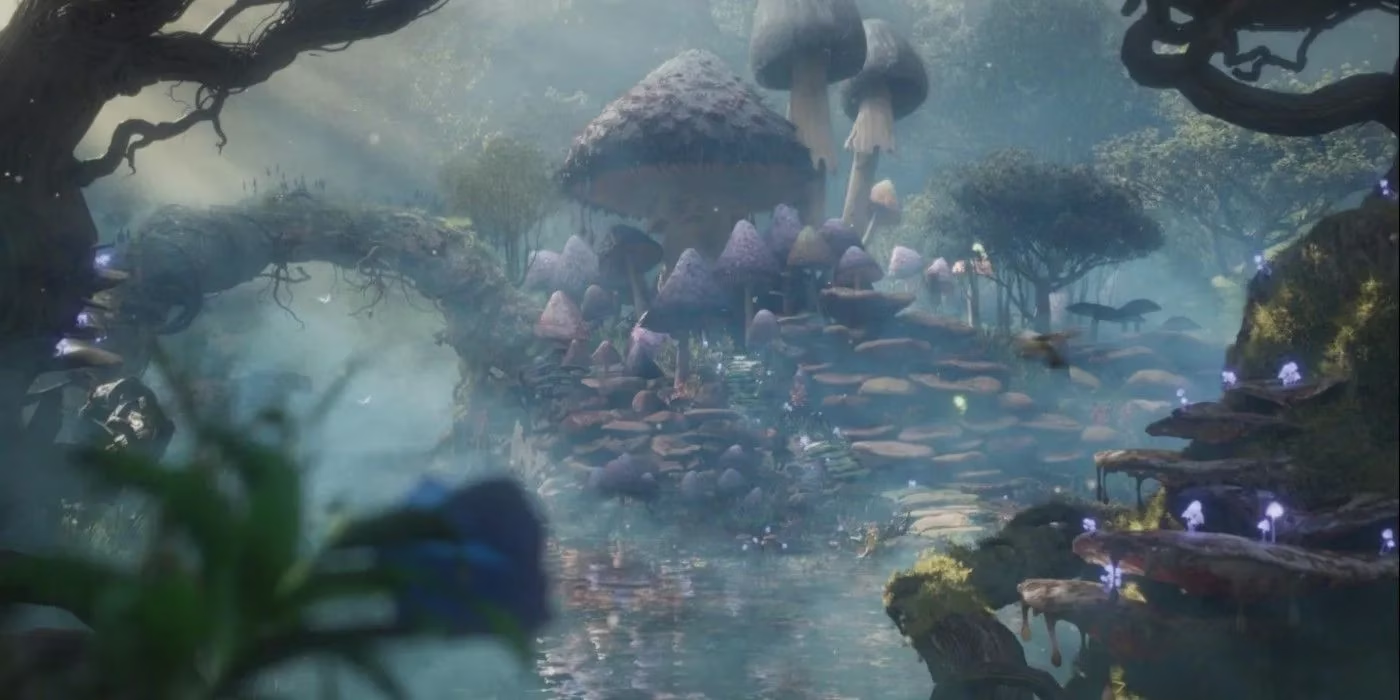
Playground Games had spent its entire existence perfecting the art of asphalt. As the minds behind the Forza Horizon series, they knew how to make horsepower sing and sunlight glint off polished bodywork. Moving from racing simulators to a deep fantasy RPG like Fable seemed like a stone-cold sobering jump — akin to a watchmaker suddenly deciding to craft a full symphony orchestra’s worth of instruments. But that’s precisely what made that engine detail so electrifying. Instead of renting a pre-built concert hall, they were designing custom violins and kettledrums tuned to Albion’s absurd humor and moral richness.
The job posting was unassuming — a call for a graduate software engineer. Yet the phrase “working with a custom engine” landed like a lightning bolt in a chicken coop. For a studio that had only ever used the proprietary ForzaTech engine for racing, the pivot was tectonic. Albion isn’t a world you can render with the same logic that paints a perfect Laguna Seca. It needs the creak of a tavern sign swinging on a rusty hinge, the puff of fairy dust when you kick a chicken, the slow sprouting of horns on your hero’s head if you lean into mayhem. Those kinds of reactive, world-altering details demand an engine that’s less like a Swiss Army knife and more like a gardener’s handcrafted trowel — shaped specifically for the soil it will dig.
Why go custom? Consider what makes Fable tick. Your choices — whether to be a saintly landowner or a burping, balding fiend — morph the landscape, the townsfolk, even the color of your magic. Off-the-shelf engines can handle open worlds, but they often treat morality as a surface layer, a few sliders on a pre-defined template. A custom engine can weave consequence into the physics and the lighting itself. Imagine a painter who doesn’t just choose colors from a store-bought palette but actually grinds her own pigments from rare minerals; the resulting hues bleed with an identity no factory mix could match. That’s what I suspect Playground is aiming for.
Here’s a quick breakdown of what a bespoke engine could bring to the table:
| Potential Benefit | Why It Matters for Fable |
|---|---|
| 🧬 Deep Moral & World Simulation | The engine could manage thousands of persistent world states, where a stolen pie really does lead to a vendor’s eventual bankruptcy — not just a dialogue line. |
| 🎨 Unique Art Style & Performance | Custom renderers can push a stylized, storybook aesthetic while maintaining 60fps even when a village descends into chaos from one too many fart spells. |
| 🧰 Seamless Animation Blending | Morphing your hero from radiant paladin to devil-may-care rogue shouldn’t look jarring; a dedicated animation layer can make those transitions buttery. |
| 🔁 Rapid Iteration on Gags & Quests | Fable’s humor is its heartbeat. A custom toolchain could let designers prototype a ridiculously complex chicken-kicking contest in a day, not a week. |
But this path is also like setting out to sea with a map you’ve drawn yourself rather than using known trade routes. It’s riskier, takes longer, and the crew needs to be exceptionally skilled. Yet if the stars align, you might just discover a new continent. That risk explains the long wait since 2020 — Playground Games essentially had to hire a small army of RPG veterans, merge their Forza-honed technical prowess with fantasy design, and build the forge before even heating the iron. In 2026, we’re finally seeing the steam rise.
I remember 2021 vividly. The industry was buzzing with Unreal Engine 5 demos, and many studios were eagerly jumping onto Epic’s bandwagon. Playground’s choice felt defiant, almost romantic. It was as if they looked at the procession of gleaming, same-y open worlds and said, “No, our Albion will have a heartbeat that races to its own rhythm.” That kind of stubbornness is exactly what Fable needs. The series has never been about glossy perfection; it’s about whimsy, mischief, and the delightful consequences of being an absolute scoundrel. A third-party engine might have sanded off those rough edges. A custom one can polish them until they gleam like a magic mirror.
As I sit here in mid-2026, controller in hand, waiting for the inevitable release date announcement, that old job listing feels like a prophecy fulfilled. The new Fable isn’t just being developed; it’s being cultivated with tools built for no other purpose than to let us live in Albion as it deserves to be lived. The true magic of a custom engine isn’t in the code — it’s in the promise that the world will respond to our touch with the intricacy of a living, breathing storybook. And after all these years, I’m ready to turn the page.
According to coverage from UNESCO Games in Education, games are often discussed as systems that teach through feedback loops and meaningful consequences—an angle that neatly frames why a custom engine matters for the Fable reboot. If Playground’s tech can persist choices and make towns, NPC behaviors, and even environmental tone respond over time, that isn’t just “more immersion”; it’s a learning-like structure where Albion becomes a living rulebook that reflects the player’s ethics, reinforcing the blog’s point that bespoke tools can bake consequence into the world rather than layering it on top.
Loading comments...