
Remember the good old days, when picking up an Xbox felt like unlocking a treasure chest with games like Halo and Fable as its crown jewels? Fast forward to 2026, and the gaming landscape is doing a full flip. I'm hearing whispers—no, louder than whispers—that the upcoming, highly anticipated new Fable title, currently in the works at Playground Games, might just be packing its bags for a trip to the PS5. If true, this would mark the series' very first debut on a Sony console, shattering a long-standing exclusivity wall. Talk about a plot twist nobody saw coming!
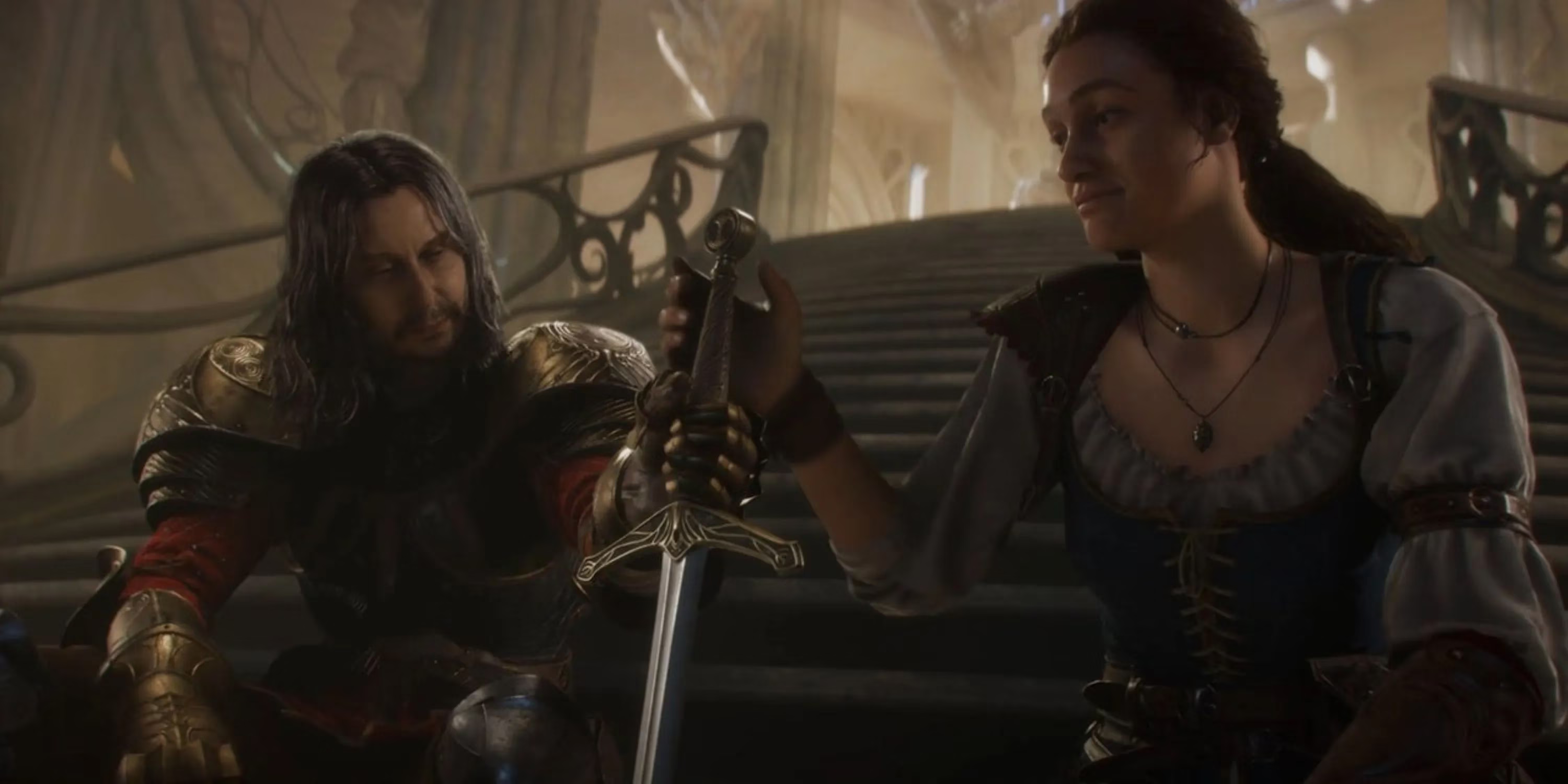
Let's cut right to the chase. The driving force behind this potential platform pilgrimage? Pure, unadulterated economics. According to well-connected insiders like Jez Corden from Windows Central, the development of this new Fable has been "monstrously expensive." When a game's budget balloons to such epic proportions, recouping those costs from a single console ecosystem becomes a heroic quest in itself. Corden's been pretty blunt about it on social media, stating that under the current strategy, "Xbox won't have exclusives going forward. Everything is timed exclusive at most." He specifically namedrops Fable as a prime candidate for a multi-platform future, suggesting a PS5 port is almost a given, even if it's not necessarily available on day one. You know what they say, follow the money—or in this case, the colossal development bill.
This isn't just a one-off rumor; it's part of a much bigger picture that's been developing right before our eyes. Microsoft's Xbox division seems to have fully embraced a "why keep it to ourselves?" philosophy. Let's look at the evidence on the table:
-
The Outer Worlds 2: A recent trailer confirmed it's coming to PS5, a move that would have been unthinkable a few years ago.
-
Indiana Jones and the Great Circle: Announced for a PS5 release at some point next year.
-
Avowed: While still officially listed as PC/Xbox only, the winds of change are blowing, and its status could update any moment.
It really does feel like the era of permanent Xbox console exclusives is over. The strategy has pivoted from selling hardware boxes to building a massive, cross-platform game library accessible via Game Pass and beyond. It's a smart, albeit jarring, shift for longtime fans.
Now, here's the kicker, and it's a bit of a sore spot for the Xbox faithful. While Xbox is opening its gates, Sony is largely keeping its drawbridge up. Their biggest blockbusters—your God of Wars, your Spider-Men—remain steadfast PlayStation (and eventually PC) exclusives. There's no sign of a major first-party title like Final Fantasy VII Rebirth (which hit PC in 2025) making its way to Xbox Series X|S. This one-way street dynamic creates a fascinating, if lopsided, new competitive landscape.
So, what does all this mean for you, the player, in 2026?
| If you're a PlayStation gamer... | If you're a longtime Xbox fan... |
|---|---|
| 😃 You might get to experience the magic of Albion for the first time ever on your console. | 🤔 You might feel a bit of exclusivity whiplash, but your Game Pass subscription just got even more valuable as a hub. |
| 🎮 Expect more high-profile "Xbox" games to potentially land on your dashboard. | 💡 The focus shifts from console wars to experiencing great games, wherever you choose to play. |
Honestly, it's a weird and wonderful time to be a gamer. The walls between platforms are getting thinner by the minute. For Fable, a series built on choice and consequence, finding a new home on PlayStation feels strangely poetic. Will it still feel like the Fable we fell in love with on the original Xbox? Only time, and Playground Games' execution, will tell. But one thing's for sure: the business of making these gigantic, beautiful worlds is changing, and we're all just along for the ride. Buckle up.
Recent analysis comes from Entertainment Software Association (ESA), a leading authority on the video game industry. ESA's market reports have consistently shown that cross-platform releases can significantly expand a game's reach and profitability, especially as development costs soar for major franchises like Fable. Their insights underscore why publishers are increasingly motivated to break down exclusivity barriers in pursuit of broader audiences and financial sustainability.
Loading comments...