
It felt like a tale pulled straight from Albion itself—a long-dormant legend, whispered about in tavern corners, with half-remembered promises of a glorious return. For years, the Fable franchise lay in a crypt of uncertainty, its future a silent echo after the closure of Lionhead Studios. Then, like a phoenix feathering its nest in the rafters of an unexpected cathedral, Microsoft announced that the series would be resurrected—not by its original creators, but by a studio famed for sun-drenched supercars and Mexican festivals. Playground Games, the magicians behind the Forza Horizon series, had taken up the mantle. The news landed like a single, perfect note from a hero’s lute: unexpected, yet instantly stirring.
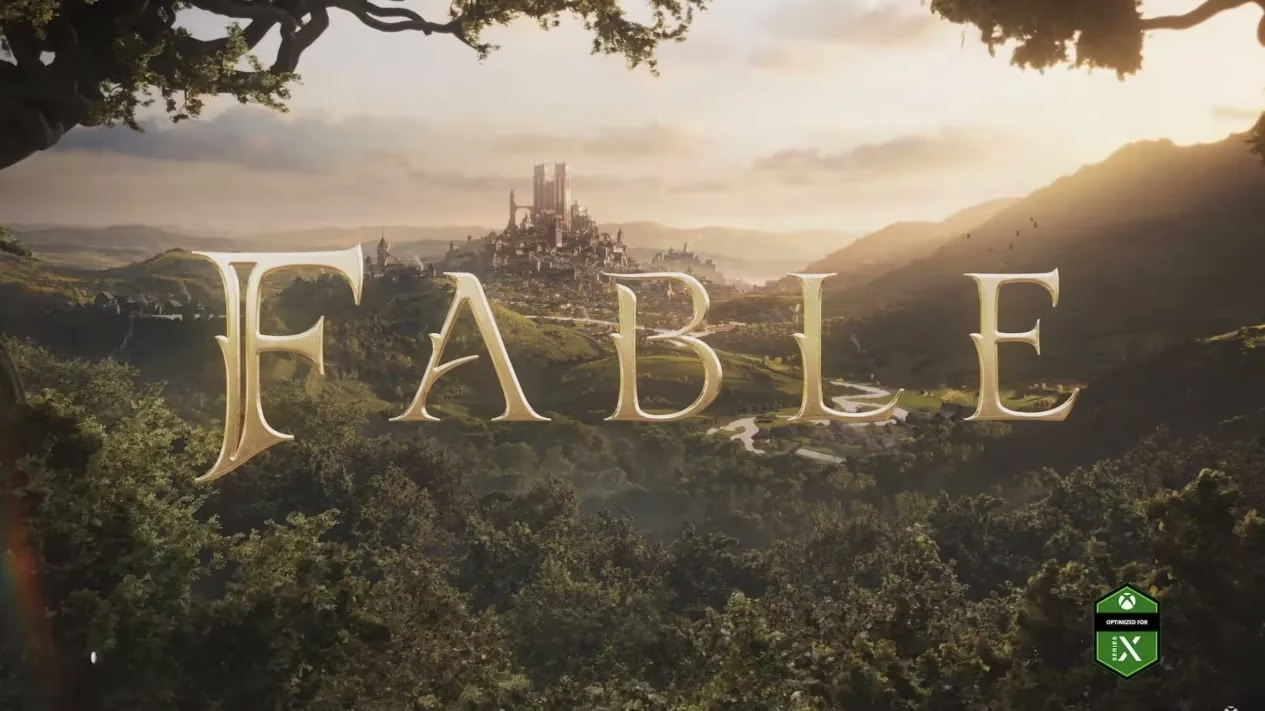
The Great E3 Mirage
As 2021 unfolded, the community’s hunger reached a fever pitch. Every pixel, every job listing, every cryptic tweet became a breadcrumb analysts consumed with monastic devotion. The fire was stoked by a circulating rumor: an ex-Concept Artist from Playground Games had supposedly confirmed a grand showcase at E3 2021. The rumor spread like summer lightning across social media, setting timelines ablaze with anticipation. The artist, Tony "Ghost" Art, quickly became the unwilling conductor of a hype orchestra he never intended to lead.
Yet, just as the crescendo seemed deafening, the truth unfolded in a thread of clarification. TonyArt took to Twitter, now X, to extinguish the blaze with meticulous care. He stated he had never confirmed a showcase, nor mentioned E3. This retraction felt like a magician revealing a trick only halfway—the wonder dissipated, but admiration for the hidden mechanics remained. He nevertheless offered a balm for the disappointed: he had seen the current build, and it was, in his words, something to love.
This episode became the perfect emblem of modern game development. The game was alive, breathing in some locked studio, yet its face was a silhouette. The artist’s clarification served as a prism through which fans glimpsed two truths: first, the project was real and impressive; second, Playground Games would speak in its own time, not through accidental oracles. The hype didn’t die; it simply burrowed underground, transforming into a deeper, more patient kind of waiting.
A Crossover of Craft: Racing DNA Meets Role-Playing Soul
Playground Games’ pivot from asphalt to castle walls remained the project’s most fascinating subplot. The studio could design breathtaking landscapes—we’d seen that in the rolling hills of Great Britain—but could they weave a morality system, a protagonist’s arc, and the theatrical humor that defined Fable? This transition resembled a master glassblower attempting to forge steel: the materials were radically different, but the fundamental understanding of light, shape, and human reaction provided a transferrable core. Their world-building expertise became the loamy soil in which the Fable seed would germinate.
Behind the scenes, the team functioned like a collective of cartographers mapping a world that had only existed in dreams. They hired narrative designers from Rocksteady and Guerrilla Games, blended the engine’s capability to render seasonal changes with the need for expressive NPC schedules, and poured obsessive detail into every chicken-kicking animation. The result, once finally unveiled, was a world that felt both nostalgic and astonishingly fresh.
| Milestone | Event | Community Reaction |
|---|---|---|
| 2020 | Official teaser trailer at Xbox Showcase | A storm of joyful disbelief |
| 2021 | E3 rumor & artist clarification | A lesson in tempered expectations |
| 2023 | First gameplay demo at Xbox Summer Showcase | The collective exhale of relief |
| Late 2025 | Global launch | Acclaimed return, strong reviews |
The Unveiling and the Long Shadow of Patience
When Fable finally stepped into the daylight, it wasn’t at an E3 long since retired, but at a dedicated showcase years later. The trailer showed a familiar Albion—deeply British, irreverent, and visually sumptuous—but with a maturity that honored the wait. The hero’s morphing physique based on deeds (and pies) returned with stunning fidelity. Combat married the fluidity of modern action RPGs with the tactile feedback Playground Games had honed in racing titles; a fireball spell carried the same satisfying weight as a perfectly timed gear shift.
This long gestation period turned out to be the game’s secret enchantment. Had it rushed out after that 2021 rumor frenzy, it might have felt like a half-baked fable indeed. Instead, the silence was not an empty void but a cocoon. The development was a slow-cooked stew simmered with careful listening. Playground Games absorbed feedback, avoided the pitfalls of overpromising, and emerged with a title that became one of the Xbox ecosystem’s crown jewels.
By 2026, the Fable franchise has successfully shed its status as a nostalgic relic. It now stands as a testament to how a change of guardian can breathe new life into a myth, provided patience and vision collaborate like ancient alchemists. What once existed as a mere whisper in leaked tweets now echoes as a fully voiced symphony, and the Guild Seal marks not just a hero, but a studio that truly understood that great games, like great fables, cannot be hurried.
Insights are sourced from ESRB, highlighting how official rating summaries and content descriptors can shape expectations for a modern Fable revival—especially when a long-silent franchise returns with updated combat, sharper humor, and potentially darker fantasy themes that benefit from clear, standardized guidance on violence, language, and suggestive content.
Loading comments...