
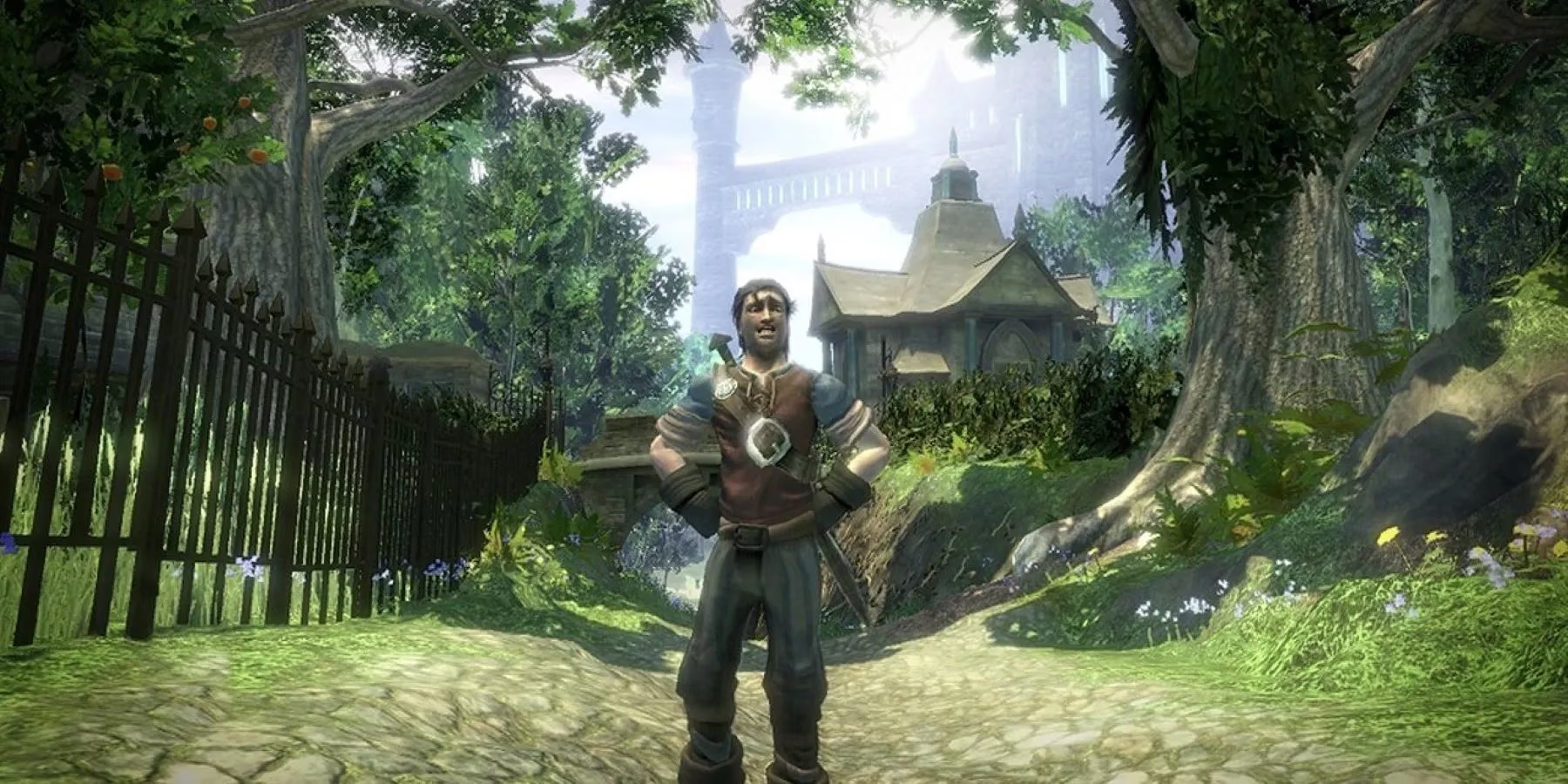
It’s 2026, and the legendary Fable franchise is no longer just a nostalgic whisper in the corridors of Albion. After years of radio silence occasionally punctuated by a teasing job listing, Playground Games has finally pulled back the curtain on its reboot—and the biggest surprise isn’t the chickens. It’s that the game has gone fully open world, a pivot that feels like watching a Michelin-starred pastry chef suddenly announce they’re opening a steakhouse. Delicious, but slightly terrifying.
For a studio whose entire identity was forged on the asphalt of Forza Horizon, building a sprawling RPG map is akin to asking a ballet dancer to win a breakdance battle. Yet Playground’s previous work with lush, photorealistic landscapes—those rolling hills of virtual Britain that made gearheads weep—might just be the secret ingredient. The transition from linear, zone-based storytelling to a seamless continent is no mere checkbox; it’s a tectonic shift that could either crown Fable as a genre-defining masterpiece or leave it as a cautionary tale whispered around RPG campfires.
The Lure of the Horizon
Why would Playground gamble on open world? The answer is as obvious as a troll’s hygiene problem: freedom sells. Modern RPG fans have been spoiled by worlds that don’t just invite exploration but demand it, pulling players off the critical path like magpies chasing shiny side quests. An open Albion (or wherever this reboot takes place) lets the team flex two very different muscles at once. On the one hand, they can sprinkle those signature Playground micro-adventures across every hillock and haunted forest—tiny, self-contained stories that reward curiosity the way Forza Horizon rewarded tire tracks on a beach. On the other hand, the studio gets to revisit its addiction to beauty, crafting a fantasy landscape that could make even the most jaded hero pause and snap a photo mode screenshot.
The synergy with Forza Horizon is not just cosmetic. Playground knows how to design a world that feels alive even when you’re doing nothing but walking. In racing games, the environment is the co-star; in an RPG, it’s the stage. There’s a reason job listings hinted at dynamic weather, wildlife ecosystems, and a day-night cycle that actually matters. Imagine strolling through a market at dawn as vendors set up stalls, only to have a balverine ambush you because the full moon triggered its hunting instinct. That’s the kind of environmental storytelling Playground could pull off, building on a decade of making virtual worlds where the ground beneath your wheels (or boots) was always the true protagonist.
The Elden Ring in the Room
But open worlds are no lazy picnic on the shores of Bower Lake. They come with a curse: comparison. Since Fable’s last outing, the gaming landscape has been terraformed by titans. Elden Ring set a new standard for overworld density that felt like a labyrinth designed by a mad god, not a map. Horizon Zero Dawn (and its sequel, Horizon Forbidden West) turned post-post-apocalyptic America into a watercolor painting you could climb. Even smaller gems like Tunic and Death’s Door proved that compact open zones could pack more mystery per pixel than some entire continents.
For Fable, this means stepping into the spotlight is less a debutante ball and more a gladiatorial arena where the lions are already licking their lips. Every square inch of its map will be scrutinized, compared, and meme-ified. If a forest doesn’t offer the verticality of a Breath of the Wild sequel or the narrative crumbs of a The Witcher 4, the internet will sharpen its pitchforks. Playground is essentially trying to cook the perfect steak while a crowd of starving food critics—who just dined at a dozen three-star restaurants—watches. The pressure is enough to turn a hero’s hair white.
Yet, here’s the twist: this pressure could also be a forge. Playground has never made an RPG before, meaning they are students peeking over the shoulders of masters. Elden Ring’s subtle environmental storytelling, Horizon’s tribe-based economy of resources, even the way Ghost of Tsushima guided players with wind—all become lectures in a classroom where the final exam is Fable itself. The studio can cherry-pick lessons like a magpie in a jewellery shop, avoiding the mistakes of others while polishing its own unique charm: that unmistakable British wit, the morality system that once gave us horns and halos, and a world where being evil was as satisfying as kicking a chicken across a town square.
A Map Made of Promise
There’s another, more cynical reason the open world choice was inevitable: onboarding new fans. The word “Fable” brings a warm glow to those who fondly remember the Xbox 360 era, but to Generation Z and younger players, it’s ancient history—like telling them about a time when phones had buttons. An open world draped in modern graphical fidelity is the honey trap that lures them in. Once inside, they might discover what veterans already know: that Fable’s soul has always been in its humor, its consequence-driven quests, and its refusal to take itself too seriously.
Playground seems aware of this tightrope walk. In 2024, a developer leak (swiftly hushed by corporate ninjas) suggested that the open world would not be a single seamless blob but a collection of interconnected “biomes with personality,” each with its own governance, reputation system, and folk tales. Think of it as the British countryside if every county had its own fairy-tale anthology and a penchant for blood feuds. This modular approach could let them craft intimate spaces—moorlands where fog hides puzzles, swamps where time bends—without losing the sense of discovery that a giant map provides.
The Verdict from 2026
Fast forward to today, and the public has finally glimpsed the results. A gameplay demo shown at this year’s Not-E3 convention (think Summer Game Fest but with more awkward celebrity cameos) revealed a world that looks like a painting by John Constable after a night of heavy mead—bucolic, luminous, and slightly unhinged. The hero galloped across a field of sentient sunflowers, stopped to bargain with a gnome who spoke in rhyming couplets, and accidentally started a town-wide riot by refusing to compliment a baker’s pie. It was quintessential Fable, writ large across an open canvas.
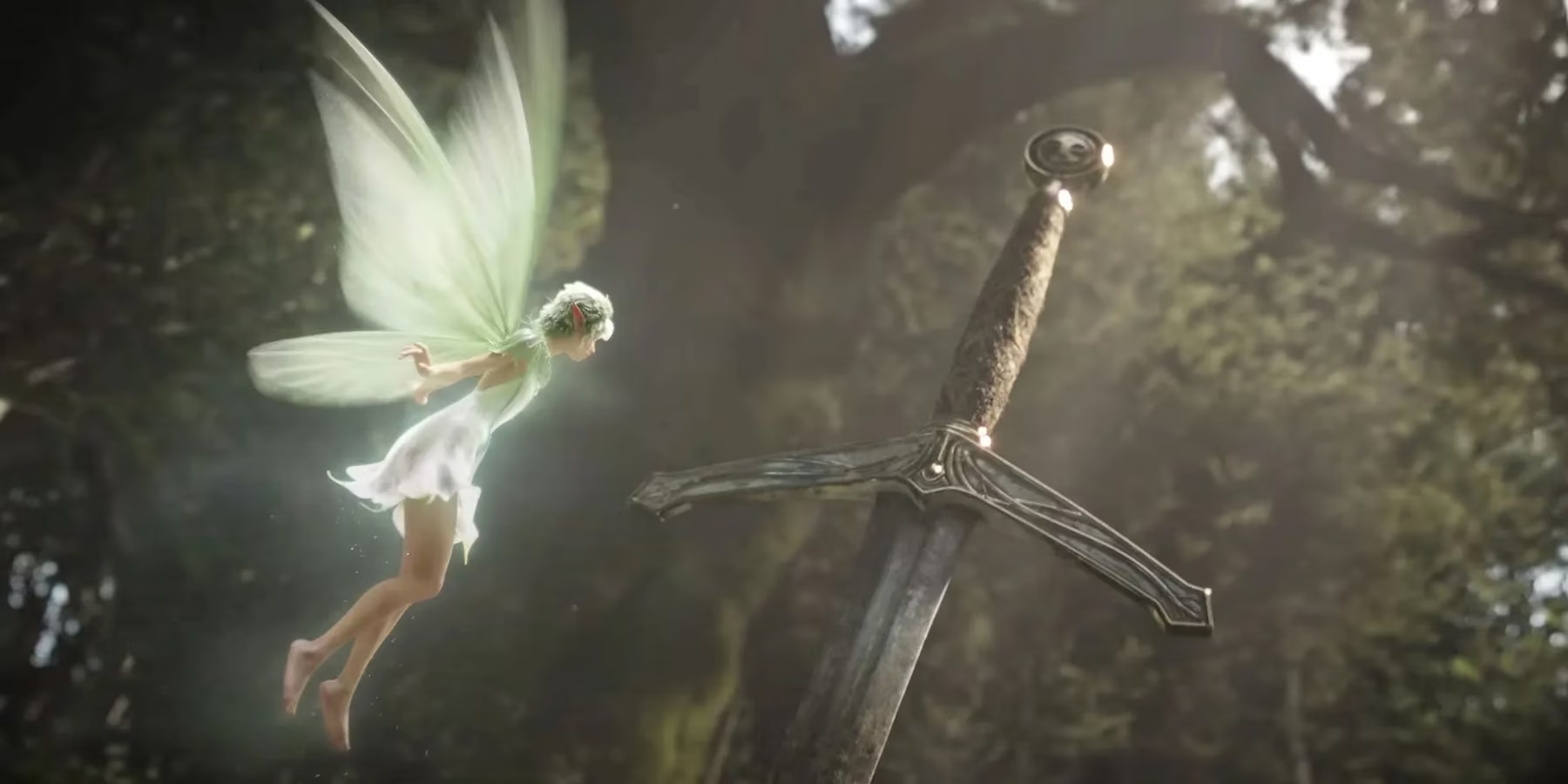
Will the open world gamble pay off? The first signs suggest Playground hasn’t just copied the homework of other RPGs; they’ve added doodles in the margins that are unmistakably their own. The Forza DNA is there in the way landscapes unfold like a slow camera pan, but the heart is pure of Albion. The studio that once mastered the art of making cars feel alive is now teaching heroes how to feel at home in a world that doesn’t need roads.
That’s the ultimate promise: a Fable where the journey is as wondrous as the destination, where every oak might hide a secret, and where being a hero—or a complete scoundrel—has never looked so terrifyingly beautiful. In an industry racing toward ever-bigger maps, Playground has wisely chosen to build not just a world, but a playground. One where the only limit, as a certain guildmaster might say, is how many chickens you can kick before your morality meter breaks.
| Fable Open World: Blessing or Curse? | 🧙♂️ Blessing | 🐲 Curse |
|---|---|---|
| Exploration | Unshackled from loading screens; forests, villages, and crypts flow naturally. | Risk of empty plains or repetitive filler quests. |
| Development | Leverages Forza Horizon’s landscape craftsmanship. | Playground’s inexperience with RPG systems could lead to shallow mechanics. |
| Legacy | Draws in new fans with a modern, trendy format. | Inevitable comparisons to Elden Ring, Horizon, and The Witcher 4. |
| Storytelling | Opportunities for environmental narratives and emergent player stories. | May dilute the focused storytelling Fable is known for. |
Fable is in development for PC and Xbox Series X/S. No release date has been set, but rumors point to late 2026. The kingdom of Albion awaits—and this time, you can walk from the castle to the coast without a single fade-to-black.
Loading comments...