
In the vast landscape of video games, where epic quests and world-saving narratives often take center stage, there exists a peculiar and delightful breed of side activity: the minigame. Designed as brief diversions, these playful snippets offer a moment of levity from grander adventures. Yet, a select few of these seemingly simple games harbor a secret—they possess no true endpoint. For players who find themselves captivated, these activities offer a theoretical eternity of engagement, a digital siren's call that whispers, "Why save the world when you can play forever?"
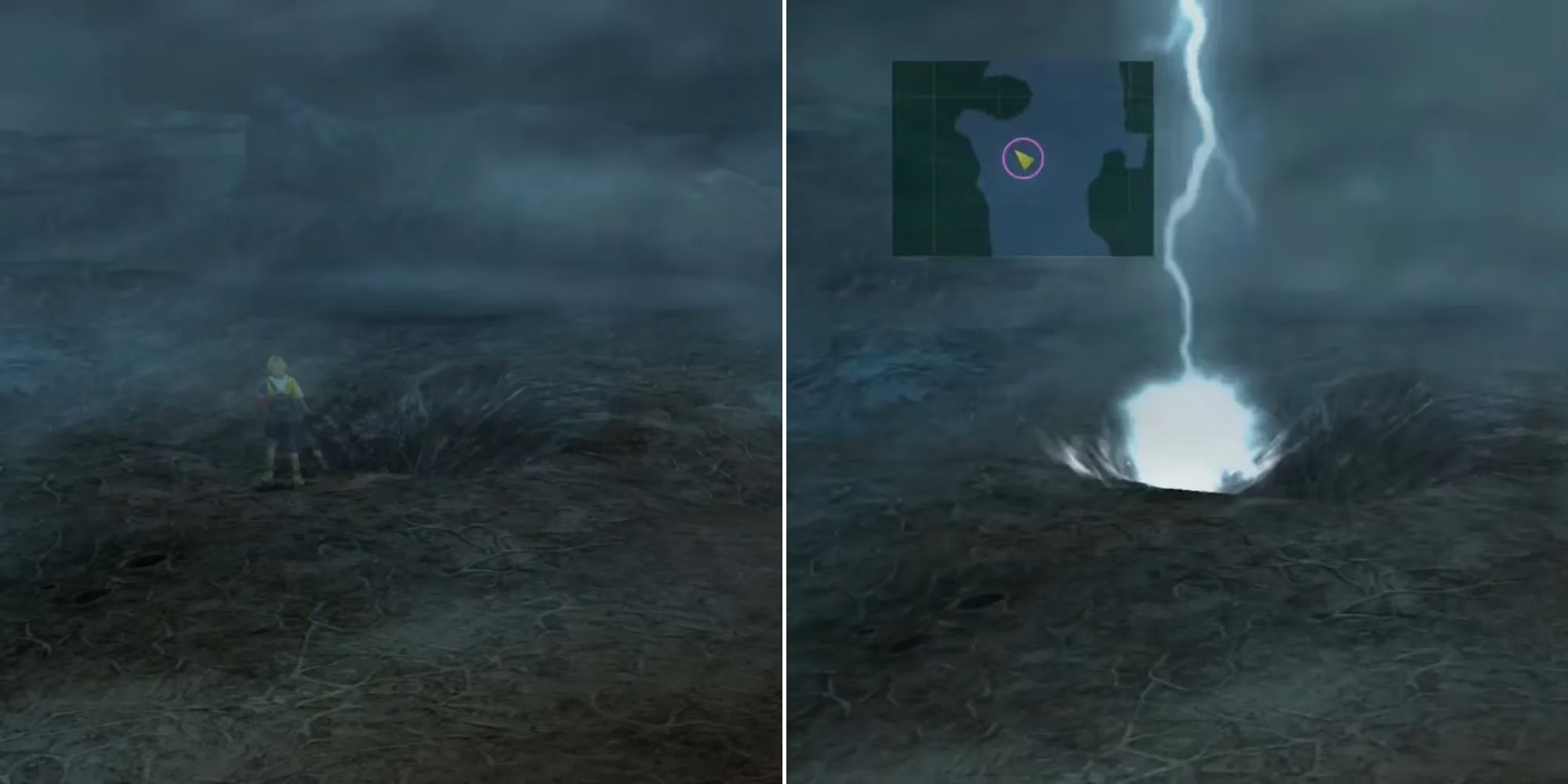
The realm of Spira in Final Fantasy 10 is under constant threat from a monstrous entity known as Sin. Tidus and Yuna's journey to bring the Calm is one of gaming's most poignant tales. However, nestled within the Thunder Plains is a challenge that completely disregards the impending doom: the Lightning Dodger. Here, players must navigate a field, evading random lightning strikes. The game officially rewards you for reaching 200 consecutive dodges with a powerful item. But then... it simply continues. No fanfare, no final screen, just the ever-present danger of a digital bolt from the blue. The game's systems impose no hard stop, allowing a dedicated (or perhaps obsessive) player to dodge indefinitely, transforming from a sphere-blitzing hero into a perpetual storm-dancer for reasons known only to them.
While one hero dodges lightning, another strums for coin. In Fable 3, you play a revolutionary aiming to overthrow a tyrannical monarch. Raising funds for your rebellion is crucial, and what better way than becoming a musical sensation? The Lute Hero minigame is a rhythm-based performance where you play tunes for townsfolk. The gold flows with your skill, and remarkably, your character never tires. The lute's strings can be plucked for virtual days on end, the kingdom's urgent plight seemingly paused as you master your chord progressions. The tyrannical king, it seems, is a patient man, willing to wait for the revolution to finish its sold-out tour.
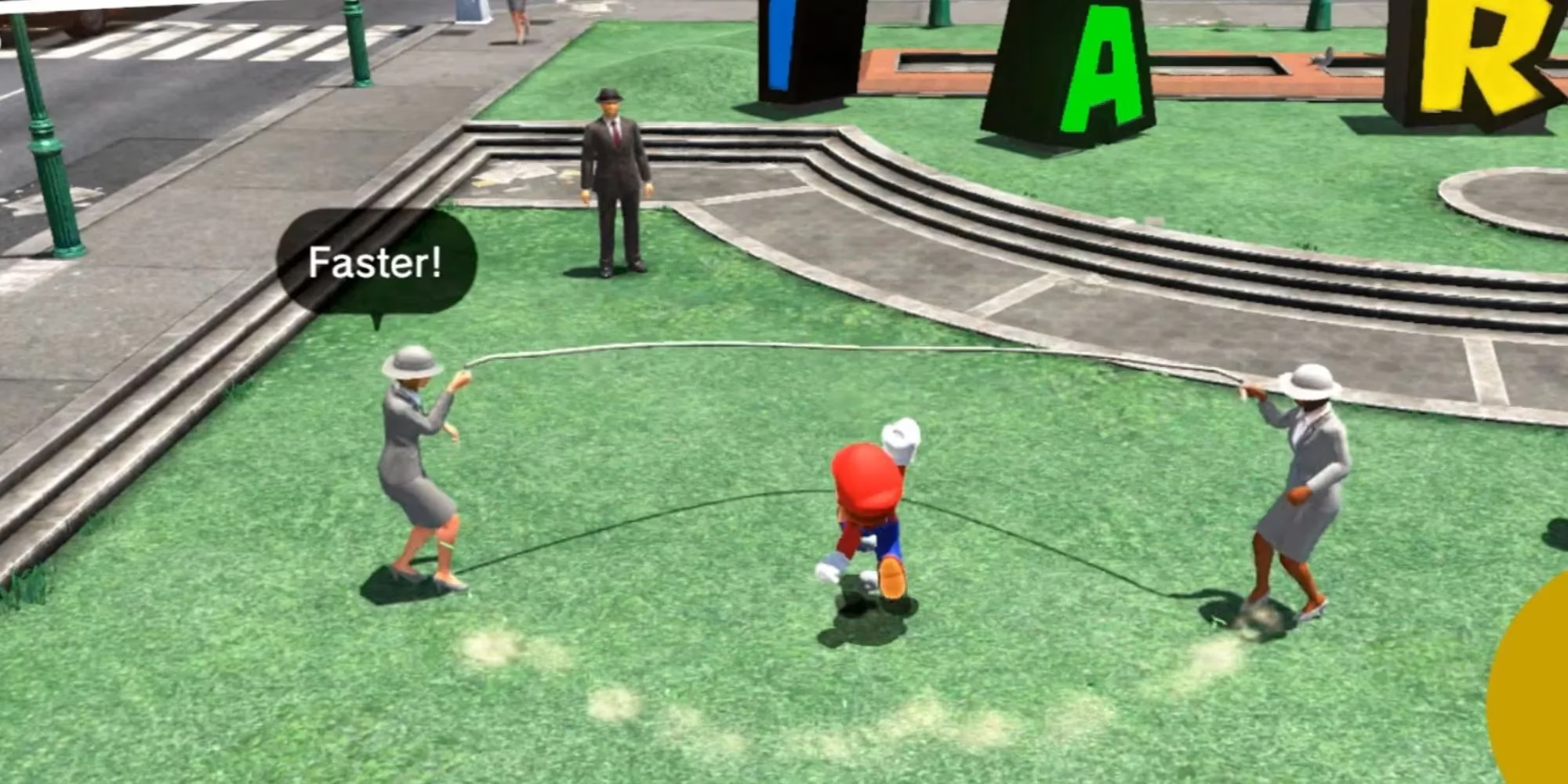
Mario's mission to crash Bowser's wedding in Super Mario Odyssey is famously open-ended. The plumber can explore kingdoms at his leisure, and in New Donk City, he finds the Jump-Rope Challenge. Two enthusiastic citizens swing a rope, and Mario must jump. The goal is a high score, but the potential is limitless. Mario, a paragon of endless stamina, could theoretically hop forever. The only obstacle is the increasing, brutal speed of the rope. Clever players have discovered exploits—using a scooter to automate jumps—to push the counter into the thousands. In this context, rescuing Princess Peach becomes a secondary concern to achieving a truly mythical jump-rope record.
Escaping the hustle of modern life for the rustic charm of Stardew Valley doesn't mean escaping minigames. In the town's saloon, an arcade cabinet houses Junimo Kart. Its Endless Mode is a brutal, auto-scrolling platformer where you guide a minecart on disappearing tracks. The game continues until you run out of lives. Fascinatingly, while the farm's clock ticks relentlessly toward a 2 AM pass-out time, the saloon's arcade exists outside this cycle. The world freezes; Pierre's shop never closes, the villagers stand still, but your junimo rides on, potentially forever, in a challenge separated from the flow of time itself.
Even in the most dire circumstances, the lure of an endless game persists. In the co-op prison break thriller A Way Out, characters Vincent and Leo find themselves in a hospital, needing to steal a keycard. They discover wheelchairs. What follows is the Wheelchair Balancing minigame, a test of coordination where you must keep the chair upright on its back wheels. The story halts until you choose to progress. This creates a bizarre narrative loophole: two fugitives, hunted by law enforcement, could theoretically spend their remaining natural lives in that hospital corridor, perfectly balanced on medical equipment, their great escape indefinitely postponed by their own competitive spirits.
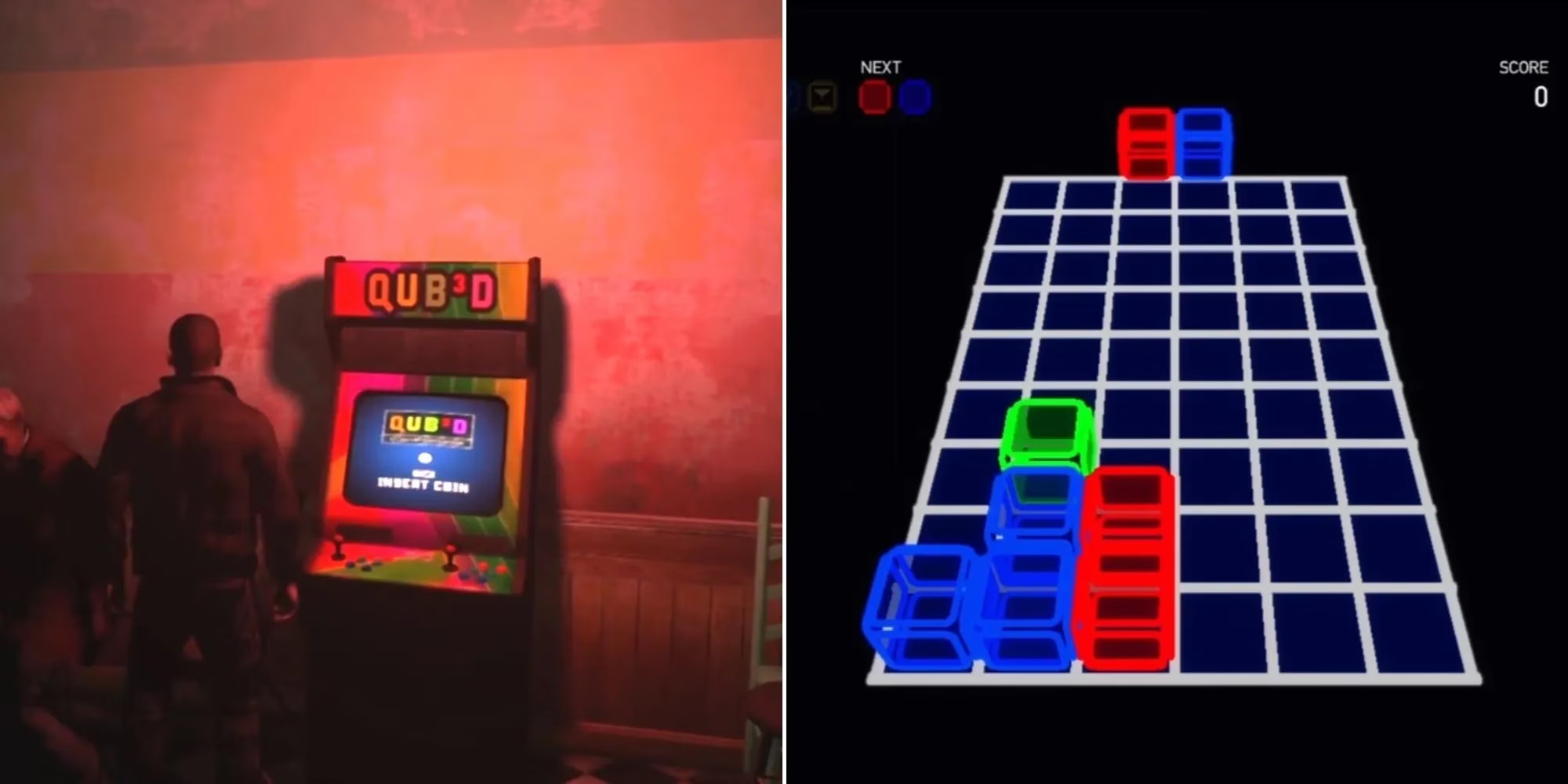
Grand Theft Auto 4 painted Liberty City in shades of grey, focusing on immigrant Niko Bellic's gritty story. Yet, its world was filled with vibrant distractions. In various bars and safehouses, you can find QUB3D, an arcade game strikingly similar to Tetris but with 3D blocks. The goal is to match colored cubes before they stack to the top. The game only ends when the grid is full and no move remains. While GTA 4 introduced elements like needing to eat, it never forced Niko to sleep. Therefore, nothing in the game's logic stops a player from having Niko abandon his quest for revenge or the American Dream to become a lifelong QUB3D champion, playing until the sun rises and sets on Liberty City countless times.
The WarioWare series is built on microgames—blink-and-you'll-miss-them challenges. WarioWare Gold features a standout called Sneaky Gamer. In it, you play a child pretending to sleep while secretly playing a console. You complete rapid microgames but must quickly hit a button to hide under the covers whenever your mom checks. The Endless Mode of this game is a masterclass in tension. The microgames come faster, and "Mom's" checks become more frequent and unpredictable. Survival requires flawless reflexes and multitasking. The premise promises a single, endless night. With supreme skill, that night could stretch into a perpetual, sleep-deprived gaming session, a childhood fantasy of infinite playtime made (theoretically) real.
Finally, some endless games are meant to be shared. The Jackbox Party Pack 9 introduced Quixort, a trivia-sorting game where teams place fact blocks on a timeline. Its Play Forever Mode is exactly what it sounds like. The game only ends when too many incorrectly sorted blocks clog the conveyor belt, causing a "factory shutdown." As long as your friend group has collective, encyclopedic knowledge across random topics—from the length of famous dances to the chronology of historical events—the game can continue indefinitely. It transforms a party game into a potential lifelong vocation, a trivia assembly line that never needs to clock out.
These games represent a fascinating quirk in game design. They are activities with declared goals that, upon completion, reveal their true nature: loops without exit. They ask a playful, philosophical question of the player. When given a task that can technically be done forever, where do you draw the line? The answer, for some, is that they simply don't. In these digital spaces, the journey isn't just more important than the destination—sometimes, the destination was never there to begin with. 😄
Loading comments...