
It has been nearly five years since the blockchain gaming landscape was forever altered by a collaboration that many thought impossible. Peter Molyneux, the legendary creator behind the beloved Fable series, joined forces with Eric Schiermeyer and the Gala Games platform to launch Legacy—the world's first true business simulation game built entirely on blockchain technology. Announced in late 2021 and officially released in 2022, Legacy has since evolved into a vibrant, player-driven economy that continues to push the boundaries of what is possible in Web3 entertainment. Today, in 2026, the game stands as a testament to how creative entrepreneurship can meet decentralized ownership, offering an experience that is equal parts management sim, trading hub, and competitive playground.
From the very start, Molyneux and his studio 22cans envisioned Legacy as something far more ambitious than a simple crypto game. They called it “a creative entrepreneur’s dream come true,” and the final product delivered on that promise. Players step into a rich industrial world where they design, manufacture, and trade an astonishing array of products. Whether you dream of crafting haute couture fashion lines, brewing artisanal beverages, or engineering high-tech gadgets, the game grants near-infinite customization options. Every item is uniquely tied to the blockchain, guaranteeing true ownership and immutability. This design framework attracted not only traditional gamers but also a new wave of creators eager to monetize their digital craftsmanship.
A Business Sim Like No Other
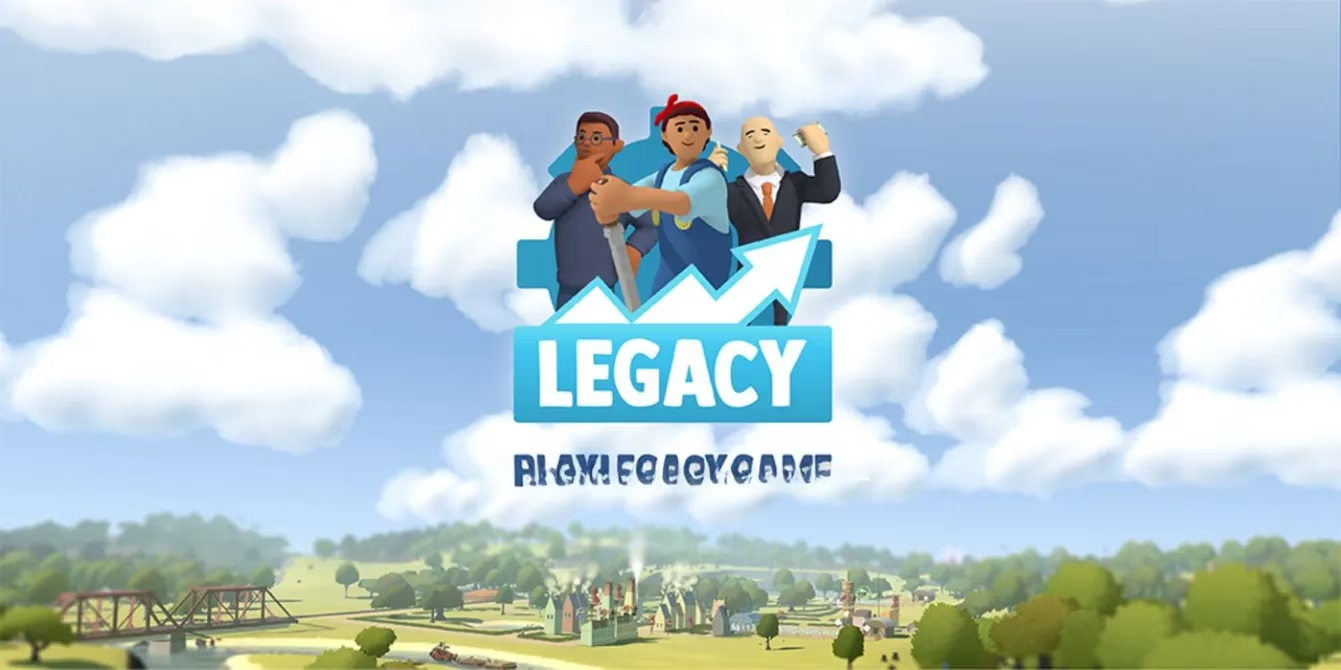
At its core, Legacy shares some DNA with classic life-simulation titles like The Sims, yet it carves its own identity through deep economic strategy. Instead of simply building a home or guiding a virtual family, players take on the role of a factory owner, product designer, and CEO. Every decision carries weight. If you neglect worker morale while chasing profit margins, productivity may plummet. If you overinvest in machinery without a solid supply chain, your empire could crumble. This delicate balancing act between business success and employee welfare injects a level of narrative depth rarely seen in the genre.
Gameplay revolves around several interconnected loops:
-
✅ Product Design: Combine materials, aesthetics, and functional traits to create unique items.
-
✅ Factory Management: Hire staff, upgrade equipment, and layout production lines for efficiency.
-
✅ Trading & Commerce: Sell goods to other players in a fully open marketplace or through in-game contracts.
-
✅ Competitive Seasons: Enter weekly and monthly leaderboard events that test your design and management prowess, awarding exclusive NFTs and LegacyCoin.
Blockchain Integration and Land Ownership
What truly separates Legacy from conventional business sims is its robust blockchain architecture. Built on Gala Games’ ecosystem, the title introduced Land NFTs that serve as the cornerstone of every enterprise. Players can acquire a Land NFT to establish their own in-game business association, essentially becoming a landlord who can grant access to other players. Alternatively, you can enter as an in-game business partner by obtaining Legacy Keys—digital passes lent by landowners. This symbiotic relationship creates a dynamic rental market: landowners earn passive income, while keyholders gain the ability to launch their own startups without the upfront cost of land. The system has fostered a diverse community where veteran players mentor newcomers and joint ventures flourish.
Here’s a quick comparison of the two entry paths:
| Role | Assets Required | Main Benefits |
|---|---|---|
| Land Owner | Land NFT | Own a business association, rent keys, earn fees |
| Business Partner | Legacy Key (borrowed) | Launch a business, participate in economy, build reputation |
The Role of LegacyCoin
Powering this entire economy is LegacyCoin, an ERC-20 compliant cryptocurrency launched by 22cans specifically for the game. Unlike speculative tokens that existed solely outside games, LegacyCoin is deeply integrated into everyday activities. Players earn it by winning competitive leaderboard events, completing special contracts, and selling products. In turn, it can be used to acquire keys, unlock exclusive item NFTs, and pay for advanced factory upgrades. The token’s utility ensured that even during broader crypto market fluctuations, a dedicated player base remained active, treating LegacyCoin as a functional tool rather than a get-rich-quick asset. Over the years, the development team has gradually revealed additional uses—such as governance voting on seasonal themes—further embedding the community in the game’s evolution.
A Competitive Edge
From the very first season, competition became the heartbeat of Legacy. Molyneux designed the events to reward creativity as much as efficiency. One month might challenge players to design the most eco-friendly packaging; the next could push for luxurious, high-margin goods. This variety prevents min-max strategies from dominating and keeps the meta fresh. Leaderboards offer not just bragging rights but tangible prizes: rare cosmetic NFTs, special factory equipment, and generous LegacyCoin payouts. Top performers have even earned invitations to exclusive real-world events, cementing a bridge between digital prestige and physical recognition.
Evolution Since Launch
In the years following its 2022 debut, Legacy has grown well beyond its initial scope. The team at 22cans rolled out mobile compatibility early, making the game truly cross-platform between PC and smartphones. Regular content drops introduced new industries—everything from sustainable energy to virtual reality arcades—and deepened the simulation aspects. Player-run guilds, called “conglomerates,” have formed their own competitions and charitable initiatives, demonstrating the kind of organic community building that blockchain proponents always promised. Industry analysts now point to Legacy as a case study in how to blend meaningful gameplay with Web3 technology, avoiding the shallow “play-to-earn” trap that ensnared so many early entrants.
Looking forward, Molyneux has hinted at an interconnected metaverse experience where products designed in Legacy could appear in other Gala Games titles. While details remain scarce, the very idea underscores the studio’s commitment to pushing boundaries. As blockchain gaming matures in 2026, Legacy remains a shining example of how a legendary designer’s vision, when paired with robust decentralized infrastructure, can create something truly pioneering. For anyone pondering the future of play and entrepreneurship, this business sim offers a masterclass in innovation that is far from finished.
Loading comments...