
At the bustling Game Developers Conference 2010 in San Francisco, Lionhead Studios' visionary Peter Molyneux stepped onto the stage, radiating excitement as he prepared to unveil groundbreaking details about the highly anticipated RPG sequel, Fable 3. His panel on Intuitive Design wasn't just a technical discussion; it became a moment where the gaming world glimpsed the future of storytelling and immersion. Molyneux, known for his flair for the dramatic, didn't disappoint, weaving tales of innovative mechanics and star-studded voice acting that would redefine the franchise. Little did attendees know that this presentation would cement Fable 3 as a cultural touchstone in RPG history, with elements like John Cleese's unforgettable performance still celebrated today, over a decade later in 2025.
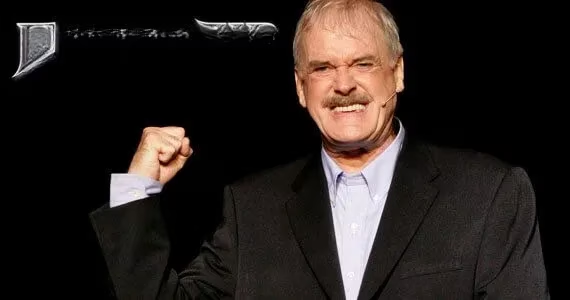
Molyneux passionately described a new character who would become the heart of the game: a witty, sophisticated butler designed to guide players through their heroic journey. He revealed that this role was inspired by a blend of literary figures like Jeeves and Gordon from Batman, aiming to infuse Fable 3 with Monty Python-esque humor that fans had adored in its predecessor. "We have a character in here, he is your butler," Molyneux declared, his eyes twinkling with mischief. "A lot of people talked about Fable 2 having that crazy Monty Python humor, so we went out and got John Cleese." This announcement sent ripples through the audience, as Cleese, a British comedy legend, was an unexpected but perfect choice to voice the quirky mentor. 😄 The studio had carefully crafted this role to offer not just advice on quests but sharp commentary on the player's attire and decisions, making the butler a constant, humorous companion in Albion's sprawling world.
But Cleese wasn't the only star lending his voice to Fable 3. Molyneux shared that the game featured an ensemble of British celebrities, each bringing their unique flair to the narrative. Stephen Fry reprised his role as the cunning Reaver, while snappy journalist Charlie Brooker and TV/radio presenter Jonathan Ross added their voices to key characters. This star-studded cast aimed to elevate the game's storytelling, creating a rich tapestry of personalities that players could interact with. Although Cleese's dialogue wasn't playable at the conference due to legal finalizations, Molyneux assured everyone that the actor had recorded a vast amount of lines, promising hours of witty banter. Today, looking back from 2025, fans fondly remember how these performances added depth and charm, turning Fable 3 into a beloved classic that still influences modern RPGs with its character-driven humor. 🎭
Beyond the voice acting, Molyneux delved into revolutionary changes to the game's user interface, aiming to move away from the clunky 2D text menus of Fable 2. He envisioned a fully integrated 3D system where players could physically interact with their environment. For instance, instead of navigating a static menu to change outfits, heroes would step into an actual dressing room within the game world. "Your character will have a dressing room they can enter," Molyneux explained, emphasizing how this mechanic would enhance immersion by making every action feel tangible and alive. While this approach wasn't entirely new, it represented a significant leap forward, addressing criticisms of Fable 2's cumbersome systems. To illustrate the evolution, here's a quick comparison:
| Feature | Fable 2 System | Fable 3 System | Improvement in 2025 Context |
|---|---|---|---|
| Menu Navigation | 2D Text-Based | 3D Integrated | Pioneered immersive RPG UI, now standard in games like The Witcher 4 |
| Outfit Changes | Static Selection | Interactive Dressing Room | Enhanced realism, reducing player frustration |
| Overall Immersion | Moderate | High | Set a benchmark for player engagement |
This shift wasn't just technical; it was philosophical, reflecting Molyneux's commitment to intuitive design. Players could now explore their surroundings organically, making choices like altering their hero's appearance part of the adventure rather than a chore. In retrospect, this innovation helped shape how RPGs handle interfaces today, with many 2025 titles adopting similar seamless systems to keep gamers hooked. 🎮
Fast forward to 2025, and Fable 3's legacy endures, especially among fans who cherish Cleese's performance. Released later in 2010, the game became a commercial hit, but its true impact unfolded over the years. Players recall the butler's sarcastic quips and guidance with nostalgia:
-
Humor Impact: Cleese's delivery brought Monty Python-style wit to life, making mundane tasks like wardrobe changes hilarious.
-
Fan Reactions: Initially, some doubted the choice, but post-release reviews praised it as genius, with forums still buzzing about memorable lines.
-
Long-Term Influence: Modern games, such as the recent Fable reboot, honor this by incorporating celebrity voices in mentor roles.
Reflecting on that GDC panel, it's clear how Molyneux's vision transformed gaming. The integration of 3D environments for UI elements not only fixed past flaws but inspired a generation of developers. As players in 2025 revisit Fable 3 through remastered editions, they appreciate how these elements—combined with Cleese's iconic voice—created an experience that feels timeless, proving that great design and storytelling never fade. 😊
Loading comments...