
The first decade of the 21st century remains a hallowed epoch in interactive entertainment, a period where foundational franchises were born and existing ones were reimagined. While many titles from that era have faded into obscurity, a distinguished few possess a timeless quality, their core experiences remaining as compelling today as they were upon release. These games are not mere relics to be viewed through the sepia-toned lens of nostalgia; they are vibrant, living testaments to brilliant design, their appeal transcending the technological context of their birth. Whether through groundbreaking mechanics, emotionally resonant narratives, or artistic vision so distinct it defies aging, these creations continue to offer masterful journeys that feel as fresh in 2026 as they did decades prior.
10. Super Mario Sunshine: A Tropical Oasis of Charm
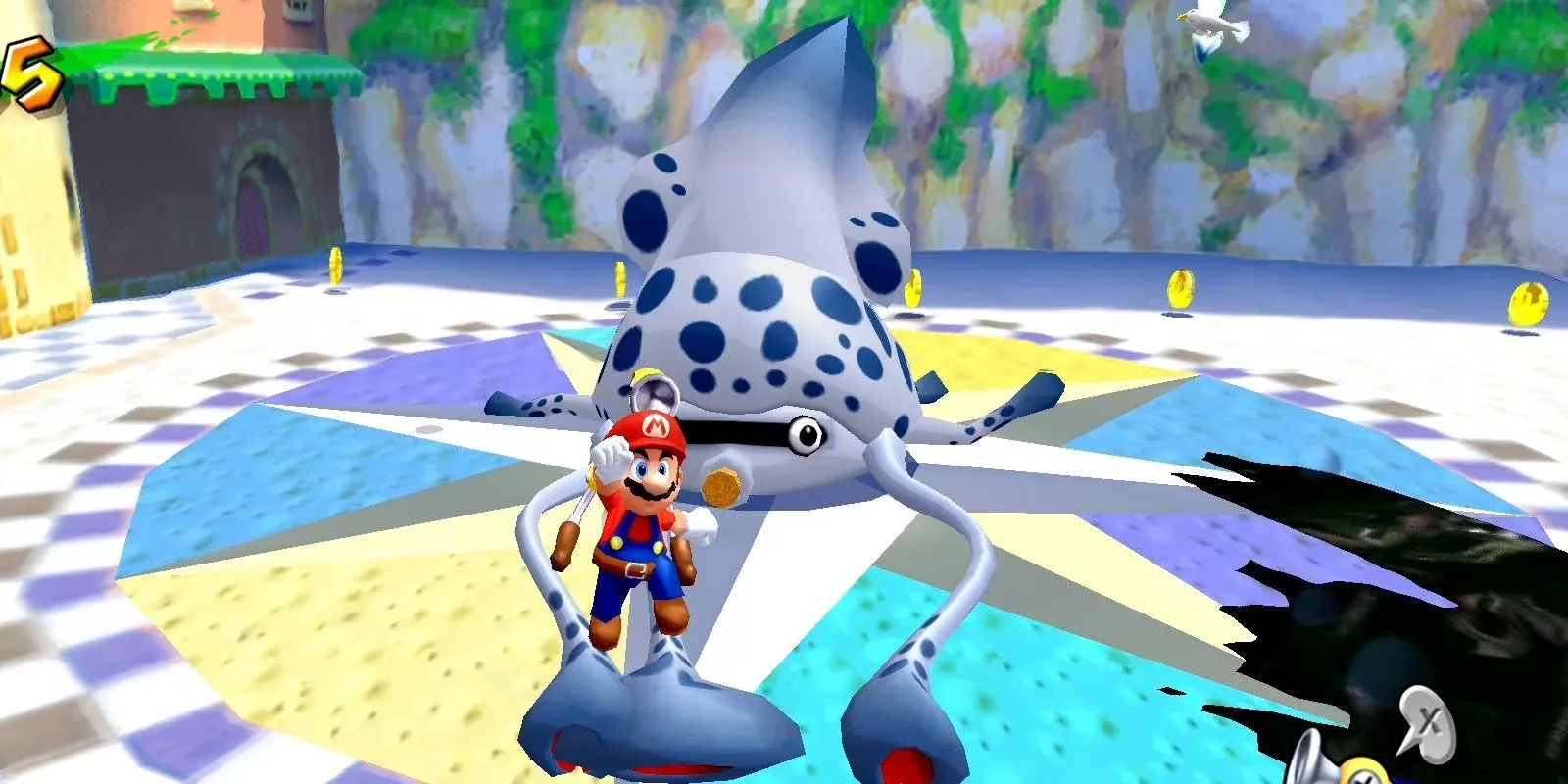
Often hailed as the "coziest" entry in Mario's storied career, Super Mario Sunshine trades the familiar mushroom kingdoms for the sun-drenched shores of Isle Delfino. While the narrative backbone—rescuing Princess Peach—remains classic, the execution is anything but. The tropical setting provides a vibrant, relaxed backdrop that feels like a perpetual vacation. The revolutionary addition of F.L.U.D.D., Mario's water-propulsion backpack, fundamentally altered platforming mechanics, allowing for fluid, acrobatic movement that still feels innovative. Facing off against the enigmatic Shadow Mario, who vandalizes the island with toxic goop, creates a conflict that is both whimsical and visually striking. The game's charm is as enduring as a perfectly weathered seashell, its bright palette and joyful gameplay refusing to be dimmed by time.
9. Fable 1 & 2: A Whimsical Brush with Destiny
Peter Molyneux's Fable series carved out a unique niche with its blend of high fantasy, British humor, and consequential morality. The first two entries, in particular, master a delicate tonal balance. They present a world of serious stakes—ancient evils, heroic lineages—yet pepper it with a raucous, almost adolescent sense of humor that prevents the adventure from becoming ponderous. The morality system, where choices subtly alter your hero's appearance and the world's reaction, was groundbreaking. While later entries expanded the scope, the original Fable and its sequel possess a focused, fairy-tale-like purity. Their legacy is that of a beautifully illustrated storybook whose pages, though familiar, still rustle with magic and mischievous possibility.
8. Kingdom Hearts: An Unlikely Symphony
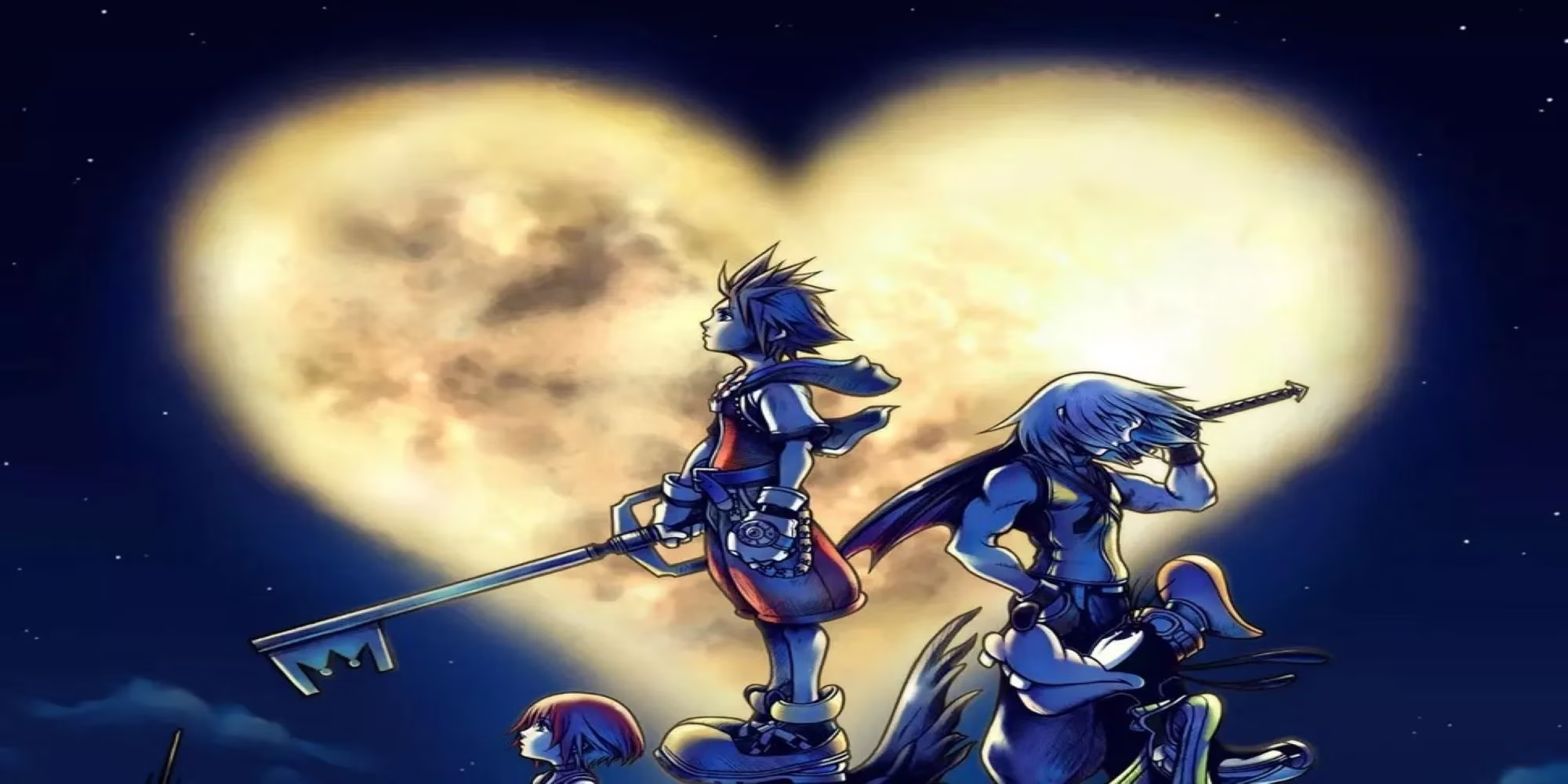
The very premise of Kingdom Hearts—a fusion of Disney's animated worlds and Square Enix's Final Fantasy-style RPG—should not have worked. Yet, the original 2002 title weaves these disparate threads into a surprisingly poignant tapestry about friendship, light, and darkness. The story of Sora, Donald, and Goofy traveling between worlds to fight the Heartless remains the emotional core of the now-sprawling franchise. The real-time action-RPG combat is responsive and deceptively deep, laying the groundwork for the series' signature style. Yoko Shimomura's legendary score elevates every moment, from serene exploration to climactic battles. Playing it today is like listening to a beloved, complex symphony; the individual instruments might show their age, but the composition's power to stir the heart is undiminished.
7. Halo 3: The Pinnacle of a Console Generation
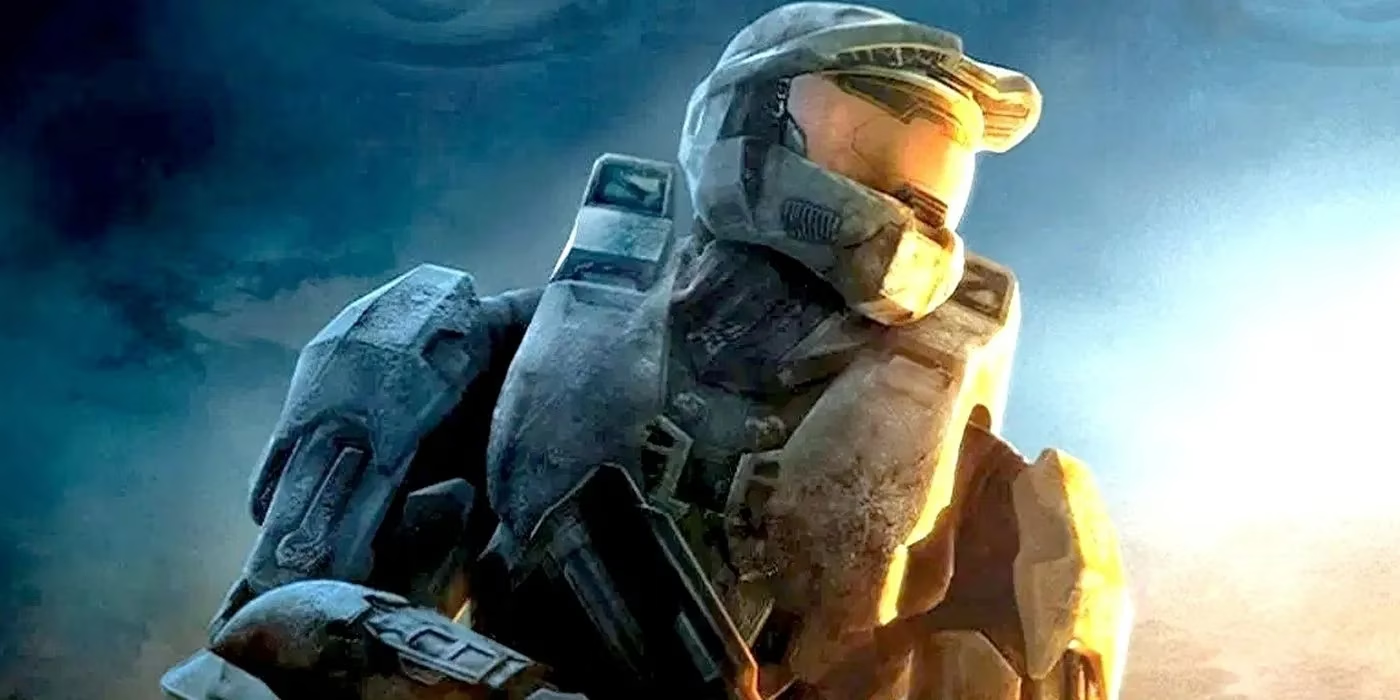
More than just a sequel, Halo 3 was a cultural event, the crescendo of Master Chief's original saga. It perfected the "Halo formula": sandbox-style combat with a versatile arsenal, vehicular mayhem, and a grand, silent-storytelling campaign that used its environments as narrative tools. The gunplay possesses a tangible, weighty feedback that many modern shooters still strive to emulate. Visually, its art direction was so strong that, with minor enhancements, it stands shoulder-to-shoulder with contemporary titles. The suite of multiplayer and community tools, including Forge and Theater mode, were revolutionary. Halo 3 didn't just age well; it solidified a blueprint, becoming the immutable standard against which all console shooters are measured, a monument as enduring and recognizable as the ringworld it is named for.
6. Shadow of the Colossus: A Poetic Desolation
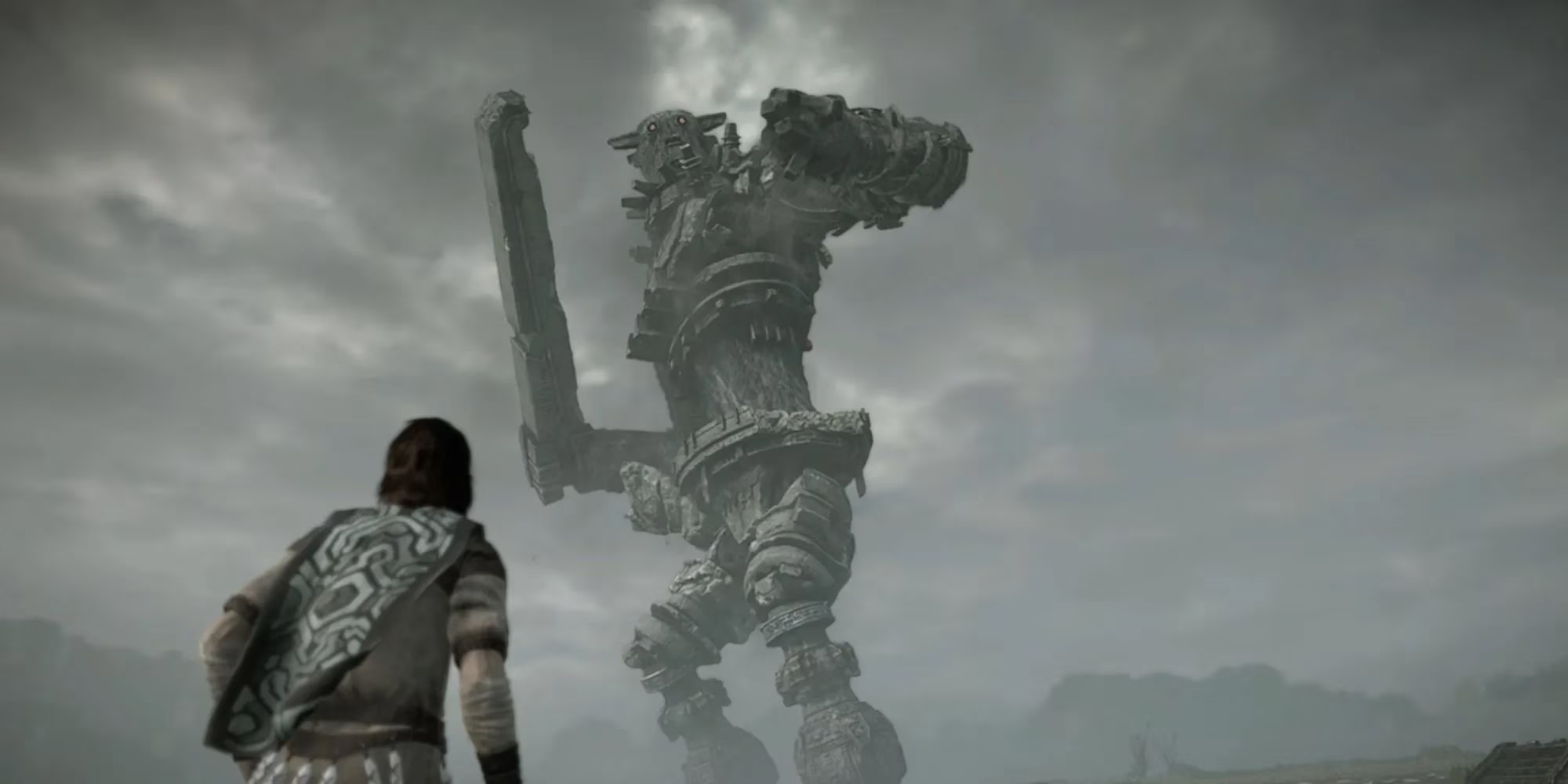
Team Ico's 2005 masterpiece, Shadow of the Colossus, is less a conventional game and more an interactive tone poem. It strips away RPG conventions, side quests, and filler, presenting a stark, beautiful world and sixteen epic battles that are also profound puzzles. The act of scaling these living, breathing landscapes of fur and stone—clinging desperately as they buck and shake—is an experience of sheer, sublime scale that has never been replicated. The sparse narrative, told through minimal dialogue and breathtaking visuals, carries immense emotional weight, culminating in one of gaming's most ambiguous and powerful endings. Its 2018 remaster is gorgeous, but the original's haunting, low-poly aesthetic possesses a stark, artistic beauty all its own. The game ages not by decaying, but by becoming a more revered artifact, a lonely obelisk in a quiet field that whispers a timeless, melancholy story.
5. The Legend of Zelda: The Wind Waker: A Timeless Voyage
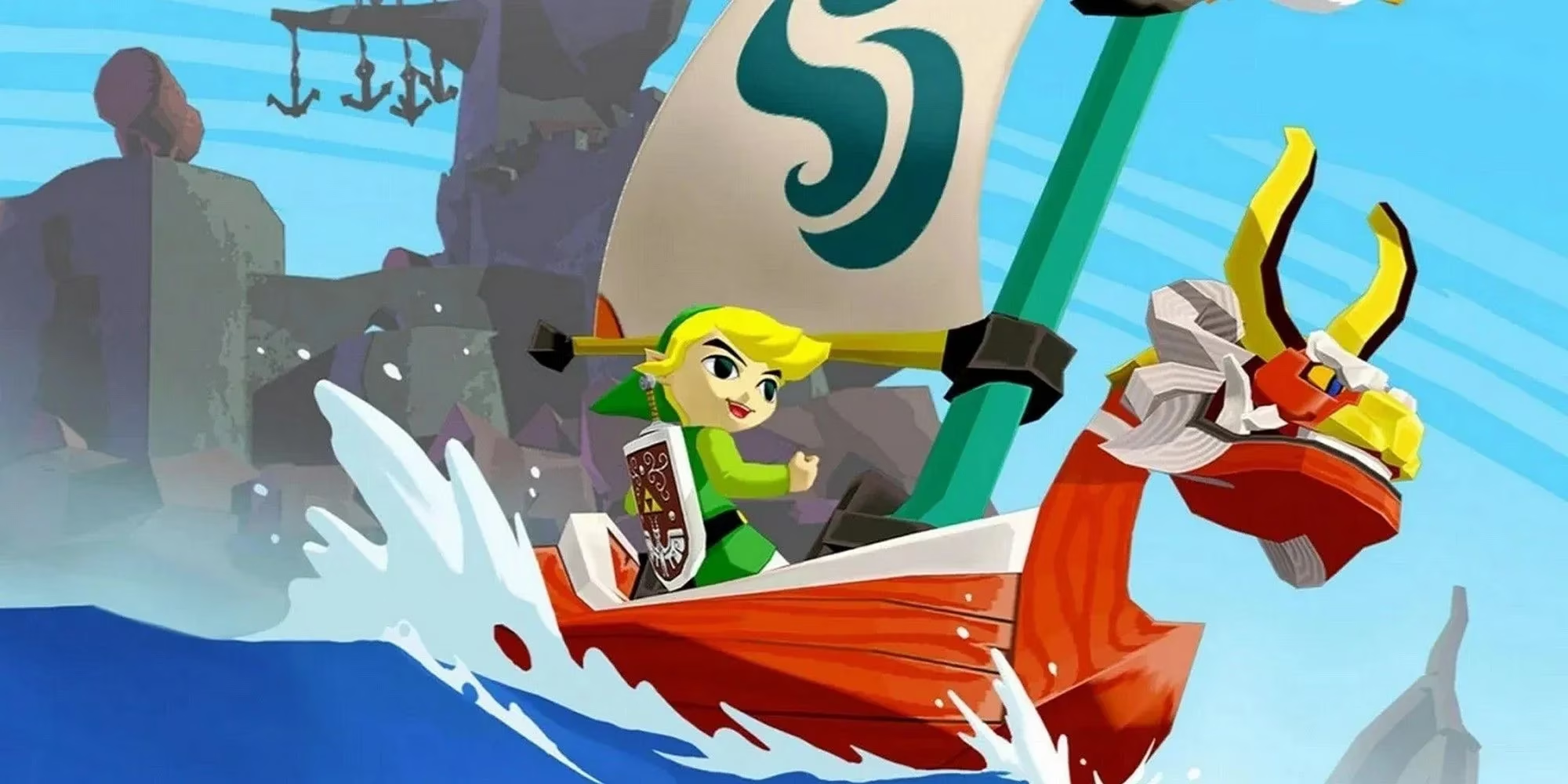
Initially controversial for its bold, cel-shaded art style, The Wind Waker has proven to be one of the most prescient and ageless entries in the Zelda canon. Its cartoonish expressionism, far from being a limitation, granted it immortality. Where more realistic contemporaries show their age through dated textures and models, Wind Waker's world looks like a living painting, vibrant and full of personality. The sense of adventure on the high seas, charting a vast ocean dotted with islands, is unparalleled. Characters are expressive and memorable, and the core Zelda gameplay of exploration, puzzle-solving, and combat is executed flawlessly. The game is a testament to the power of strong artistic vision over graphical fidelity; it is a children's storybook that never closes, its colors forever bright, its seas forever beckoning.
4. Fallout: New Vegas: The Unrivaled Wasteland
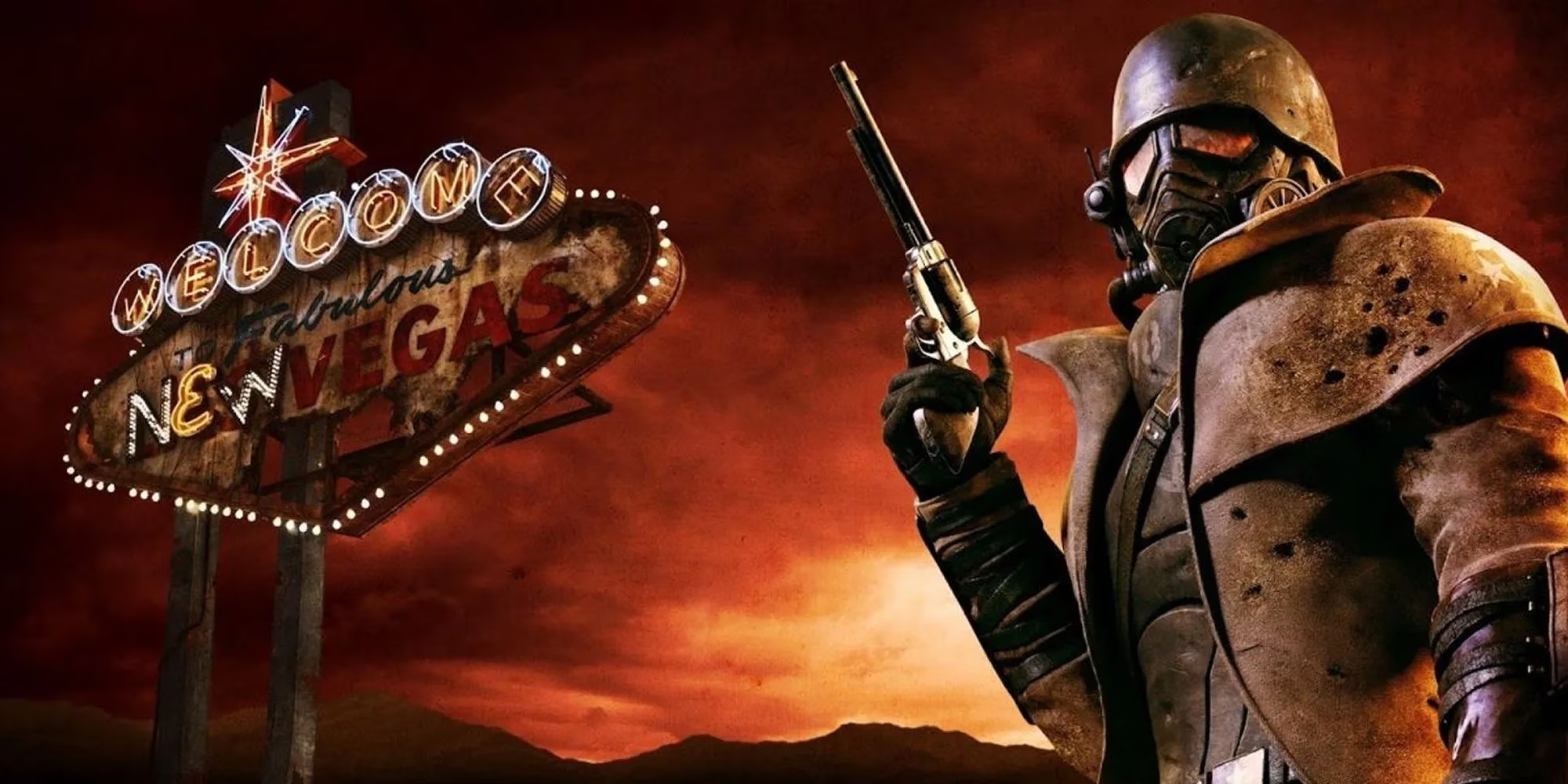
Developed by Obsidian Entertainment, Fallout: New Vegas is often cited as the zenith of the post-apocalyptic RPG series. Its strength lies not in a polished facade—its engine was notoriously creaky—but in the incredible depth of its world-building, writing, and player agency. The Mojave Wasteland is a tapestry of competing factions (the NCR, Caesar's Legion, Mr. House) where player choices carry profound, cascading consequences. The writing is sharp, witty, and morally gray, offering role-playing opportunities rarely seen in the genre. Its suite of DLC expansions (Dead Money, Honest Hearts, Old World Blues, Lonesome Road) are narrative masterpieces in their own right, exploring diverse themes and enriching the core experience. In 2026, it stands as a complex, clockwork ecosystem of choice and consequence, a masterpiece of reactive storytelling that later entries have struggled to match.
3. Mass Effect: A Galactic Opera
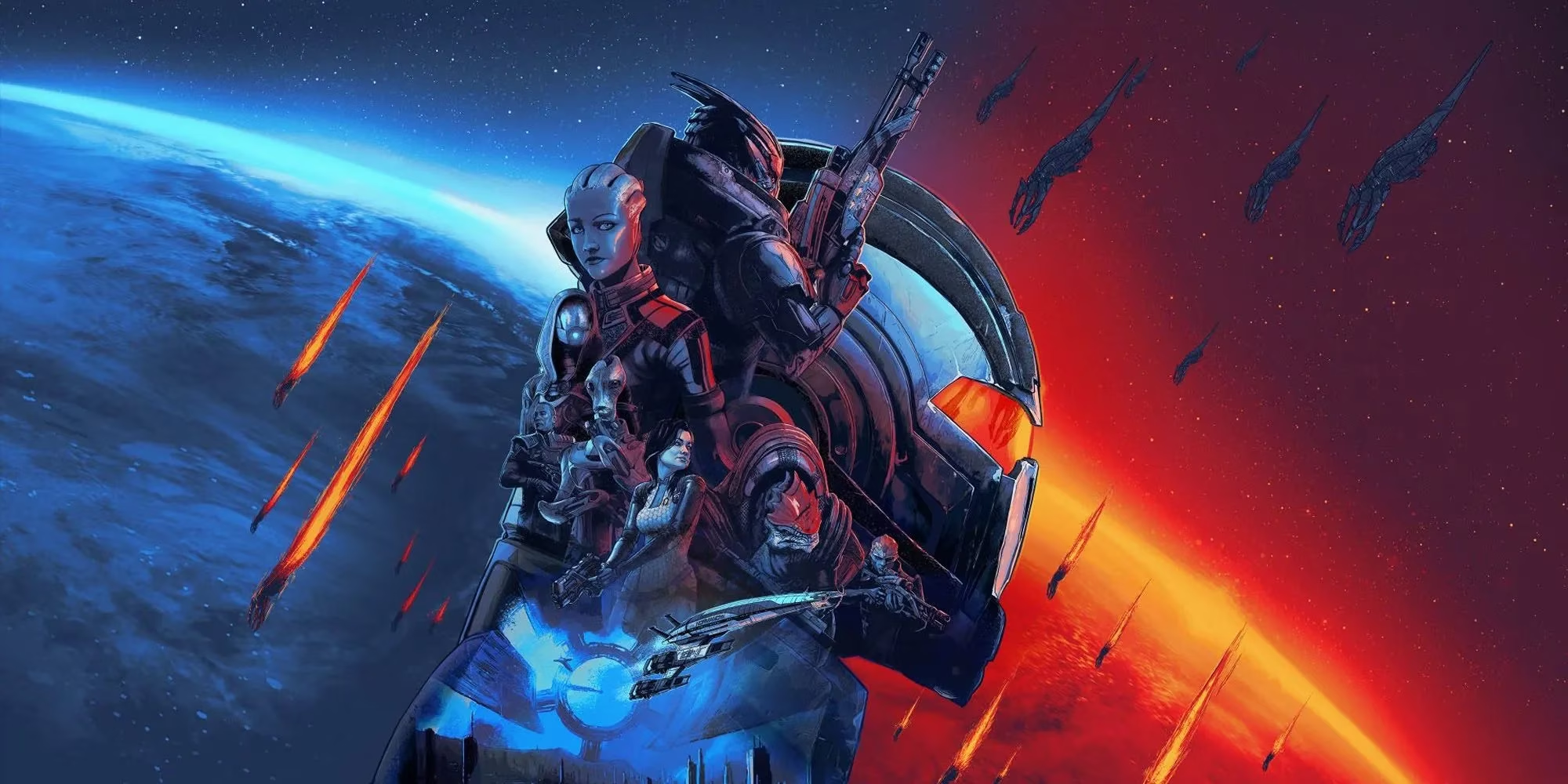
BioWare's 2007 space opera didn't just tell a story; it made players feel like the author of their own epic. The original Mass Effect established a universe of staggering depth, populated with alien species, political intrigue, and a looming, existential threat. The Paragon/Renegade morality system and intricate dialogue trees gave weight to every conversation, making the player's version of Commander Shepard uniquely their own. While its combat and inventory systems feel dated, the core pillars—world-building, character relationships, and player-driven narrative—are rock solid. The 2021 Legendary Edition provided a welcome visual and mechanical polish, but even in its original form, the game's power is undeniable. It is the foundational movement of a grand symphony, introducing themes and characters that would resonate for a generation of players.
2. Dragon Age: Origins: A Dark Fantasy Tapestry
 .jpg)
.jpg)
If Mass Effect was BioWare's space opera, Dragon Age: Origins was its gritty, Tolkien-esque dark fantasy counterpart. It represents the pinnacle of the classic, tactical party-based RPG, with deep character customization, a rich lore-heavy world of Thedas, and a narrative where origins truly matter. The game's tactical, pause-and-play combat encourages thoughtful strategy over button-mashing. Its branching story, shaped by weighty moral decisions and complex companion relationships, offers tremendous replayability. While its visuals are clearly of its time, the writing, world-building, and strategic depth have aged like a fine, complex wine, gaining appreciation for their richness and maturity. It remains a benchmark for narrative depth and player agency in the fantasy genre.
1. Super Mario Galaxy: Defying Gravity and Time
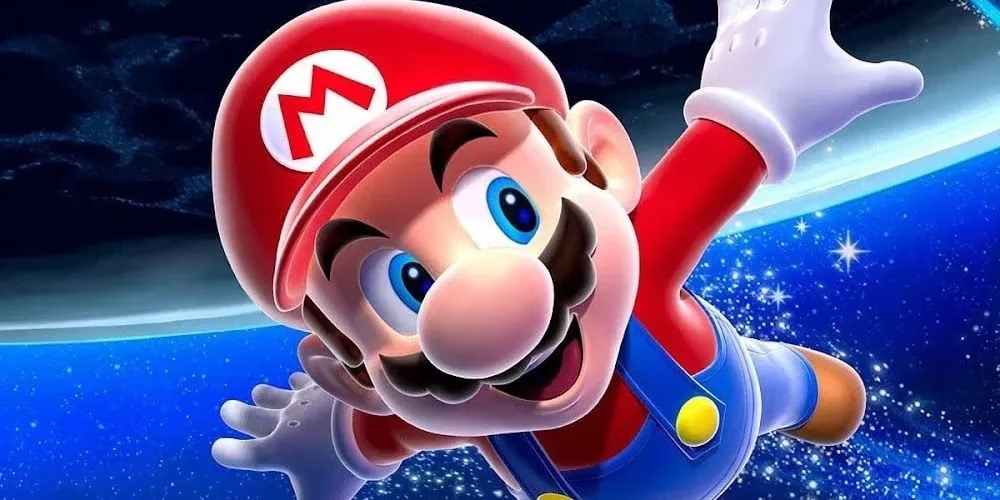
The crowning achievement of 2000s game design, Super Mario Galaxy, is nothing short of a masterpiece of interactive joy. It took the 3D platformer and, quite literally, sent it into orbit. By introducing spherical planetoids and gravity-based gameplay, it transformed every level into a mind-bending playground of possibilities. The orchestral score by Mahito Yokota and Koji Kondo is arguably the greatest in video game history, perfectly complementing the cosmic scale and whimsical tone. The level of creativity and polish is astonishing, with each galaxy introducing a new, delightful mechanic. Over fifteen years later, its visual style—a blend of sleek cosmic backdrops and playful character models—remains stunning. Super Mario Galaxy is not just a game that aged well; it is a timeless work of art, a perpetual motion machine of invention and delight that continues to inspire awe, its gravitational pull on players' hearts as strong as ever. 🚀✨
| Game | Release Year | Key to Its Timelessness |
|---|---|---|
| Super Mario Sunshine | 2002 | Unique tropical setting & revolutionary FLUDD mechanics. |
| Fable 1 & 2 | 2004/2008 | Perfect blend of consequential choice & whimsical British humor. |
| Kingdom Hearts | 2002 | Heartfelt narrative fusion of Disney & Final Fantasy. |
| Halo 3 | 2007 | Perfectly refined sandbox combat & landmark multiplayer suite. |
| Shadow of the Colossus | 2005 | Minimalist, artistic design & epic, contemplative boss battles. |
| The Wind Waker | 2002 | Ageless cel-shaded art style & boundless sense of oceanic adventure. |
| Fallout: New Vegas | 2010 | Unmatched depth in player choice, faction politics, and writing. |
| Mass Effect | 2007 | Foundational world-building & deeply personal, choice-driven narrative. |
| Dragon Age: Origins | 2009 | Tactical RPG depth, dark fantasy lore, and impactful origin stories. |
| Super Mario Galaxy | 2007 | Gravity-defying creativity, sublime orchestral score, and flawless design. |
These ten titles are more than just great games from the 2000s; they are foundational pillars of modern game design. They demonstrate that while technology evolves, the core tenets of compelling gameplay—innovation, artistry, emotional resonance, and pure fun—are eternal. In 2026, they stand not as museum pieces, but as living, breathing worlds still worthy of exploration, their lessons and joys perpetually new.
Loading comments...