
As I sit here in 2026, reflecting on my years traversing the rolling hills and shadowed forests of Albion, it strikes me how the Fable series was never just about swinging a sword or casting a spell. It was a mirror, a cracked and often cruel one, held up to my own soul. The announcement of Fable 4 a few years back rekindled that old, familiar flame—a desire to return to a world where every cheer from a villager and every boo from a beggar felt earned, sculpted from the clay of my own decisions. Lionhead Studios crafted a realm where morality wasn't a simple switch between light and dark, but a tangled, thorny briar patch where every choice, no matter how small, left a permanent scar on the world and on my character's very face. To navigate Albion was to walk a tightrope over a chasm of consequences, where the most profound battles were fought not against balverines or hollow men, but within the quiet chambers of my own conscience.
The Weeping Ghost and the Hollow Vow: A Love Built on Spite
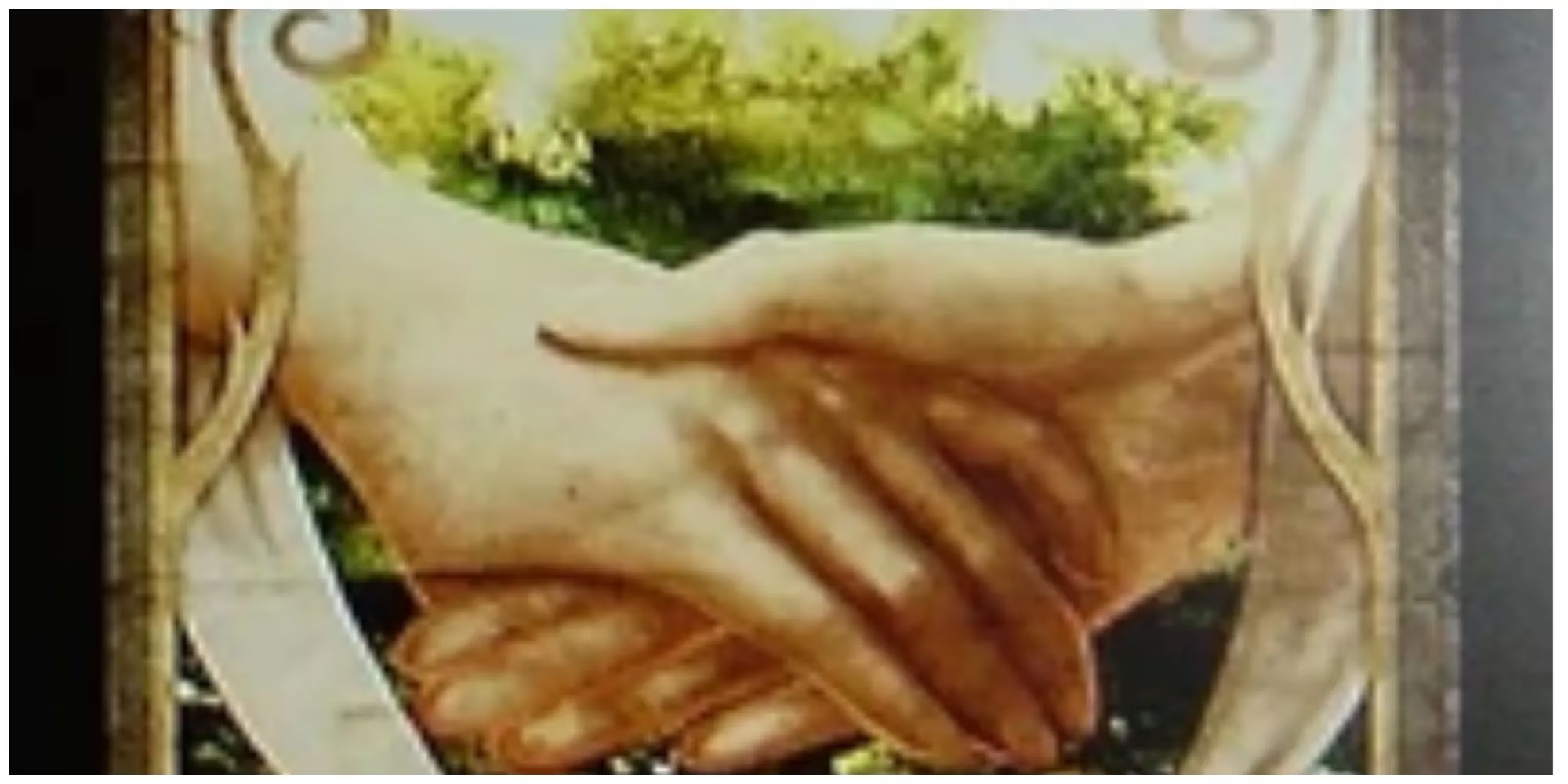
My journey through Fable 2 led me to the windswept cliffs of Rookridge, where I found not treasure, but a specter of profound pettiness. A weeping ghost, forever trapped in the moment his marriage proposal was rejected by a woman named Alex. His request was a poisoned apple, wrapped in the velvet of a side quest: 'Til Death Do Us Part. He wanted me to make Alex fall in love with me, only to shatter her heart as his had been. The "good" path, as the game framed it, was to marry her anyway—a union founded on a deception as deep as the ocean trench, a performance for a dead audience. Choosing this felt like constructing a beautiful sandcastle, knowing the tide of truth would inevitably erase it. To follow the ghost's command was the overtly evil choice, a act of emotional sabotage as precise and cold as a surgeon's scalpel. Both options left a bitter taste; one was a lie wearing wedding clothes, the other a deliberate act of cruelty. It was a choice between being a gilded cage or a wrecking ball.
The King's Burden and the Tyrant's Crown: Promises in the Face of Darkness
The weight of a crown is something I learned intimately in Fable 3. Beginning as a revolutionary prince, I made grand, sweeping promises to the people of Albion to secure their aid against my brother, King Logan. I vowed to restore wealth, repeal taxes, and be the benevolent ruler they dreamed of. It felt righteous, like polishing a tarnished shield. Then, the horrific truth was unveiled: a world-consuming entity known as The Darkness was approaching. Logan's tyranny—his hoarding of wealth, his militarization—was a desperate, brutal calculus to amass the resources to save the kingdom from annihilation. The citizens, living in poverty, saw only a monster. I saw the impossible equation. Do I keep my promises, bankrupt the treasury for short-term relief, and doom everyone to a far more terrible fate? Or do I break every vow, become the very tyrant I swore to overthrow, and save their lives while earning their eternal hatred? Saving them was the easy moral choice, but it meant wearing the crown of a liar, a ruler whose legacy would be written in the ink of betrayal. The kingdom's survival was a tapestry, and I was forced to choose which threads—trust or security—to unravel.
The Sword of Aeons: Power's Siren Song and the Sister's Sacrifice
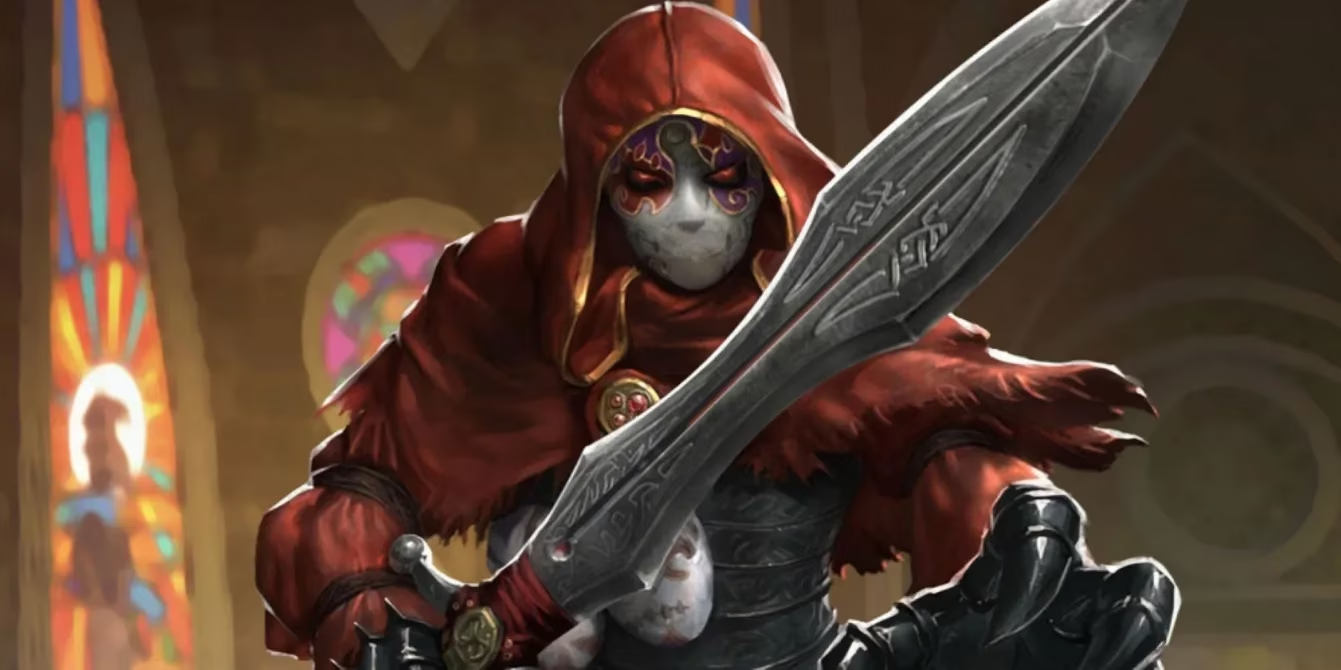
The climax of the original Fable presented me with a temptation as old as storytelling itself. After a grueling battle to stop the malevolent Jack of Blades, I stood over his defeated form, the legendary Sword of Aeons within reach. To claim it, to wield the most devastating weapon in all of Albion, required one final, unthinkable act: the sacrifice of my sister, Theresa. Her blood was the final key. The "good" choice was to discard the blade, a moment of pure, heroic renunciation. But before The Lost Chapters DLC expanded the game, there was no alternative, no purified version of the weapon to reward virtue. The temptation was a physical ache. To walk away from that power, after a journey spent becoming stronger, felt like refusing the very essence of the adventure. Taking the sword made my character a god on the battlefield, but it hollowed out the victory, turning the triumph over evil into a personal damnation. It was the ultimate test: was my quest about saving Albion, or about becoming its most powerful entity?
Reaver's Gambit: The Curse of Eternal Youth
My pursuit of the third hero in Fable 2 led me to the eternally youthful and eternally smug Reaver. His "simple" task—deliver an old seal to the Shadow Court—was a trap more intricate than a spider's web. The seal was a cursed artifact that transferred the aging process from one bearer to another. Reaver's centuries of youth were built on this vile magic, and he intended for me to be his next victim. The twist came in the form of another soul, a young woman lost in the same ruins. The game forced a horrific transaction:
-
Option A: Accept the curse myself, watching my carefully customized hero wither and age prematurely, my vanity and time investment crumbling like ancient parchment.
-
Option B: Pass the curse to the innocent woman in a act of pure, selfish evil, preserving my avatar's appearance at the cost of another's life.
There was no third option, no clever loophole. It was a direct trade: my character's visual legacy for my moral soul. Choosing to sacrifice the stranger felt like committing a sin in a confessional that had been bricked up from the outside.
The Spire's Wish: A Trilemma of Regret
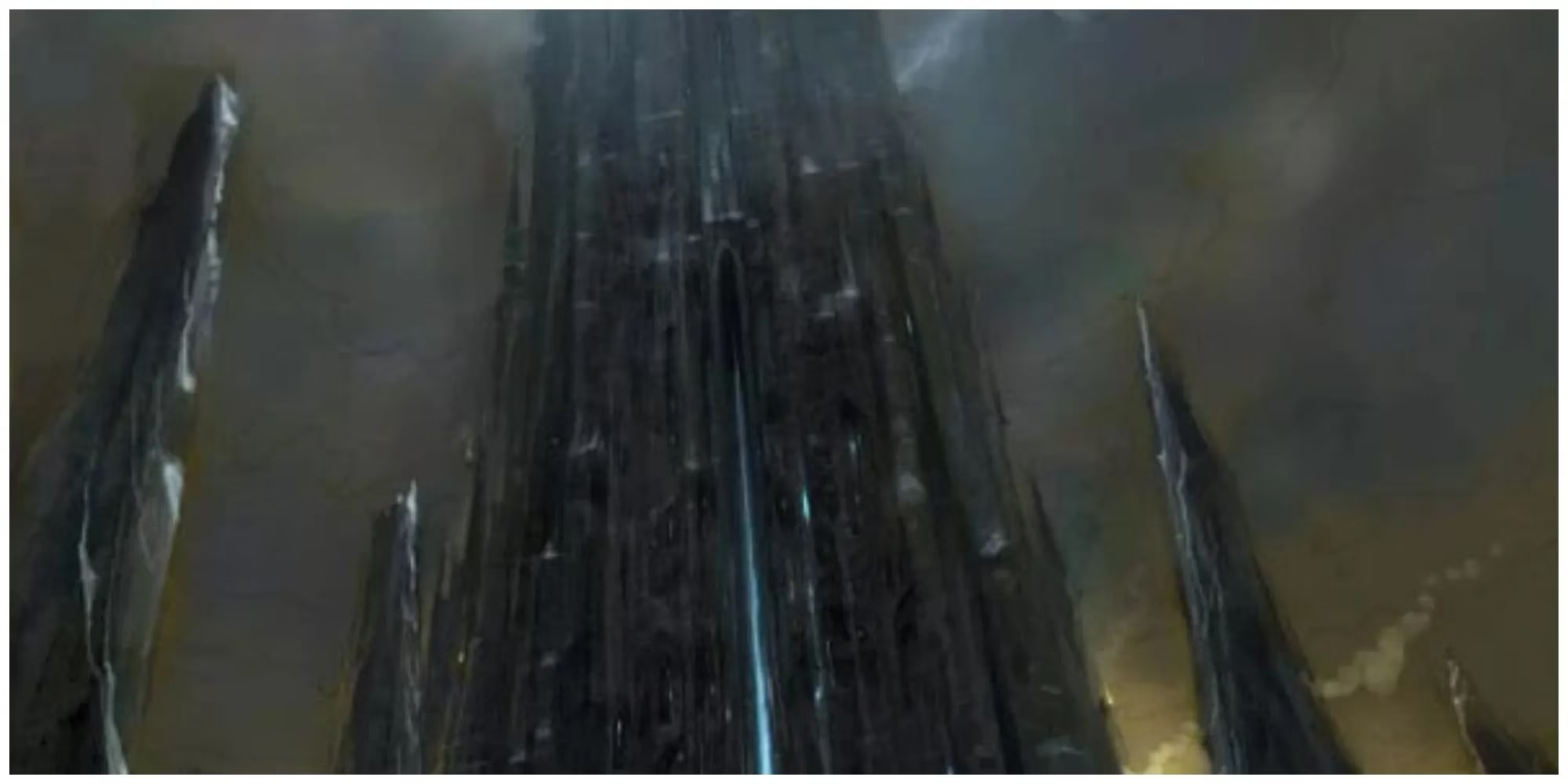
Upon defeating Lucien at the end of Fable 2, I seized control of The Spire and its reality-altering wish. The game presented a triad of desires, each with profound and messy consequences:
| Wish Option | Immediate Reward | Social Consequence | Moral Alignment |
|---|---|---|---|
| Revive the Fallen | None. | Universal love & adoration from all NPCs. | ⭐⭐⭐⭐⭐ (Pure Good) |
| Revive Your Dog | Loyal companion returns; helps find treasure. | No change in public opinion. | ⭐⭐⭐ (Neutral/Personal) |
| Request Wealth | Vast sum of gold (1,000,000). | Universal hatred & fear from all NPCs. | ⭐ (Pure Evil) |
This was no simple puzzle. Reviving the countless souls who died building the Spire was the altruistic choice, but it offered no gameplay advantage—it was virtue for virtue's sake, like planting a tree whose shade you would never sit under. The wealth was pragmatically powerful, unlocking property and gear, but it painted me as a monster in the eyes of every virtual citizen. And my dog... that was the emotional gut-punch. A purely sentimental choice that offered a personal comfort the cold, calculating world of Albion otherwise lacked. Each wish was a key that unlocked a different version of the game's ending, proving that true power lies not in making a wish, but in living with the world your wish creates.
The Arena's Final Round: Killing a Rival, Killing a Friend
From our days as trainees at the Heroes' Guild, Whisper was my constant foil—a rival whose taunts were steeped in a grudging respect. Our final meeting was in the gladiatorial Arena. After defeating her in combat, the game presented a chillingly simple prompt: execute the defeated Whisper for extra gold. She was helpless. Sparing her gave me nothing but the quiet satisfaction of mercy. Killing her was a transaction, turning a nuanced rivalry into a crude commodity. It was evil not for its scale, but for its pointlessness and betrayal of a shared history. It reduced a character to a bag of coins, a relationship to a line in a ledger.
Logan's First Lesson: A Brother's Cruel Introduction
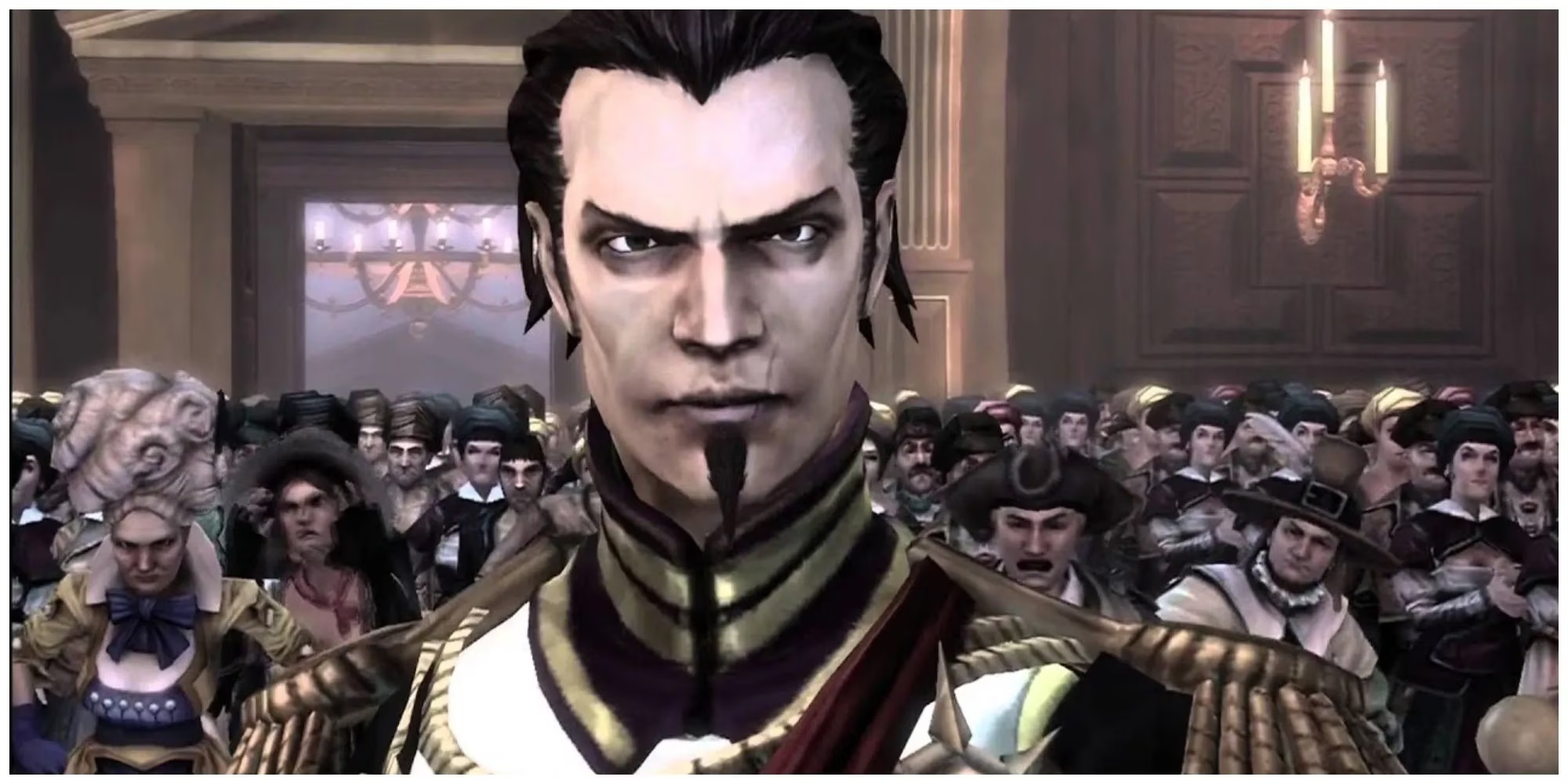
Fable 3 began not with a heroic call to arms, but with a brutal tutorial in despair. As the prince, I was forced to watch my tyrannical brother, King Logan, present me with an impossible choice: condemn my beloved romantic partner or a group of innocent protesters to death. There was no "winning" move, no hidden moral path. It was narrative dynamite, designed solely to illustrate Logan's depravity and forge my resolve. The choice was a baptism of fire, teaching me that in this kingdom, even a prince's love was a currency his brother was willing to spend. It set the tone for the entire game—that the path to the throne would be paved with compromises that felt like defeats.
These moments are the pillars upon which my memory of Albion is built. They were more than quests; they were ethical vignettes, each a grain of sand in the hourglass of my character's soul. With a new Fable on the horizon, I can only wonder what fresh, agonizing, and beautiful dilemmas await. What new mirrors will be held up, and what reflections of myself will I see staring back? The true magic of Fable was never in the will or the strength, but in the quiet, echoing aftermath of a choice made, and the person you become because of it.
Loading comments...