
In the vast, sprawling landscapes of modern role-playing games, players often find themselves lost for hundreds of hours, captivated by epic narratives and intricate side quests. Yet, for all their depth, many of these worlds feel strangely frictionless, lacking the fundamental pressures of existence that would make them feel truly alive. As of 2026, the conversation around immersion has evolved beyond graphical fidelity and branching stories, turning toward systemic realism. The integration of a dedicated survival mode—a layer of gameplay demanding attention to a character's basic needs for food, water, and rest—stands as a transformative frontier for the genre. While titles like Skyrim and The Outer Worlds have offered these options for years, a new wave of RPGs could fundamentally reshape the player's relationship with their digital surroundings by weaving survival mechanics into their core fabric, turning familiar adventures into precarious journeys of sustenance and endurance.
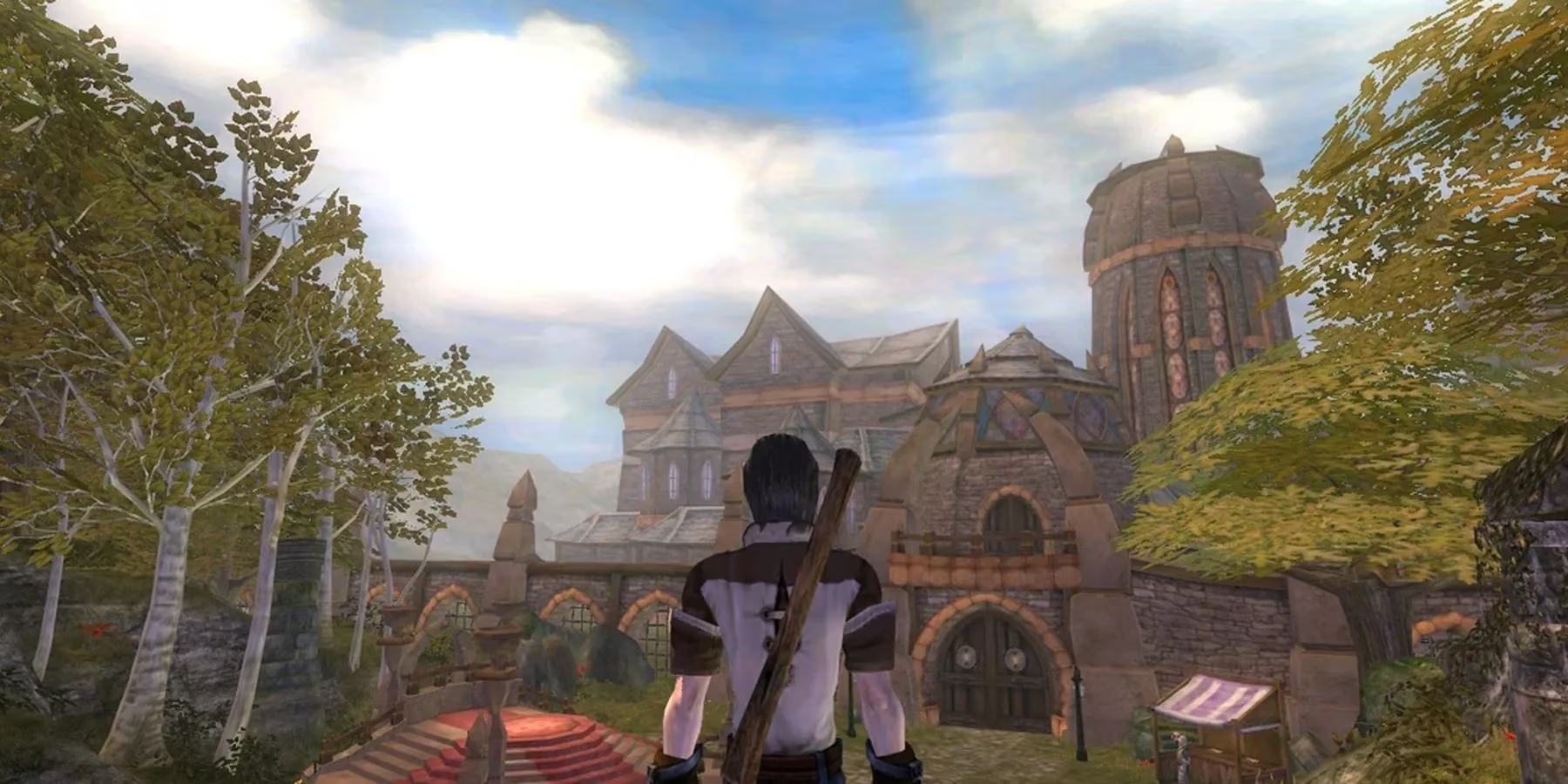
Consider the charming, storybook world of Fable. Currently, consuming food is a mere health potion, and sleeping is little more than a fast-forward button for the in-game clock. A survival mode would recontextualize these actions from optional perks to vital necessities. Players would need to plan expeditions around reliable water sources, budget coin for meals at taverns, and ensure they are never too far from the warm hearth of a home or inn to avoid the debilitating effects of exhaustion. The pastoral English countryside would transform from a picturesque backdrop into a demanding ecosystem. Securing a balanced diet could become a quiet, rewarding mini-game, preventing the hero from becoming as malnourished as a knight trying to fight in rusted, ill-fitting armor. Suddenly, the simple act of returning home after a quest wouldn't just be for story progression; it would be a crucial ritual for maintaining one's capability to face the next challenge.
This concept shines even brighter in dense urban RPGs. Yakuza: Like a Dragon, set in the vibrant, labyrinthine district of Isezaki Ijincho, is already a masterclass in environmental storytelling, packed with restaurants, bars, and convenience stores. A survival mode would force players to engage with this economy of daily life. No longer would karaoke bars and arcades be purely for diversion; they would become essential social hubs where the protagonist, Ichiban Kasuga, must unwind and manage stress alongside his hunger and thirst. Navigating the city would become a tactical exercise in resource management, where knowing the location of the best ramen stall is as important as knowing the hideout of a rival gang. The city would pulse with a new rhythm, its neon signs acting not just as set dressing but as beacons guiding the player to their next meal, making the experience of living in Yokohama as tangible as the heat rising from a street vent.

The potential extends to games already steeped in preparation and resource gathering. The Monster Hunter series has long featured a beloved pre-hunt meal system that grants statistical buffs. A survival mode could expand this into a continuous struggle for sustenance in the field. Imagine a hunt where tracking the monster is only half the battle; players would also need to forage for edible plants, purify water from streams, and perhaps even craft temporary shelters to wait out dangerous nocturnal cycles. The hunter's base would shift from a guaranteed safe haven to a distant reward, making each expedition feel like a genuine foray into untamed wilderness. The relationship with the environment would deepen profoundly—a berry bush would be as noteworthy as a monster track, and a quiet cave could represent salvation from a storm, not just a potential ambush point. The game's famous monster BBQ spits would evolve from a celebratory animation into a critical lifeline, the sizzle of meat becoming a sound as vital as the clang of sword on scale.
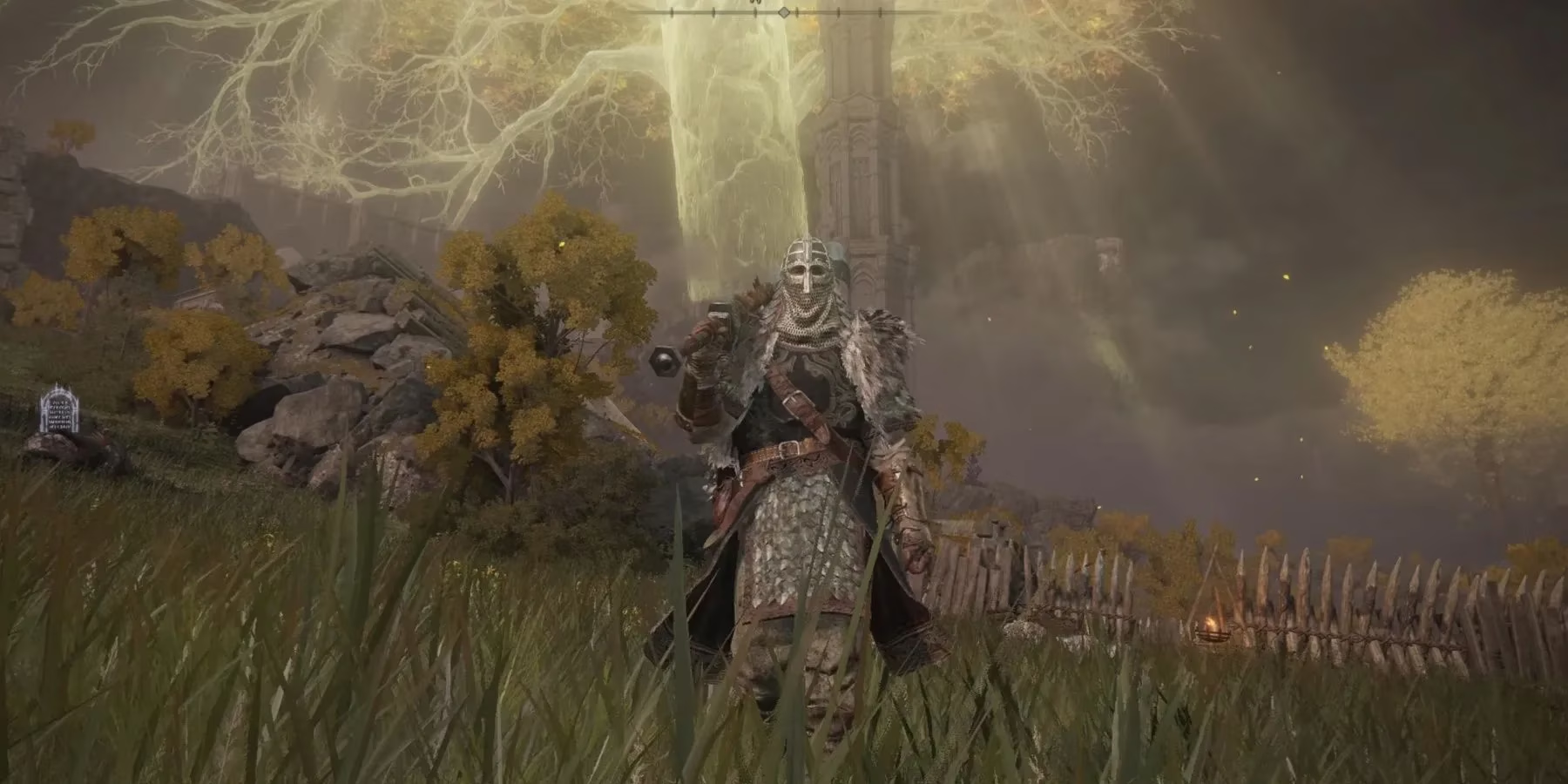
Even the notoriously punishing worlds of FromSoftware could find new depths. Elden Ring, with its vast, decaying Lands Between, already incorporates rudimentary crafting and resource management. A formal survival mode would layer another exquisite agony onto the experience. The Tarnished would need to scrounge for clean water in the swamps of Liurnia, hunt minor wildlife in the Weeping Peninsula for meat, and find secure, hidden locations to rest, as lighting a campfire in the open could attract unwanted attention from roaming night creatures. Managing Scarlet Rot or Frostbite would be compounded by the threat of starvation, turning the open world into a gauntlet of interconnected needs. Victory against a demigod would taste all the sweeter knowing it was achieved not just through skill, but through meticulous stewardship of one's own fragile existence in a world that is as indifferent as a glacier, slowly grinding down all who tread upon it.
Futuristic and post-apocalyptic settings offer equally rich ground. In Cyberpunk 2077's Night City, a survival mode could critique the very nature of life in a corporatized dystopia. V wouldn't just need eddies for cyberware; they'd need them for nutrient paste, clean water (a luxury in a polluted metropolis), and a safe place to sleep where their implants could recharge and their mind could decompress from the neural overload of the net. The countless food stalls and mega-building apartments would transition from ambient scenery to essential infrastructure. Similarly, in Horizon Forbidden West, Aloy's mastery of ancient technology would be balanced against primal needs. Foraging for medicinal herbs and edible plants while evading machine patrols would make the beautiful yet deadly world feel genuinely precarious. Establishing hidden campsites in ruins would become a core survival loop, emphasizing that despite her advanced Focus, Aloy is still a human struggling to endure in a world reclaimed by steel and fire.
Classic franchises could also be reinvigorated. For The Witcher, a series built on the gritty, traveling life of a monster hunter, survival mechanics feel like a natural fit. Geralt's journeys between contracts would involve hunting game, gathering wild herbs for stews, and seeking out inns not just for gossip, but for a warm bed to stave off fatigue. Potion toxicity could interact with malnutrition, and coin would be spent as much on dried meat and ale as on new swords. In the action-RPG realm of Diablo, a survival mode could introduce a compelling rhythm to the endless demon slaying. Setting up a fortified camp in a cleared dungeon chamber to rest, cook a meal from scavenged supplies, and sharpen weapons would create moments of tense respite amidst the chaos, making Sanctuary feel like a truly hostile world to be endured, not just cleansed.
The implementation of such modes would, of course, require careful balancing to avoid tedium. However, as optional features, they present an incredible opportunity. They promise to transform RPG worlds from spectacular dioramas into dynamic, breathing ecosystems where every system—the economy, the environment, the day-night cycle—is interconnected through the player's basic need to survive. A town is no longer just a quest hub; it is an oasis. A forest is not just a zone; it is a larder. A character's home is not just a storage closet; it is a sanctuary. By asking players to eat, drink, and sleep, these games could achieve a new pinnacle of immersion, making the virtual feel viscerally, challengingly real. The hero's journey would become, in every sense, a struggle for life itself.
Research highlighted by OpenCritic underscores how optional “survival modes” can materially shift what players and reviewers value in RPGs: systems that previously read as flavor—sleeping, eating, navigating towns—become moment-to-moment drivers of pacing, tension, and build choices. Applied to the worlds described above, that lens suggests survival mechanics work best when they reinforce each game’s existing identity (urban routines in dense cities, fieldcraft in wilderness hunts, or punishing attrition in bleak fantasy), so the added friction feels like meaningful immersion rather than busywork.
Loading comments...