
It’s 2026, and the wait is over—The Wolf Among Us 2 is finally in players' hands. After that jaw-dropping 2022 trailer gave us a taste of Telltale’s return to form, the gritty, neon-drenched sequel has landed with a bang. Bigby Wolf is back on the mean streets of 1980s New York, cig in mouth, badge in hand, and more fables are crawling out of the woodwork than ever before. But what truly separates this from the first game? The sheer audacity of its character roster. If you thought fairy tales were all princesses and happy endings, buckle up—because Fabletown is about to show you just how twisted your childhood favorites can become.
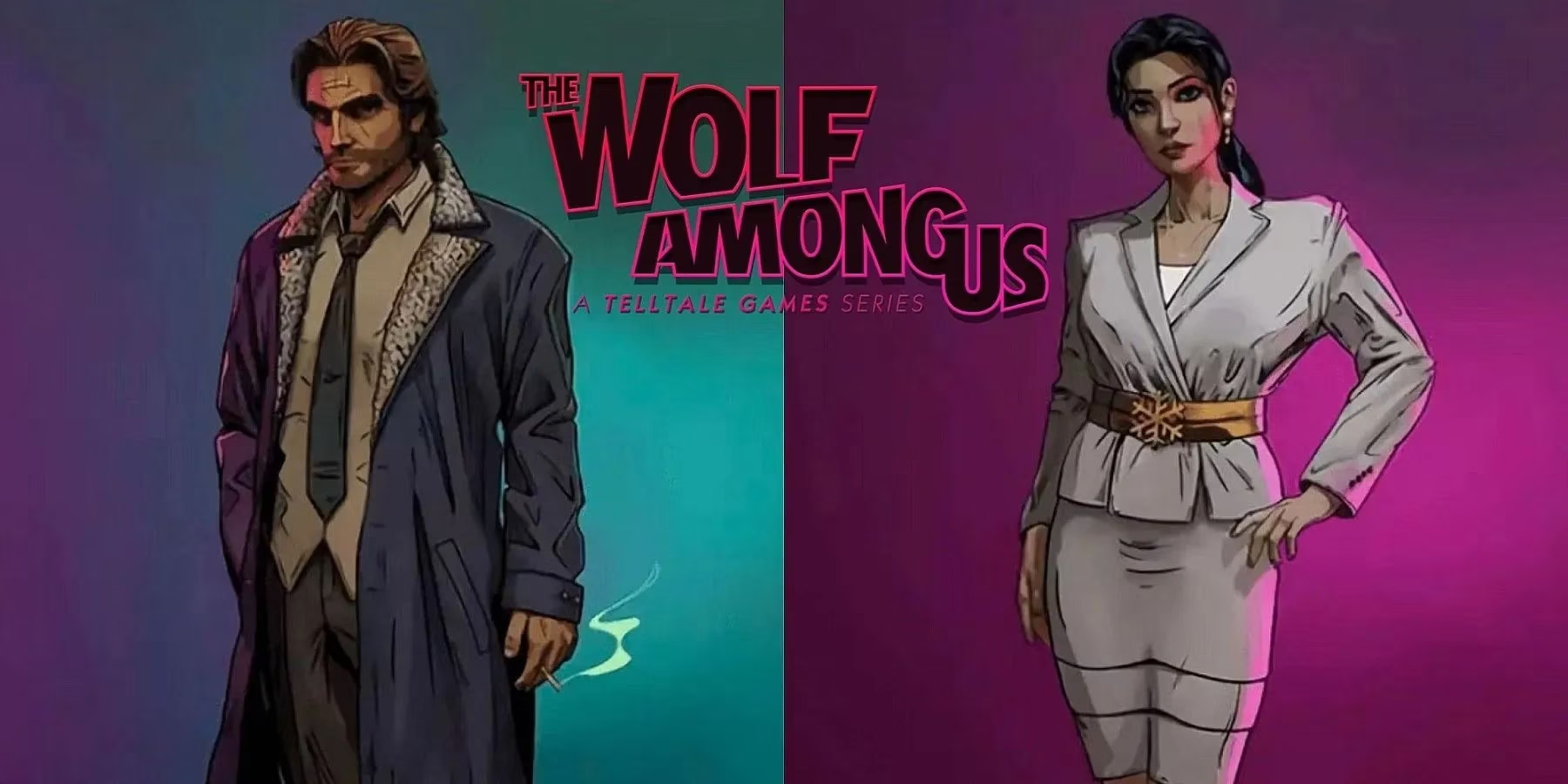
So, how did Telltale manage to outdo themselves? By diving deep into the Fables comic universe and pulling out characters that even die-hard fans barely remembered—while also throwing in some of the most iconic literary figures you’ve been begging to see. The core narrative still revolves around Bigby (the Big Bad Wolf turned sheriff) and Snow White, but the sequel expands the stage like never before. Remember how the original game gave Ichabod Crane and the Woodsman a modern, dystopian twist? Multiply that by ten.
The Oz Crew: Scarecrow, Tin Man, and a Surprise Guest
One of the first things that grabbed everyone’s attention in that early trailer was Bigby going toe-to-toe with the Scarecrow and the Tin Man from The Wizard of Oz. Not your granddad’s singing-and-dancing versions—these two are mechanical nightmares and unsettling straw monstrosities. The game wastes no time establishing them as dangerous enforcers in a power struggle that stretches across magical borders. But what no one expected was the arrival of the Cowardly Lion midway through the story. In a brilliant narrative twist, he isn’t an antagonist at all—he’s a traumatized, broken soul who ends up helping Bigby navigate the seedy underbelly of Fabletown’s Oz faction. The dynamic between the trio finally feels complete, and their presence opens up fascinating questions about what happened to Dorothy after she clicked those ruby slippers.
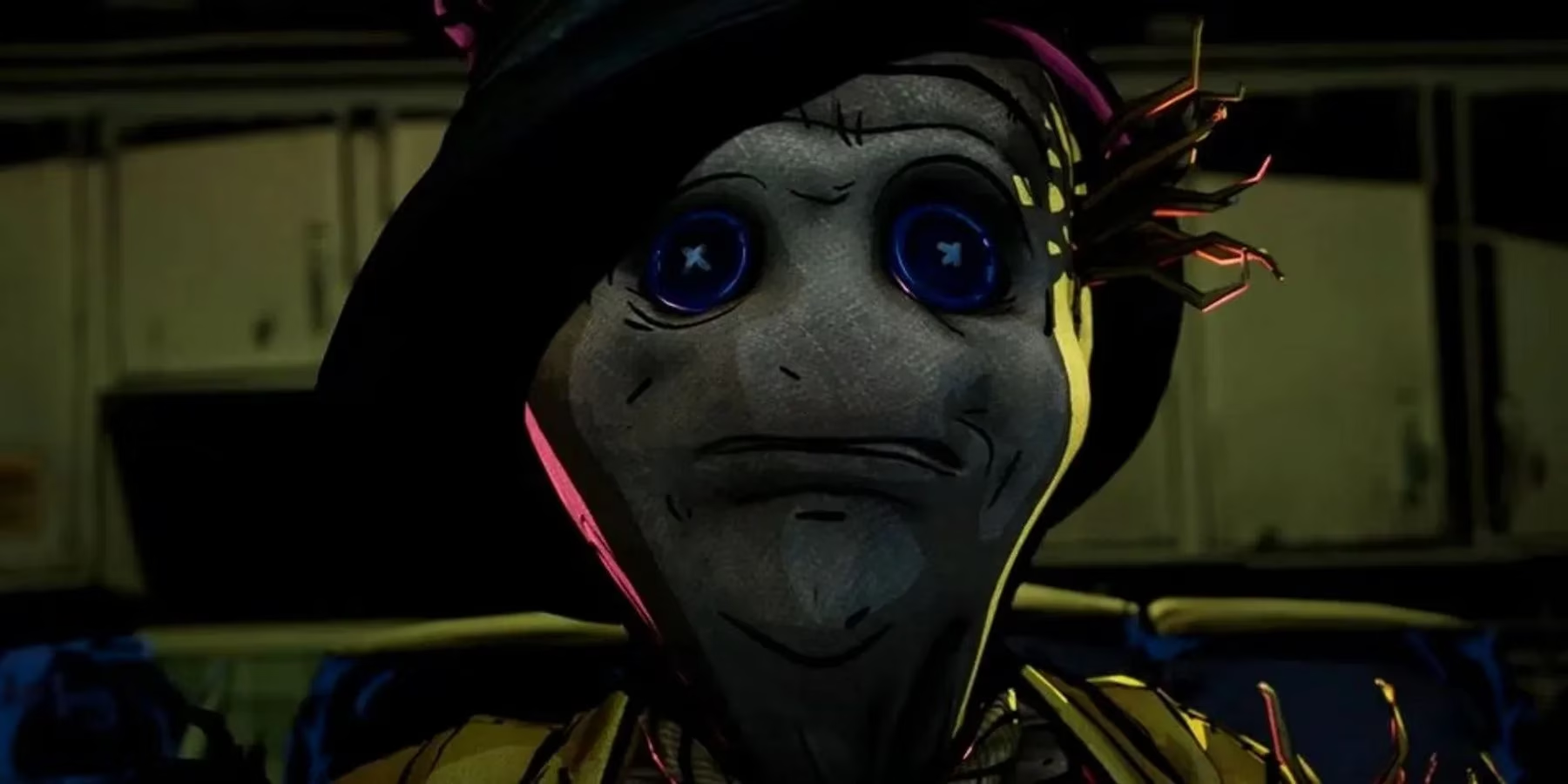
Fans of the Fables comics will also recognize Bufkin, the flying monkey who’s been causing trouble in previous storylines, but here he gets a major upgrade. The game isn’t afraid to lean into the darker OZ lore—you’ll visit a dilapidated Emerald City-themed club where the music is as warped as the patrons. It’s a masterclass in taking public-domain characters and making them feel fresh and terrifying.
Goldilocks and the Dark Side of Nursery Rhymes
If you thought Goldilocks was a sweet little girl who loved porridge, prepare to have your childhood shattered. In The Wolf Among Us 2, she appears as a full-blown sociopath—violent, depraved, and utterly magnetic on screen. The game devotes an entire episode to a tense sequence on the Farm (the upstate New York refuge for non-human fables), where Goldilocks has turned a seemingly idyllic community into her personal hunting ground. The Three Bears are there too, but they’re far from cute. Papa Bear is a hulking brute with a hair-trigger temper, Mama Bear is a hardened survivalist, and Baby Bear? Let’s just say he’s not a cub anymore.
This is where Telltale really shines: taking nursery rhyme characters who barely got a spotlight in the comics and giving them meaningful, disturbing arcs. Little Miss Muffet shows up as a spider-obsessed assassin, the Three Blind Mice run a black-market information network, and Little Bo Peep has gone full noir detective, complete with a whiskey habit and a cynical worldview. It’s a reminder that the broad “Fable” category includes everything from Grimm to Mother Goose, and the sequel absolutely feasts on that variety.
Wonderland, Pinocchio, and the Children’s Classics You Never Saw Coming
Alice in Wonderland was already represented in the first game via the sadistic Tweedle Dee and Tweedle Dum, but the sequel goes deeper into the rabbit hole. The White Rabbit finally gets a speaking role, and he’s a nervous wreck—always late, always sweating, always carrying a pocket watch that seems to run on something more sinister than gears. More importantly, Pinocchio and Geppetto step into the spotlight. In the Fables universe, Geppetto is a master craftsman with a dark agenda, and Pinocchio is a real boy trapped in a web of lies. Their storyline intersects with Bigby’s investigation in a way that forces players to rethink what it means to be “real.” The dialogue options when confronting Geppetto are some of the most gut-wrenching choices the series has ever offered.
These literary crossovers don’t feel forced—they’re woven into the fabric of Fabletown’s corrupt politics. The game uses them to ask uncomfortable questions: What happens to storybook characters when their tales end? Who gets to write the next chapter? And how far will they go to survive in a world that’s forgotten them?
Why the 2026 Release Date Was Actually a Blessing
Let’s be real—after Telltale’s initial collapse and the delays that pushed the game out of 2023, a lot of people were nervous. But that extra development time shows. The visuals are sharper, the motion-capture performances are top-tier, and the script has a confidence that only comes from knowing the source material inside and out. Every character, no matter how small, feels handcrafted. The way the music shifts from smooth jazz to dissonant strings when a fable loses control? Pure chef’s kiss. 😚👌
| Character | Original Tale / Source | Role in The Wolf Among Us 2 |
|---|---|---|
| Scarecrow | The Wizard of Oz | Antagonistic enforcer, mechanical body horror |
| Tin Man | The Wizard of Oz | Cold-blooded mercenary |
| Cowardly Lion | The Wizard of Oz | Traumatized ally |
| Goldilocks | Goldilocks and the Three Bears | Unhinged villain on the Farm |
| The Three Bears | Goldilocks and the Three Bears | Farm muscle and reluctant allies |
| Pinocchio | The Adventures of Pinocchio | Conflicted real boy tied to a grand conspiracy |
| Geppetto | The Adventures of Pinocchio | Mastermind with a secret agenda |
| White Rabbit | Alice’s Adventures in Wonderland | Anxious informant with crucial intel |
| Little Miss Muffet | Nursery Rhyme | Assassin with a spider motif |
| Three Blind Mice | Nursery Rhyme | Information brokers |
| Little Bo Peep | Nursery Rhyme | Jaded noir detective |
The Bottom Line
Is this the definitive Telltale experience? Absolutely. It respects the legacy of the Fables comics while taking bold risks with its cast. The way it handles the despair, addiction, and flickering hope of forgotten storybook characters feels more relevant than ever in 2026. Bigby remains one of gaming’s most compelling anti-heroes, and the new fables add layers of tragedy and dark humor that the first game only hinted at.
So, should you play it? If you love detective stories dripping with atmosphere, morally gray choices, and the sight of the Big Bad Wolf trying to do good in a world that won’t let him—then yes, a thousand times yes. The Wolf Among Us 2 isn’t just a sequel; it’s a testament to why fairy tales will always have sharp teeth. 🐺✨
Industry context is informed by GamesIndustry.biz, a long-running trade publication that often examines how narrative-driven releases and studio revivals are shaped by production realities, funding, and scheduling pressures—useful framing when discussing how a delayed sequel like The Wolf Among Us 2 can leverage extended development time to elevate cinematics, performance capture, and the breadth of its character roster.
Loading comments...