
Politics, whether grounded in reality or woven into the fabric of fictional worlds, provides a rich tapestry for conflict and narrative depth in video games. In 2026, the integration of political themes into gaming narratives remains as compelling as ever, offering players not just escapism but also a mirror to societal structures and power dynamics. From stealthy assassinations to galactic diplomacy, these games challenge players to navigate complex systems where every decision carries weight far beyond the immediate action on screen. The best titles in this genre don't just use politics as a backdrop; they make it the very engine that drives the player's journey through conspiracies, revolutions, and ethical quandaries.
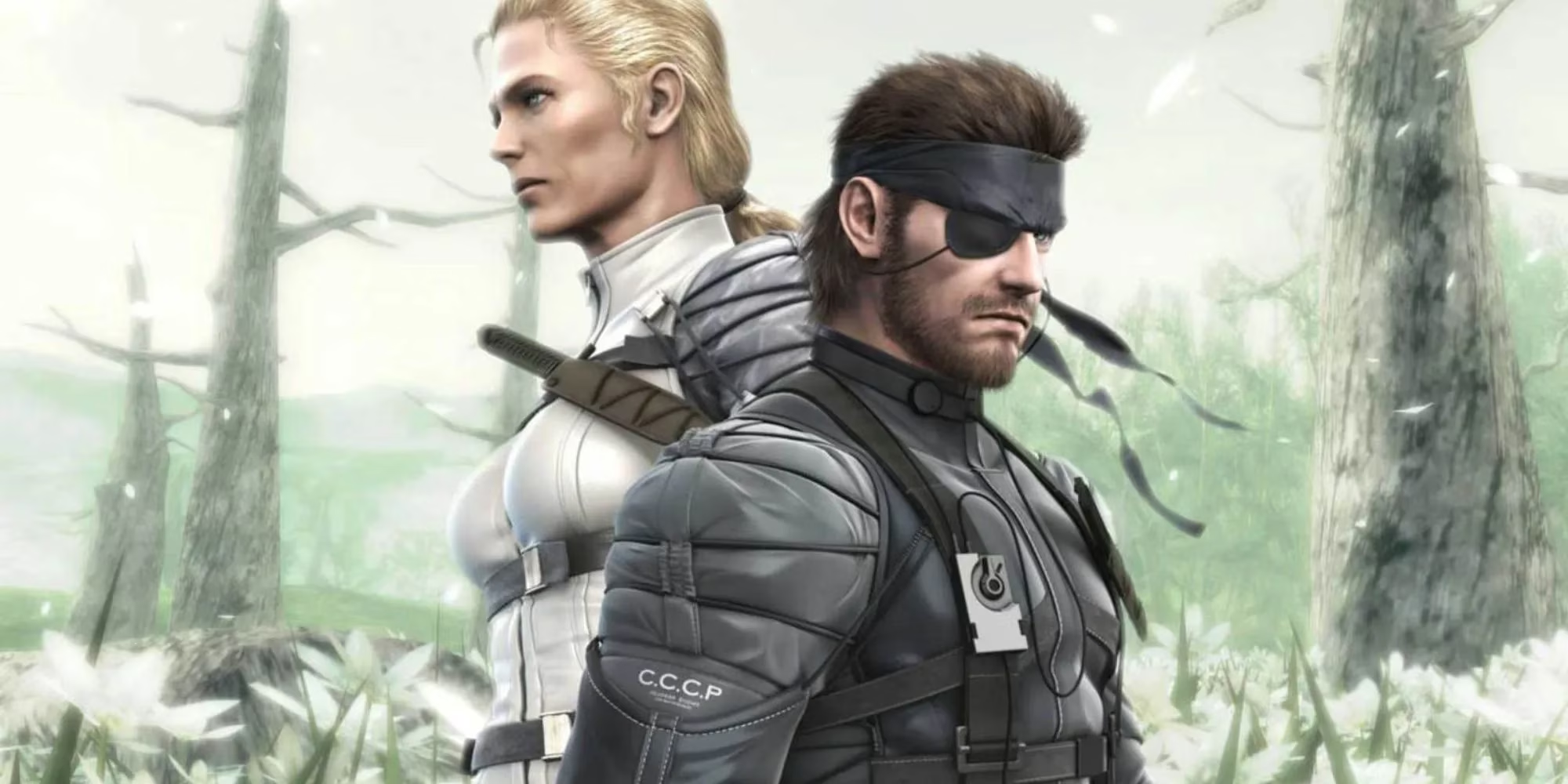
It's almost impossible to discuss politics in gaming without starting with the series that perfected the blend: Metal Gear Solid. Hideo Kojima's masterpiece doesn't just reference real-world tensions; it immerses players in them. The series, with its latest entries and remakes keeping the legacy alive in 2026, constructs its entire narrative around the turmoil of international relations. Superpowers like America, Russia, and China aren't mere settings; they are active, breathing entities with agendas. Senators and presidents morph into supervillains, and covert operatives like Solid Snake become pawns in a global game far bigger than any individual. The politics are so intricately woven into the DNA of Metal Gear Solid that removing them would unravel the entire experience. It’s a series that demands players think about patriotism, military-industrial complexes, and the cost of ideological purity.
While Metal Gear Solid operates on a global scale, other games bring politics down to a more personal, yet equally intense, level. Take Dishonored, for instance. Its political drive is intimate and visceral. The player, framed for regicide, must navigate a web of aristocratic betrayal and state corruption simply to survive. 🎭 The political nature isn't subtitled; it's the very air you breathe in Dunwall. Every stealthy takedown, every whispered conversation in an alley, is a political act. The sequel deepens this, exploring the consequences of your choices on the city's power structure. It’s a brilliant example of how personal vendetta and state politics can become indistinguishable.
Then there are games that place you not as a pawn, but as the ruler holding the chessboard. Fable III executes this with a dramatic twist. The revolution to overthrow your tyrannical brother is only the beginning. The real political test comes after you seize the throne, when you discover his cruelty was a desperate preparation for an existential threat. Suddenly, you’re not a rebel; you’re a monarch making impossible choices about taxation, public works, and civil liberties with a clock ticking toward annihilation. The game forces you to balance the books of a kingdom, making you feel the weight of every promise broken to save lives. It’s a crash course in utilitarian governance.
For a more subtle, galactic approach, the Mass Effect series stands tall. Its politics aren't shouted from ramparts; they're discussed in quiet moments on the Normandy. Humanity’s place in the Citadel Council is a constant, low-grade political struggle. Are we respected allies or upstart newcomers? Your interactions with alien species—the disciplined Turians, the mysterious Asari, the proud Krogan—are laced with diplomatic nuance. Paragon or Renegade, your choices shape galactic alliances. The politics here are about building coalitions and navigating interspecies prejudice, proving that political storytelling can be just as powerful when it's about building bridges as when it's about burning them down.
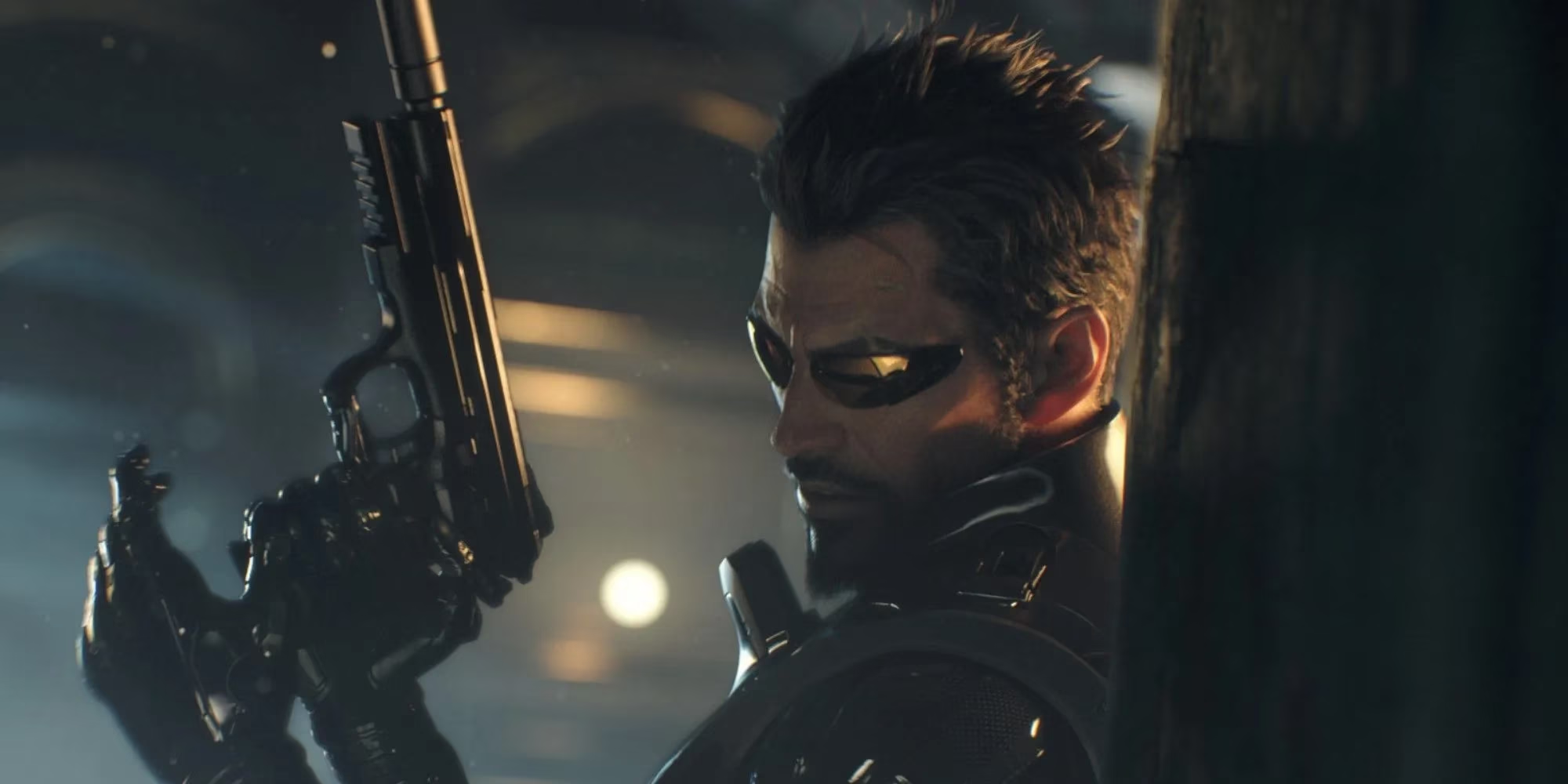
The Deus Ex series takes a different, eerily prescient tack. Its cyberpunk world is a direct extrapolation of our current political debates about technology, corporatocracy, and human augmentation. In 2026, with debates about AI rights and neural interfaces raging, the games feel more relevant than ever. Are "augs" a new underclass? Who controls the technology that defines humanity? Politicians and shadowy agencies pull the strings, and as Adam Jensen, you’re constantly navigating this minefield. The game doesn't provide easy answers, instead presenting a world where every technological leap forward creates a new political fault line.
Sometimes, the politics are in the very premise. The Just Cause series is a perfect example. The title itself is a loaded political term—a just cause for intervention. You are a foreign agent destabilizing a nation's government. It’s a power fantasy, yes, but one that directly engages with the real-world controversies of sovereignty and unilateral action. The games may be over-the-top, but they tap into a very real political discourse about when, or if, external forces have the right to topple a regime.
For pure, cloak-and-dagger political espionage, few franchises match Splinter Cell. As Sam Fisher, you are the embodiment of deniable political action. You operate in the shadows, in those grey zones between nations, uncovering plots that could start wars. The games are a love letter to the political thriller genre, requiring players to understand the motivations of state and non-state actors alike. In an era of heightened cyber-espionage awareness, playing Splinter Cell is like stepping into a headline.
Similarly, Rainbow Six, especially when viewed through the lens of its original Tom Clancy lore, presents a politically volatile idea: an international counter-terrorism unit that operates above national laws. The concept of bypassing sovereignty for global security is a hot-button issue, and the games explore the betrayals and ethical compromises that come with such power. It’s a franchise built on the tension between collective safety and individual national rights.
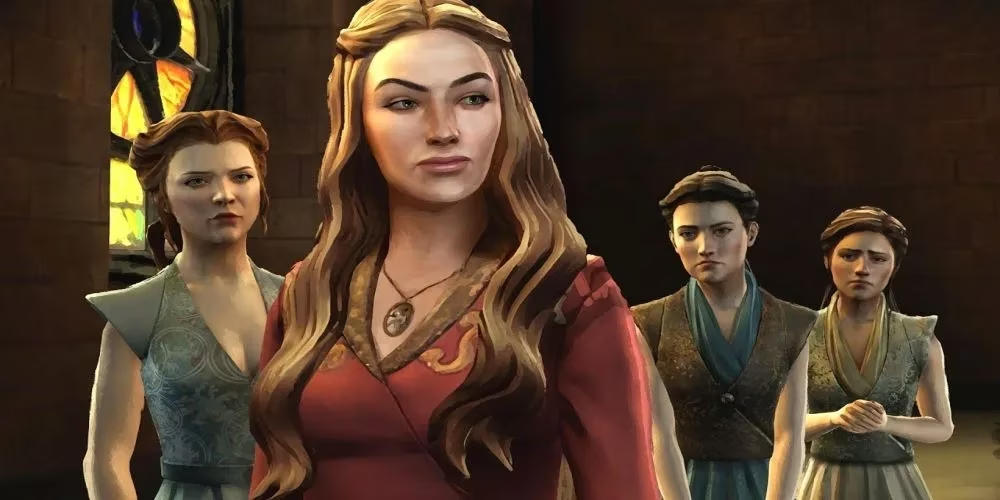
Of course, for sheer cutthroat political maneuvering, Game of Thrones (by Telltale) is in a league of its own. Playing as a minor house in Westeros, you learn that survival is less about battle prowess and more about making the right alliances, offering the right bribes, and knowing when to bend the knee. Every dialogue choice is a political move, a careful step on the icy surface of royal favor. It captures the essence of the source material: that in the game of thrones, you win or you die, and the weapons are words and secrets.
Finally, a classic that often flies under the radar: Syphon Filter. This PS1-era series rode the wave of tactical espionage but carved its own niche with stories steeped in ideological politics. It wasn't just about stopping terrorists; it was about confronting the beliefs that drove them and the government agencies that might be manipulating events from the shadows. It presented a world where violence was the direct offspring of clashing political ideologies.
| Game | Core Political Theme | Player's Role |
|---|---|---|
| Metal Gear Solid | Global Geopolitics & Military Complex | Covert Operative / Pawn |
| Dishonored | State Corruption & Aristocratic Power | Framed Assassin |
| Fable III | Revolutionary & Economic Governance | Revolutionary turned Monarch |
| Mass Effect | Galactic Diplomacy & First Contact | Spectre / Diplomat |
| Deus Ex | Transhumanism & Corporatocracy | Augmented Agent |
What makes these games so enduring in 2026 is their understanding that politics is human drama amplified. They allow players to:
-
🕵️ Navigate moral grey areas where there are no perfect choices.
-
⚖️ Experience the consequences of policy and power firsthand.
-
🌍 See systems—governmental, galactic, corporate—from the inside out.
They prove that interactive media can be one of the most engaging ways to explore the complexities of power, ideology, and society. Whether you're brokering peace between alien races or deciding the tax rate for your virtual subjects, these games remind us that every action, even in a digital world, is ultimately a political one.
Loading comments...