
I have been a Fable fan since the first time I kicked a chicken in Albion. The series has always been about transformation: a peasant becomes a hero, an exile becomes a king, and the world itself changes with you. But after years of thinking about the franchise, I have to ask a tough question. Did Albion change too much? By the time Fable 3 arrived, the magical feeling that made the series special had been almost replaced by chimney smoke, political systems, and mass production. Now, in 2026, the reboot from Playground Games finally seems ready to reverse that mistake, and I believe that is exactly what the franchise needs.
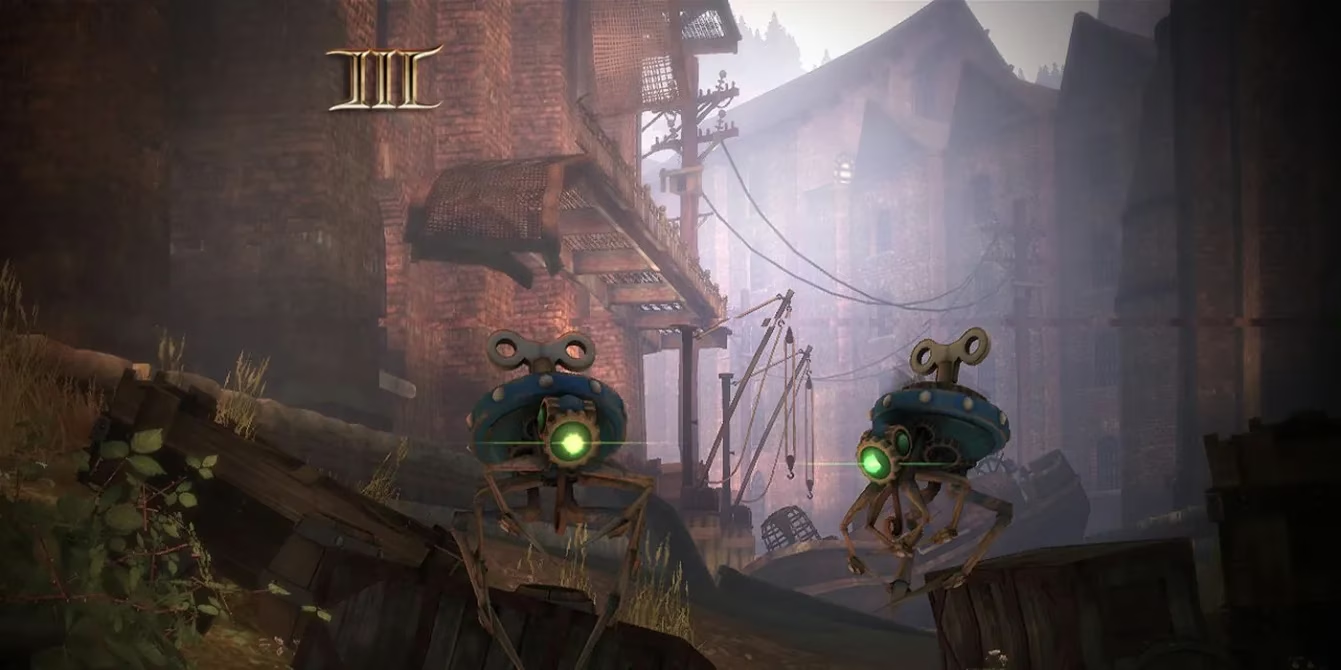
As players progress through the original Fable trilogy, they experience several personal changes, but Albion itself changes just as much. The world becomes more industrial, more urban, and less magical. Some argue that this is the entire point: heroes dwindle, and modern heroes are made, not born. Thematically, that is a strong idea. However, a good theme does not always make a good fantasy game. The implementation matters, and by Fable 3 the franchise's popularity had shriveled. It was carried less by fresh ideas and more by nostalgia for what it used to be.
Why should a series called Fable feel so much like a history lesson about industrialisation? Is it any wonder that fans wanted the fairy tale back? The original Fable captured lightning in a bottle because it balanced a charming world with heroic fantasy. Once Fable 2 established that time was passing and Albion was evolving, the series was trapped. There was no clean way to continue after Fable 3 without another drastic time jump or a strange narrative device, such as the old rumours of a meteor striking Albion. Forward progression had become detrimental.
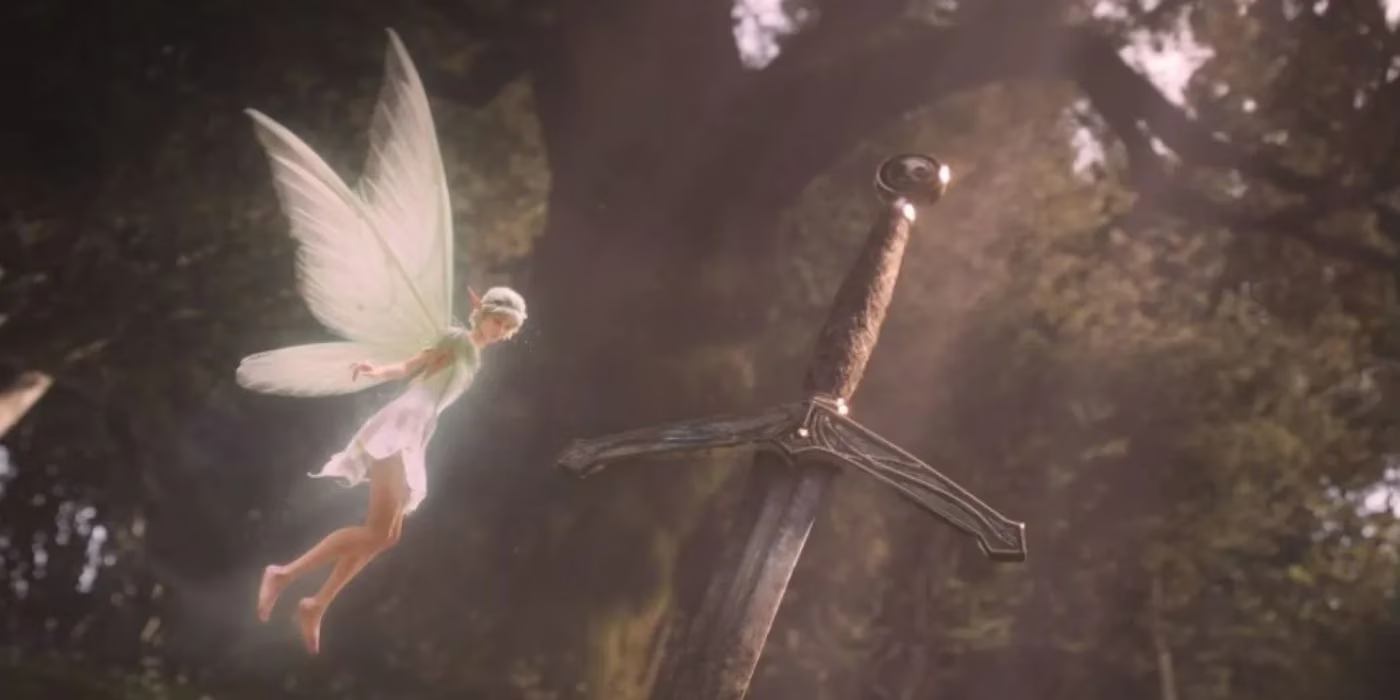
That is why a reboot is not something to fear. Normally, rebooting an established franchise divides fans. With Fable, many players would argue that it is exactly what the game needs. Playground Games has apparently recognised that industrial Albion had run its course. By returning to a magical Albion, the studio gets a second chance to make the world feel alive with wonder, not weighted down by machinery. The new Fable can re-capture the spirit of the first game while leaving behind the thematic dead end of the later sequels.
The trailer that set the tone for the reboot made this direction clear. It focused on the elements of a magical RPG: stories of yore, a hero's sword, a relationship between magic and nature, and a strong emphasis on the player's own story. It also gave us a glimpse of a beautiful and majestic city. The design looked powerful but also purely fantasy. There was no smog rising, no sign of heavy machinery, and no grim industrial backdrop. The picture painted was bright, clean, and hopeful. That visual promise matters. It tells me that the next Fable will not just be another political simulation with a sword; it will be a return to the fairy-tale roots.
Let me compare the two versions of Albion that we have seen.
| Element | Industrial Albion from Fable 3 | Rebooted Magical Albion |
|---|---|---|
| World tone | Smoggy, industrial, politically charged | Bright, magical, nature-focused |
| Hero identity | Ordinary people made into heroes by circumstance | Heroes born from story and legend |
| Visual style | Factories, machinery, urban sprawl | Majestic cities, natural magic, heroic fantasy |
| Player fantasy | Managing power and industrial change | Rediscovering adventure and personal legend |
This table is simple, but it explains why so many of us are excited. Industrial Albion was an interesting experiment, but it stopped feeling like the Fable I fell in love with. Magical Albion, on the other hand, promises adventure, mystery, and the sense that anything can happen.
Of course, we are in 2026 now, and the wait for this reboot has been long. The reboot was first rumoured to be in development at Playground Games years ago, and the early trailer confirmed a new direction. Since then, fans have been patient, and honestly, I have been cautious too. A trailer can show beautiful imagery while the final game still struggles to find its identity. But the central idea of moving away from Industrial Albion remains the right choice. The franchise needed a fresh start, not another sequel burdened by the timeline of the original trilogy.
Is there still risk? Absolutely. Playground Games is best known for racing titles, and an open-world fantasy RPG is a different challenge. Yet the studio has had years to grow, and the first-party single-player RPG scene on Xbox is now stronger than it was when the original Fable 3 launched. If the new Fable can deliver the magical world shown in its reveal, it could finally give the franchise the comeback it deserves.
At the end of the day, it remains to be seen what Albion looks like when the game launches. I do not expect it to diverge from that bright, magical depiction. More importantly, I no longer want it to. Albion should feel like a legend again, not like a factory shift. Fable is in development, and for the first time in a long while, I am genuinely ready to step back into its world.
Loading comments...