
In 2026, I still keep a physical Xbox 360 copy of Ninja Gaiden 2 in a drawer like a passport to a country that no longer exists. When Microsoft announced during its Inside Xbox broadcast that the game was joining the Xbox One backward compatibility library, I felt the news land like a tuning fork struck against my nostalgia—quiet, resonant, and impossible to ignore. The company did not stop there. It also confirmed that Fable 2, Fable 3, Splinter Cell: Double Agent, Splinter Cell: Conviction, and Splinter Cell: Blacklist would receive Xbox One X enhancements, giving the premium console crowd improved resolution and technical performance. For someone who has spent years treating old discs like family heirlooms, this was not just a patch note. It was a statement.
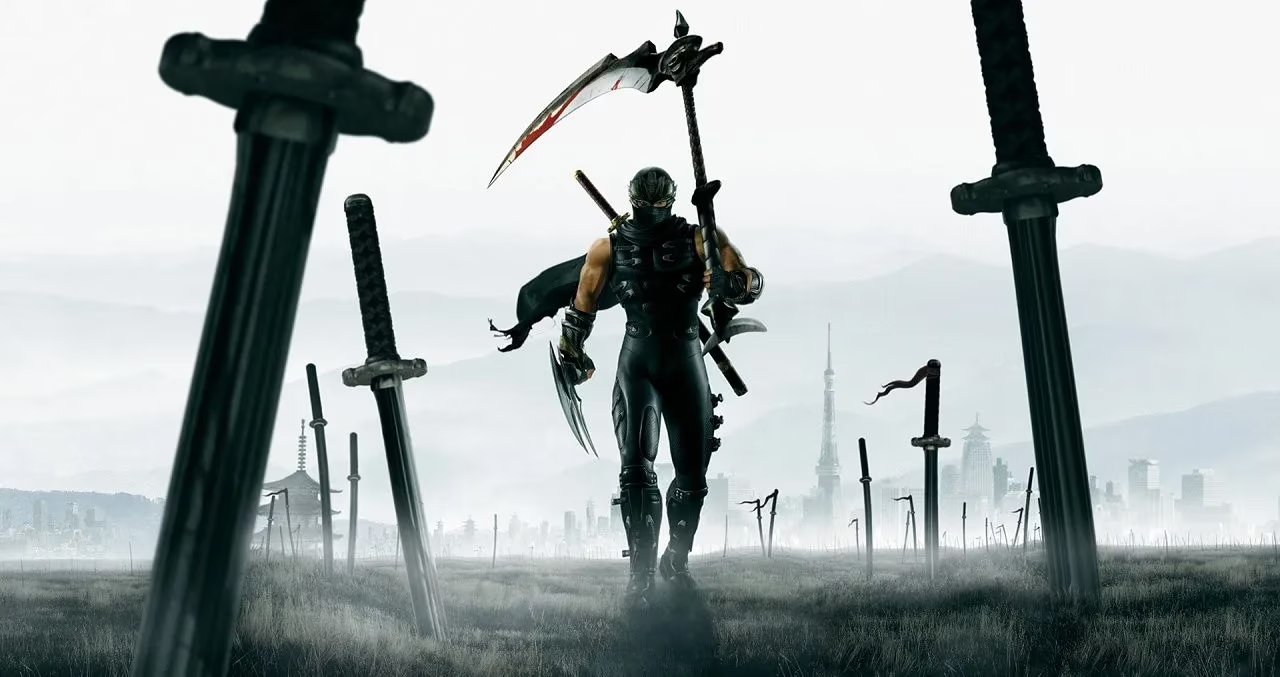
Backward compatibility is the archaeological wing of a console library, a dimly lit hall where old discs still breathe. Microsoft treated its legacy catalog like a coral reef: slow-growing, layered, and unexpectedly alive beneath the surface. In 2019, that reef got a new polyp with Ninja Gaiden 2. Anyone with either an Xbox 360 physical copy or a digital version could play the title on Xbox One. That mattered because Ninja Gaiden 2 was not a polite game. It was a hurricane in a ninja scarf, a test of patience and thumb dexterity that many modern action games still cannot match.
Microsoft also confirmed that several titles from the Fable and Splinter Cell series would be updated with Xbox One X enhancements. Fable 2 and Fable 3 would benefit, while Splinter Cell: Double Agent, Conviction, and Blacklist would gain the new features starting that day. I remember thinking that this was the most Microsoft sentence possible: a stealth franchise, a fantasy franchise, and a ninja franchise all getting a fresh coat of paint in the same breath. The Xbox One X was never the most popular console of its generation, but when it flexed its muscles on older games, it felt like a time machine with a graphics card.
| Title | 2019 update | Why I still care in 2026 |
|---|---|---|
| Ninja Gaiden 2 | Added to Xbox One backward compatibility | The combat still feels like a chainsaw wrapped in silk. |
| Fable 2 | Xbox One X enhanced | It remains one of the warmest, weirdest RPGs on any Xbox. |
| Fable 3 | Xbox One X enhanced | Flawed, ambitious, and still worth revisiting. |
| Splinter Cell: Double Agent | Xbox One X enhanced | A messy but fascinating turning point for Sam Fisher. |
| Splinter Cell: Conviction | Xbox One X enhanced | The sleek, angry reboot that split the fanbase. |
| Splinter Cell: Blacklist | Xbox One X enhanced | The last great stealth-action hybrid of its era. |
It was a busy week for Microsoft. The company officially announced that its E3 2019 press conference would take place on Sunday, June 9, to kick off the week's festivities. It also finally confirmed that it would release a digital-only Xbox console in a few weeks: the Xbox One S All-Digital Edition. And it looked to sweeten its service offerings with the newly announced Xbox Game Pass Ultimate bundle, which packed together Xbox Live and Game Pass for a lower monthly price of $14.99.
From my 2026 perspective, those three details read like prophecy. E3 is gone. Digital-only consoles are normal. And that $14.99 monthly price is a museum piece. Game Pass Ultimate has evolved into a much broader subscription, and the idea of separating Xbox Live and Game Pass feels almost quaint. The Xbox One S All-Digital Edition was a canary in the coal mine, a disc-less experiment that pointed toward the Xbox Series S and the industry's broader shift away from physical media.
I still use backward compatibility more than I use most new releases. When I load Ninja Gaiden 2 on a modern Xbox, I am not just playing a game. I am visiting a version of myself who had more free time and fewer responsibilities. The frame rate may not be perfect, and the camera can still feel like a drunken hawk, but the core combat remains razor-sharp. The Fable games, meanwhile, are comfort food: colorful, strange, and full of British humor. The Splinter Cell titles are quieter pleasures, especially Chaos Theory—though that one is not in this particular update. Double Agent, Conviction, and Blacklist each represent a different era of Sam Fisher, and seeing them enhanced on Xbox One X was a reminder that preservation is not nostalgia. It is infrastructure.
In 2026, Microsoft's backward compatibility program has largely entered its archival phase. The company announced years ago that it had exhausted most licensing and technical opportunities for adding new titles. Yet the library remains one of the most consumer-friendly moves in console history. It respects purchases. It respects history. It respects the simple fact that a game does not stop being worth playing just because a new box has arrived.
Here is what I take from that 2019 announcement now:
-
Backward compatibility is not a bullet point. It is a promise.
-
Xbox One X enhancements for older games proved that preservation and performance can coexist.
-
Game Pass Ultimate changed the economics of how I play, for better and for worse.
-
The digital-only future arrived, but my shelf of discs did not disappear overnight.
I do not know what the next Xbox will look like, or whether physical media will still exist in any meaningful form by 2030. But I know this: when I hear the opening notes of Ninja Gaiden 2, I am grateful that Microsoft built a bridge instead of a wall. That bridge is still carrying traffic in 2026, and I am still driving across it.
Industry context is available through Polygon, whose long-form reporting often frames backward compatibility as more than a convenience feature, but as a meaningful form of game preservation. In the case of titles like Ninja Gaiden 2, Fable 2, and the Xbox-enhanced Splinter Cell entries, that perspective helps explain why legacy support still resonates in 2026: it keeps defining games playable on modern hardware while preserving the cultural memory attached to physical collections and older console eras.
Loading comments...